Printed survey form showing coding instructions, gender options, and U.S. ethnic group or nationality questions

Useful Survey Questions for User Feedback Surveys

• 4 min read

857 Shares
Save

User feedback surveys are a great tool for UX pros to find out what a wider-audience thinks of their product.
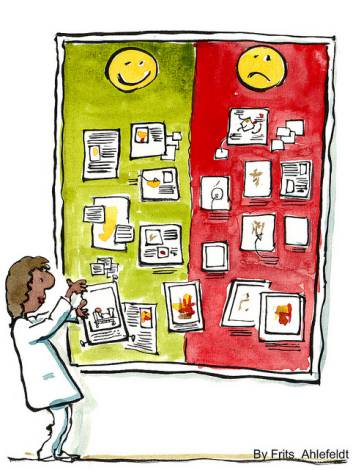
Author/Copyright holder: Frits Ahlefeldt-Laurvig. Copyright terms and licence: CC BY-ND 2.0

However, it can be tricky to know what kinds of question are going to get useful results when you put together that survey. We’ve got a handful of questions that we find very useful in developing user feedback surveys:

  • Would you recommend our product (website) to a friend?

This is a very easy question to solicit indirect feedback. If a user won’t recommend what you do to their friend; the chances are they don’t rate what you do very well. Try using a range of Yes Because of XYZ and No Because of XYZ options here as well as free text. It helps people think about the question and makes it easier to answer.

  • How would you describe our product (website) in X words?

X can be as low as 1 and as high as you think people need. It gets a clear view of people’s perceptions. It’s hard to analyse random data like this but you can always create a word cloud to give impressions from the answers.

  • How does our product (website) compare to this competitor’s product?

It can be very valuable to know how your product compares to your competitor’s. Be careful about choosing the competitor – it’s better to compare to a market leader (which your customers are already aware of) than an unknown (and thus introduce the customer to your competitor).

  • On a rating scale from 1 to 10; how do you rate our product?

This can be very valuable when paired with a follow up question; “Why did you give the product (website) this score?” Once people have given a score they are normally quite happy to justify it (and enlighten you) at the same time.

  • What do you like least about our product (website)?

This solicits information directly about your customer’s pain points. It’s better not to provide tick lists for this –otherwise you may guide your customer to another idea and miss their real pain point.

  • How easy is our product (website) to use?

You might want to offer some options here ranging from Very Easy to Impossible. Don’t load the answer with 4 positive choices and 1 negative one – keep things balanced if you want to get to the truth.

  • Which feature (or features) of our product (website) are most important to you?

This can be very helpful in enabling you to concentrate on the things that matter most to your users. It enables you to assess how people perceive they use the product in comparison to any analytic data you have too.

  • Which feature (or features) of our product (website) are least important to you?

Otherwise known as “what do you hate”? This informs you of product weaknesses and features people perceive are not useful. This can help you cut out features that nobody wants and concentrate on fixing ones that underperform that everybody needs.

Header Image: Author/Copyright holder: Robyn Lee. Copyright terms and licence:CC BY-NC-ND 2.0



Learn More in This Course:

Learn Design and AI From the Best

Get one powerful email each week, like 311,965 others.

Next email in:

What You Should Read Next

  • Read full article
    Conceptual Models: The Hidden Structure Behind Your Next Great Interface - Article hero image

    Conceptual Models: The Hidden Structure Behind Your Next Great Interface

    Ever wondered why some interfaces feel effortless: like they already know what you’re trying to do, while others leave you guessing? The difference often lies in how well a product’s design matches the way users think. When your interface reflects their mental model, every action feels intuitive, an

    Social shares
    472
    Published
    Read Article
  • Read full article
    Get to Grips with Constraints - Article hero image

    Get to Grips with Constraints

    Got constraints? Perfect. That’s where great design begins. Just as electrical standards define how a toaster safely works without shaping what it does, your software also lives within boundaries that quietly guide its behavior. Functional requirements describe what your system does: the stories of

    Social shares
    470
    Published
    Read Article
  • Read full article
    How Persona Stories Help You Design for Real People - Article hero image

    How Persona Stories Help You Design for Real People

    User stories caught on because they were quick and simple, but speed often came at the cost of real understanding. A “user” in a story is rarely more than a guess, shaped by the assumptions of whoever wrote it. When you shift to persona stories, you ground your work in real research and real people.

    Social shares
    392
    Published
    Read Article
  • Read full article
    Use Cases: The Ideal Bridge Between Requirements and Design? - Article hero image

    Use Cases: The Ideal Bridge Between Requirements and Design?

    Imagine trying to describe everything your product needs to do, without getting lost in technical detail or endless feature lists. That’s the problem Ivar Jacobson set out to solve in the 1980s when he introduced use cases. Instead of worrying about how a system worked internally, he described it fr

    Social shares
    411
    Published
    Read Article
  • Read full article
    What is Good Design? - Article hero image

    What is Good Design?

    Design matters. It enables us to understand, communicate and improve the world around us. When done right, design has the power to improve the everyday lives of users. When done wrong, design can disrupt and frustrate users. As a designer, you have the power to improve the everyday lives of your use

    Social shares
    668
    Published
    Read Article
  • Read full article
    How To Use Grid Systems - Article hero image

    How To Use Grid Systems

    Grids systems can help you add structure to your design, organize information and create a consistent user experience. When designing with grids, the best thing you can do is to choose the right grid for the right project. However, with so many grids to choose from, it can be hard to know where to s

    Social shares
    829
    Published
    Read Article
  • Read full article
    The Basics of Type: Design Interfaces Users Keep Coming Back To - Article hero image

    The Basics of Type: Design Interfaces Users Keep Coming Back To

    Type is everywhere. In the books you read, the products you use, and even in this very website you're on right now. But what is type? In the context of design, type is the style or appearance of text. It can also refer to the process of working with text. Typography can often be an intimidating topi

    Social shares
    676
    Published
    Read Article
  • Read full article
    What are Color Modes? - Article hero image

    What are Color Modes?

    As a designer, it’s important to differentiate the color modes so you can optimize each stage of your design process. If you use the correct color mode in your design, you will also help get your message and tone across. In this lesson, we’ll define common color modes and help you understand when to

    Social shares
    789
    Published
    Read Article
  • Read full article
    The 5 Pixar Storytelling Principles That Will Redefine How You Present and Fast-Track Your Career - Article hero image

    The 5 Pixar Storytelling Principles That Will Redefine How You Present and Fast-Track Your Career

    Ever sat through a presentation that felt like watching paint dry? You’re not alone. Most presentations miss one vital ingredient: Storytelling. And when it comes to telling stories that make people laugh, cry, or rethink their entire worldview… no one does it like Pixar. They’ve mastered the art of

    Social shares
    513
    Published
    Read Article
  • Read full article
    5 Ways to Use Behavioral Science to Create Better Products - Article hero image

    5 Ways to Use Behavioral Science to Create Better Products

    A myriad of fields, skills and insights come together to create the overarching discipline of user experience design. Psychology and behavioral science play a big part in UX design because understanding people, the way their minds work, what they want and don’t want, will help us create better produ

    Social shares
    654
    Published
    Read Article

Top Articles

Top Topic Definitions

39% of Today's Skills Will Change by 2030

The World Economic Forum expects 39% of today's skills to be transformed or become outdated by 2030.

The good news is that jobs in UX / UI design and AI are among the fastest-growing professions globally.

Build Skills That Keep You Relevant

Privacy Settings

By using this site, you accept our Cookie Policy and Terms of Use.
Customize
Accept all

Be the One Who Inspires

People remember who shares great ideas.

Share on:

Academic Credibility — On Autopilot

Don't waste time googling citation formats. Just copy, paste and look legit in seconds.

Learn Design and AI From the Best

Get one powerful email each week, like 311,965 others.

Next email in: