Unicorns, Foxes, Hedgehogs, the UX Design Bestiary

• 8 min read

753 Shares

A bestiary is a collection of animals, and we don’t want to imply that anyone involved in the UX design profession is an actual animal (well, except for human animals), but there are three animals terms that have become common usage in the UX profession: unicorns, foxes and hedgehogs.

It’s useful to know what each of these terms means because it allows us to talk in a common language — and who knows? Maybe one day, you’ll be a unicorn and you’ll want to share that news with the world.

UX Unicorns

© yosuke muroya. CC BY-NC 2.0

A unicorn is a mythical horse. It is supposed to have a single horn rising from the center of its’ head. It was said to be only able to be ridden or touched by a virgin. It was to appear when there was trouble in the land.

A UX unicorn has no horn growing out of its head. In fact, it’s not a horse at all but it’s nearly as rare as the mythical unicorn. A UX unicorn is a UX generalist. Someone who is good at all aspects of UX design work. They are also good at graphic design and coding which allows them to tackle other project work when they’re not doing UX work.

The UX unicorn is highly sought after. They make for excellent UX team leaders and managers because their wide-ranging skill sets enable them to work on any UX project and lead others to deliver the best possible work. As you might expect the UX unicorn also commands a fairly hefty salary premium.

Given the scarcity of UX unicorns, employers probably spend too much time trying to find them. While they do exist, they aren’t available in large numbers (because it takes a lot of time to become good at everything in the UX field) and they aren’t usually available on demand.

They are “very nice to have” for the corporate UX department, but in reality, it’s often going to be easier and possibly cheaper to recruit “almost unicorns” and have them work together to deliver UX work.

UX Foxes

The term UX Fox was coined by Jeremy Wilt in UX Matters. The term applies to people who aren’t quite unicorns but who have the ability to think laterally and offer insight not just from the field of UX but other fields too. They might have a psychology background, or a marketing background or a general business background. They’ve generally come into UX after some serious work experience in other parts of the business.

The UX fox can call on their varied experiences and skills to adapt to any situation. They’re extremely adept at working in environments where there’s a lot of uncertainty involved. This can enable them to motivate and lead teams and bring together varying degrees of expertise.

They are also great problem solvers and not afraid of applying creative thinking to research or other UX activities.

UX foxes are more easily found than unicorns. That’s not to say that they’re common — they’re a valuable resource for any UX team.

UX Hedgehogs

In the same piece in UX matters, Jeremy Wilt also coined the term UX hedgehog. The hedgehog is an absolute master of an area or areas of UX work. They’re the kind of people who have gained the kind of mastery that Malcolm Gladwell enthuses about when he talks about 10,000 hours of effort to become an expert in a field.
© A-dit-ya. CC BY 2.0

The best UX hedgehogs are a godsend to UX projects. Their total understanding of their discipline and all the obscure nooks and crannies of it enables them to add massive value in these areas. They can often glance at a problem and instantly map out a resolution to it. There’s nothing that’s too challenging for them.

There are, however, some downsides to having a UX hedgehog on the team sometimes. Some hedgehogs are going to be very rigid about the way they approach their work – there’s a right way, and no matter how impractical, they’re going to stick to it. They may also be difficult to work with at times, using their expertise as a club to beat other less experienced team members.

They may also struggle when operating outside of their domains of expertise and when faced with large amounts of uncertainty. It’s best to help a hedgehog play to their strengths and fill the gaps with foxes.

The Ideal
Author/Copyright holder: Rob Enslin. Copyright terms and licence: CC BY 2.0

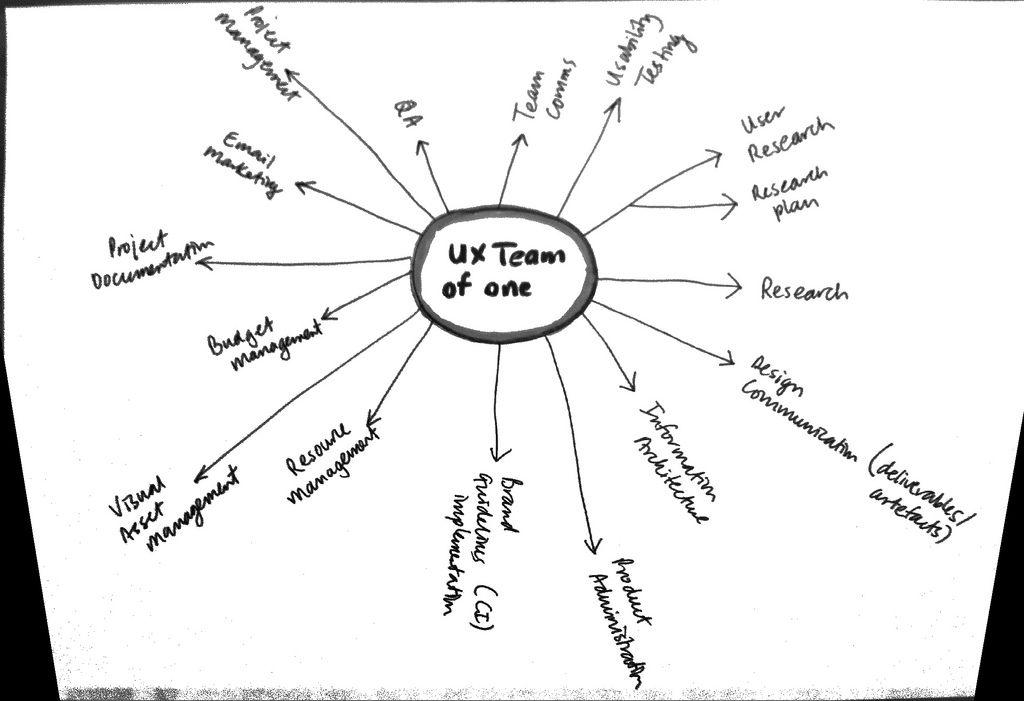
The ideal UX team would have a mix of unicorns, hedgehogs and foxes. Sadly, the unicorn may be hard to find but a well-constructed group of hedgehogs and foxes can be a great force for UX delivery. Foxes can handle the challenges hedgehogs cannot and in return hedgehogs deliver a depth of understanding and mastery that the fox may lack.

The Take Away

UX unicorns, foxes and hedgehogs are simple labels that help us define our place in a UX team. They allow us to speak in a common language on design projects so that we understand our own roles and the roles of others. This can lead to better levels of cooperation and outcomes for the team as a whole.

It is, however, important to remember that these labels should not be used to pigeonhole people. There are foxes with great degrees of mastery in some areas and hedgehogs who can instinctively think out of the box. Even unicorns have their moments of weakness – nobody should be expected to have all the answers all the time.

Resources

You can read Jeremy Wilt’s article on Foxes and Hedgehogs where he goes in-depth to explain the way that they add value to UX teams here: http://www.uxmatters.com/mt/archives/2015/10/unicorns-foxes-and-hedgehogs-why-you-need-diversity-on-your-ux-team.php

You can find out why not every team needs or wants a UX unicorn here: https://medium.com/re-write/we-dont-need-more-designers-who-can-code-b81483d2a0e6#.fi08xzsgi and here http://www.fastcodesign.com/3050675/designers-should-design-coders-should-code

And finally, here's our take on the debate on whether designers should learn to code or not:
/literature/article/should-ux-designers-learn-to-code

Images

Hero Image: Author/Copyright holder: Dmitry Dzhus. Copyright terms and license: CC BY 2.0

Learn More in This Course:

AI for Designers

4 days
57 % booked
View Course

What You Should Read Next

  • Read full article
    What is Interaction Design? - Article hero image
    Interaction Design Foundation logo

    What is Interaction Design?

    Interaction design is an important component within the giant umbrella of user experience (UX) design. In this article, we’ll explain what interaction design is, some useful models of interaction design, as well as briefly describe what an interaction designer usually does.A simple and useful unders

    Social shares
    1.5k
    Published
    Read Article
  • Read full article
    Apple’s Product Development Process – Inside the World’s Greatest Design Organization - Article hero image
    Interaction Design Foundation logo

    Apple’s Product Development Process – Inside the World’s Greatest Design Organization

    Apple’s Product Development Process may be one of the most successful design processes ever implemented. With a valuation that exceeds $2 trillion, there’s a lot that designers can learn from Apple and introduce into their own design environments.Apple is a notoriously secretive business. In Steve J

    Social shares
    1.4k
    Published
    Read Article
  • Read full article
    10 Great Sites for UI Design Patterns - Article hero image
    Interaction Design Foundation logo

    10 Great Sites for UI Design Patterns

    You don’t want to spend your whole life redesigning the wheel, do you? No, neither do we. If you are looking for a design that solves a problem that has been solved with a different application before, then the template for your wheel is probably already out there. This lets you save time and make a

    Social shares
    1.4k
    Published
    Read Article
  • Read full article
    Shneiderman’s Eight Golden Rules Will Help You Design Better Interfaces - Article hero image
    Interaction Design Foundation logo

    Shneiderman’s Eight Golden Rules Will Help You Design Better Interfaces

    Follow Ben Shneiderman’s 'Eight Golden Rules of Interface Design' if you want to design great, productive and frustration-free user interfaces. Apple, Google and Microsoft are among some of the highly successful companies whose well-designed products reflect Shneiderman’s rules. The characteristics

    Social shares
    1.4k
    Published
    Read Article
  • Read full article
    How to Change Your Career from Graphic Design to UX Design - Article hero image
    Interaction Design Foundation logo

    How to Change Your Career from Graphic Design to UX Design

    If there’s an occupation that is 100% linked with the public’s idea of what design is all about, it’s graphic design. From the familiar golden arches of the McDonald’s brand to the typography and colors of movie posters, graphic designers create some of the most iconic and ubiquitous designs around

    Social shares
    1.4k
    Published
    Read Article
  • Read full article
    Repetition, Pattern, and Rhythm - Article hero image
    Interaction Design Foundation logo

    Repetition, Pattern, and Rhythm

    Let’s look at three subjects that, at first glance, may strike you as being incredibly basic and self-explanatory. However, although they may seem like they should need no introduction, we should study them. By understanding these concepts, you’ll be able to apply them more effectively to captivate

    Social shares
    1.4k
    Published
    Read Article
  • Read full article
    The Grid System: Building a Solid Design Layout - Article hero image
    Interaction Design Foundation logo

    The Grid System: Building a Solid Design Layout

    Now that we’ve seen some grids at work in the Rule of Thirds article, let’s examine them a little more deeply. As a concept that deals so fundamentally with the fabric and background of our work as designers, it’s easy to overlook the power of grids and think more about the elements we want to creat

    Social shares
    1.4k
    Published
    Read Article
  • Read full article
    The Principles of Service Design Thinking - Building Better Services - Article hero image
    Interaction Design Foundation logo

    The Principles of Service Design Thinking - Building Better Services

    Service design is all about taking a service and making it meet the user’s and customer’s needs for that service. It can be used to improve an existing service or to create a new service from scratch. In order to adapt to service design, a UX designer will need to understand the basic principles of

    Social shares
    1.4k
    Published
    Read Article
  • Read full article
    The Golden Ratio - Principles of form and layout - Article hero image
    Interaction Design Foundation logo

    The Golden Ratio - Principles of form and layout

    Now, we’re going to look at a subject that comes directly from mathematics and that we can also find all around us – the golden ratio. Don’t worry; we’re not going back into the classroom for long. We will examine what this concept is and exactly how much it is a fundamental part of making designs p

    Social shares
    1.3k
    Published
    Read Article
  • Read full article
    A Simple Introduction to Lean UX - Article hero image
    Interaction Design Foundation logo

    A Simple Introduction to Lean UX

    Lean UX is an incredibly useful technique when working on projects where the Agile development method is used. Traditional UX techniques often don’t work when development is conducted in rapid bursts – there’s not enough time to deliver UX in the same way. Fundamentally Lean UX and other forms of UX

    Social shares
    1.3k
    Published
    Read Article

Top Articles

Top Topic Definitions

Feel Stuck?
Want Better Job Options?

AI is replacing jobs everywhere, yet design jobs are booming with a projected 45% job growth. With design skills, you can create products and services people love. More love means more impact and greater salary potential.

At IxDF, we help you from your first course to your next job, all in one place.

See How Design Skills Turn Into Job Options
Privacy Settings
By using this site, you accept our Cookie Policy and Terms of Use.
Customize
Accept all

Be the One Who Inspires

People remember who shares great ideas.

Share on:

Academic Credibility — On Autopilot

Don't waste time googling citation formats. Just copy, paste and look legit in seconds.

Feel stuck? Want Freedom?

Get one powerful email each week, like 325,421 others.

Learn to design a life you love.

Next email in:
1
day
4
hrs
12
mins
2
secs