Skeuomorphism is dead, long live skeuomorphism

• 8 min read

1,070 Shares

Skeuomorphism has been a very useful concept in design, then it became the most hated concept in design, and then it came back from the dead. Understanding skeuomorphism lets designers help users through learning curves and make decisions as to whether skeuomorphism still serves a purpose today.

Skeuomorphism is where an object in software mimics its real-world counterpart. The “trash can” is, perhaps, the most recognizable skeuomorphic object. Though the good old “save” icon was once skeuomorphic but following the demise of the floppy disc – it no longer bears resemblance to the world of today.

Skeuomorphism began to take shape in the 1980s. One of its earliest proponents was Steve Jobs of Apple. The idea was simple; computer interfaces would be much more intuitive to users if skeuomorphic design were applied.

That trash can let users drag stuff they didn’t want on their computers to an actual bin. You could move files to folders (another real-life equivalent). It meant that we weren’t baffled by all these new facilities because we had something to reference them against in real life.

James Gibson, the environmental psychologist, once suggested that we perceive the world as a set of “affordances”. An affordance is an object that’s shape suggests its use. The most commonly cited affordances would include door handles and push buttons. Skeuomorphism also represents “perceived affordances”. It fits with our natural interpretation of objects but in a digital world.

The Trouble with Skeuomorphism

Skeuomorphism helped a generation through the learning curve of coming to grips with a digital era. But, it also began to hold us back. We became familiar with the concepts and they entered the language and our day-to-day lives but skeuomorphic design led to huge amounts of clutter on the desktop. They brought too many useless details to our computers which we no longer needed.

There’s a whole generation out there now that has never known a world without computing. The visual metaphor isn’t necessary any more.
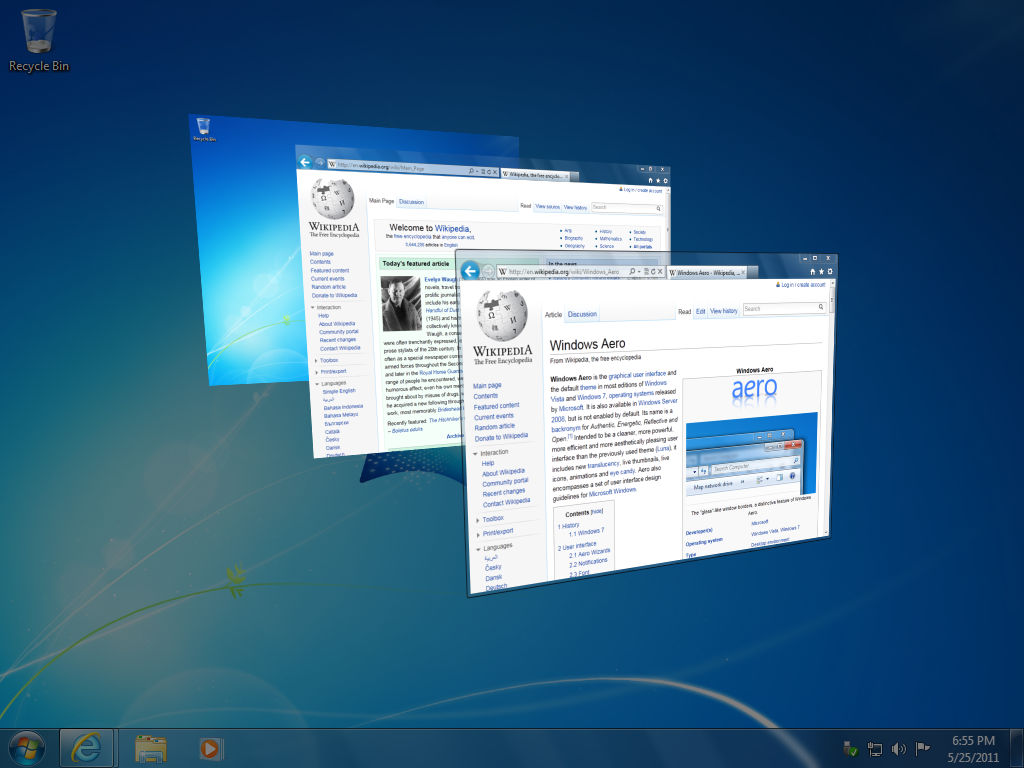
Author/Copyright holder: Lifemaestro. Copyright terms and licence: CC BY-SA 3.0

The Rise of Flat Design

In 2007, Forbes magazine announced the death of skeuomorphism. Apple (to be followed quickly by Google) had settled on a new form of design – flat design

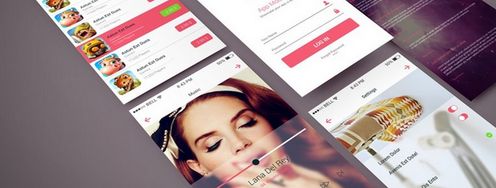
Flat design mandated that graphic user interfaces (GUIs) should be freed from clutter. There was no need for bevelled edges, gradients, reflections, and skeuomorphism. The digital interface should be exploited for its own strengths.

Visual clarity was put at the forefront of design. If you use Windows 8, for example, you’ll find that the start button brings you to a shining example of flat design. All those icons are gone and they’ve been replaced with tiles – tiles that bring you actual data in both written and graphical format – they can deal with greater levels of complexity in the interface without compromising the user experience

Of course, Windows 8 was not universally loved but that may have something to do with the transition between the old and new being so dramatic. It might have been easier to inch away from skeuomorphism for Microsoft rather than to run away from it.

iOS 7 was Apple’s leap into the world of flat design and was, from a consumer acceptance perspective, more successful than Microsoft’s. This may have something to do with Apple’s trendy, design audience compared to Microsoft’s more staid and older demographic. However, the minimalist approach of iOS 7 was hailed as a work of genius. Skeuomorphism was declared dead on the spot – the new metaphorical, rich flat design was the way forward.

We’d argue that skeuomorphism and flat design aren’t as far apart as they appear. A camera icon, for example, still appears on the camera functionality in iOS 7. It may be a slightly less realistic camera icon than would have been used in the past but flat design doesn’t so much replace skeuomorphism as mute it.
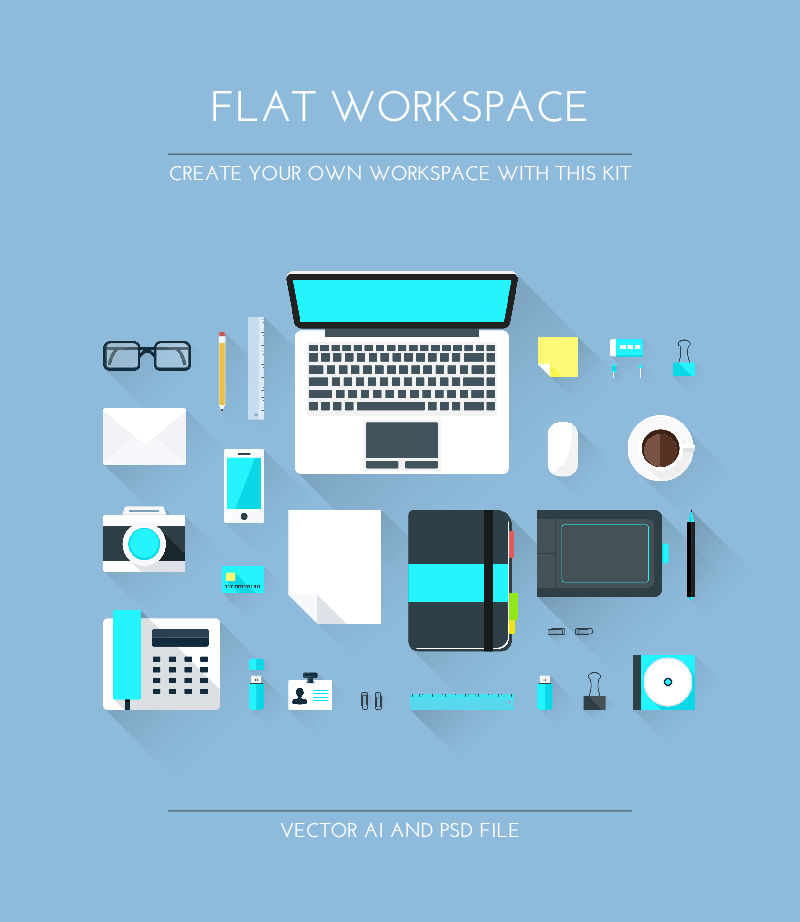
Author/Copyright holder: GraphBerry. Copyright terms and licence: CC BY-SA 3.0

The Return of Skeuomorphism

Those that declared the death of skeuomorphism got carried away. It might have seemed logical at the time – smartphones and tablets were after all only extension of the computing frameworks we already knew. But then something changed – the smart watch arrived on the market.
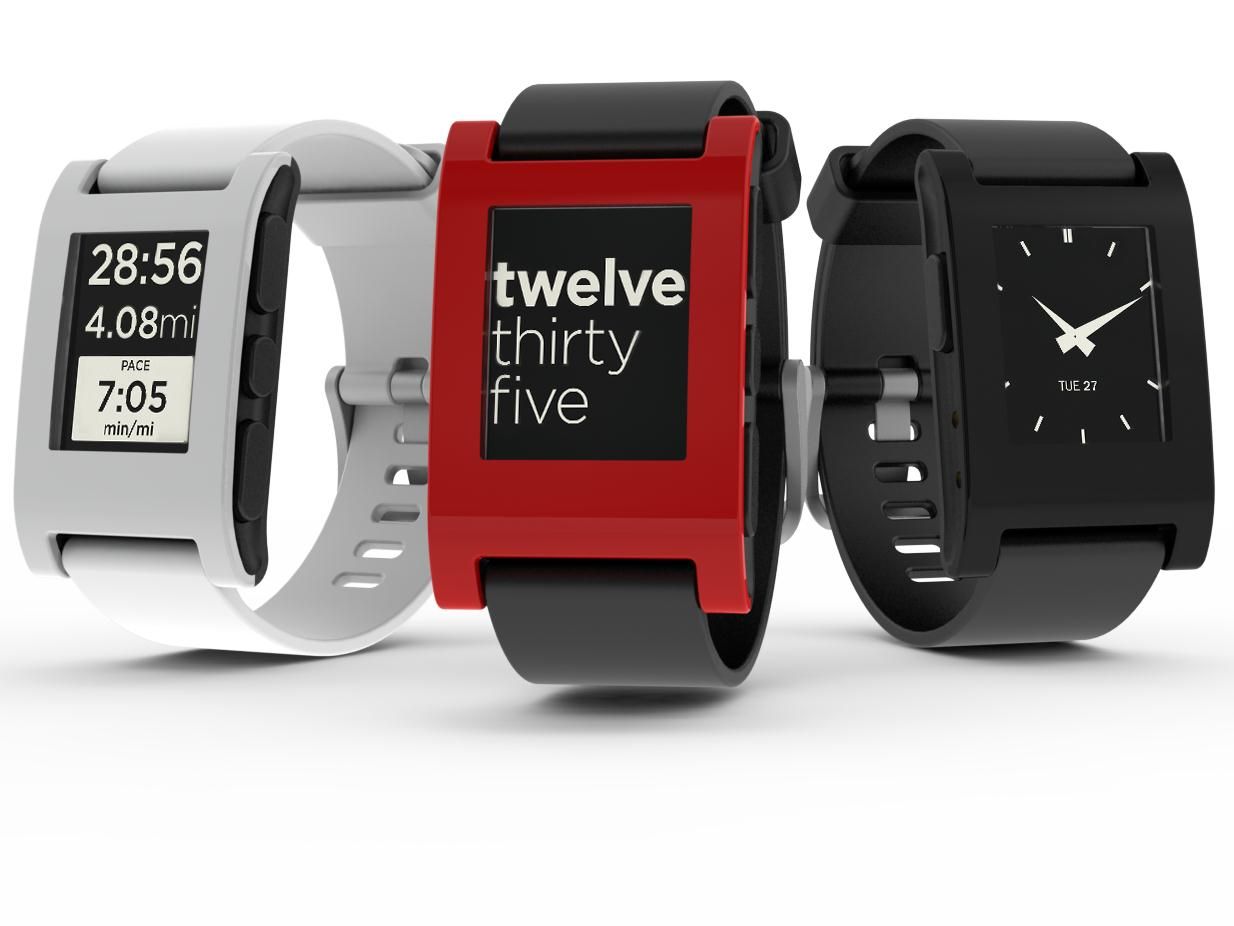

Author/Copyright holder: Pebble Technology. Copyright terms and licence: CC BY-SA 1.0

Watches have not been a traditional part of the computing line up. In fact, the digital watch has always been regarded with a certain scepticism (or even disdain) among the watch wearing community at large. It may do the same thing as an analogue watch, it may even do it as well as an analogue watch but for the majority of watch wearers – it doesn’t do it as prettily.

Phones, tablets, desktops, laptops can make a fashion statement but for the majority of the time; they aren’t part of our day-to-day fashion decisions. The smartwatch is different.

To encourage people to use the smartwatch, manufacturers need to convince them to give up their old watches. It seemed unlikely that Rolex, Tag Heuer, Breitling, Patek Phillipe, etc. would be shaking in their shoes if the smartwatch experience was a digital one.

Skeuomorphism was embraced by canny smartwatch manufactures once again. The faces of smartwatches are designed to mimic that analogue watch experience. So that when the user goes to examine the time – the real world and the digital are as one.

In fact, it can be argued that the smartwatch itself is skeuomorphic. It’s not a watch. It’s a computer. But it’s a computer that you wear on your wrist. The current designs which all mimic the wrist watch may be a gentle way to ease consumers into a transition before a new form of iconic design arises for future generations of smartwatches.

The Take Away

Design trends come and go. Skeuomorphism can be very useful. It can also be taken too far. Flat design came about in response to the over use of skeuomorphism. The current trend in smartwatches is a return to it – but for how long?

References

Check out our fantastic IxDF course, Affordances: Designing Intuitive User Interfaces.

The BBC takes a long look at the history of skeuomorphism in devices.

Kelsey Campbell-Dollaghan argues the case for the permanency of skeuomorphism in design: Skeuomorphism Will Never Go Away, And That's a Good Thing

The Next Web examines the contrast and debate over flat design vs. skeuomorphism.

Forbes’ premature celebration of the end of skeuomorphism can be read and enjoyed by the curious learner.

Fast Company examines the rise of skeuomorphism on the wrist.

Hero Image: Author/Copyright holder: Klaus Göttling. Copyright terms and licence: CC BY-SA 3.0

Learn More in This Course:

AI for Designers

11 days
12 % booked
View Course

What You Should Read Next

  • Read full article
    10 Great Sites for UI Design Patterns - Article hero image
    Interaction Design Foundation logo

    10 Great Sites for UI Design Patterns

    You don’t want to spend your whole life redesigning the wheel, do you? No, neither do we. If you are looking for a design that solves a problem that has been solved with a different application before, then the template for your wheel is probably already out there. This lets you save time and make a

    Social shares
    1.4k
    Published
    Read Article
  • Read full article
    Shneiderman’s Eight Golden Rules Will Help You Design Better Interfaces - Article hero image
    Interaction Design Foundation logo

    Shneiderman’s Eight Golden Rules Will Help You Design Better Interfaces

    Follow Ben Shneiderman’s 'Eight Golden Rules of Interface Design' if you want to design great, productive and frustration-free user interfaces. Apple, Google and Microsoft are among some of the highly successful companies whose well-designed products reflect Shneiderman’s rules. The characteristics

    Social shares
    1.4k
    Published
    Read Article
  • Read full article
    User Interface Design Guidelines: 10 Rules of Thumb - Article hero image
    Interaction Design Foundation logo

    User Interface Design Guidelines: 10 Rules of Thumb

    Learn to design with your user’s needs and expectations in mind by applying Jakob Nielsen and Rolf Molich’s Ten User Interface Guidelines. These heuristics have been reflected in many of the products designed by some of the most successful companies in the world such as Apple, Google, and Adobe. Fur

    Social shares
    1.4k
    Published
    Read Article
  • Read full article
    Repetition, Pattern, and Rhythm - Article hero image
    Interaction Design Foundation logo

    Repetition, Pattern, and Rhythm

    Let’s look at three subjects that, at first glance, may strike you as being incredibly basic and self-explanatory. However, although they may seem like they should need no introduction, we should study them. By understanding these concepts, you’ll be able to apply them more effectively to captivate

    Social shares
    1.4k
    Published
    Read Article
  • Read full article
    The Grid System: Building a Solid Design Layout - Article hero image
    Interaction Design Foundation logo

    The Grid System: Building a Solid Design Layout

    Now that we’ve seen some grids at work in the Rule of Thirds article, let’s examine them a little more deeply. As a concept that deals so fundamentally with the fabric and background of our work as designers, it’s easy to overlook the power of grids and think more about the elements we want to creat

    Social shares
    1.4k
    Published
    Read Article
  • Read full article
    The Golden Ratio - Principles of form and layout - Article hero image
    Interaction Design Foundation logo

    The Golden Ratio - Principles of form and layout

    Now, we’re going to look at a subject that comes directly from mathematics and that we can also find all around us – the golden ratio. Don’t worry; we’re not going back into the classroom for long. We will examine what this concept is and exactly how much it is a fundamental part of making designs p

    Social shares
    1.3k
    Published
    Read Article
  • Read full article
    10 Free-to-Use Wireframing Tools for UX Designers in 2026 - Article hero image
    Interaction Design Foundation logo

    10 Free-to-Use Wireframing Tools for UX Designers in 2026

    Wireframes help you quickly ideate and test your ideas. While paper wireframes are the fastest to create, digital wireframes look more polished and presentable. If you are looking for a pocket-friendly wireframing tool, look no further.Whether you prefer browser-based apps or offline desktop tools,

    Social shares
    1.3k
    Published
    Read Article
  • Read full article
    Principle of Consistency and Standards in User Interface Design - Article hero image
    Interaction Design Foundation logo

    Principle of Consistency and Standards in User Interface Design

    Learn to design with consistency and standards in mind and understand the reasons why they’re important to incorporate them into your work. Derived from Jakob Nielsen and Rolf Molich’s Ten User Interface (UI) Guidelines, ‘Consistency and Standards’ are evident in many of the widely-used produc

    Social shares
    1.3k
    Published
    Read Article
  • Read full article
    Adaptive vs. Responsive Design - Article hero image
    Interaction Design Foundation logo

    Adaptive vs. Responsive Design

    The differences between responsive and adaptive design approaches spotlight important options for us as web and app designers. Choosing with insight can empower you to plan and execute your designs with better aim, purpose and results.With the pervasiveness and diversity of mobile devices, as design

    Social shares
    1.3k
    Published
    Read Article
  • Read full article
    Visual Hierarchy: Organizing content to follow natural eye movement patterns - Article hero image
    Interaction Design Foundation logo

    Visual Hierarchy: Organizing content to follow natural eye movement patterns

    Let’s look at a topic that deals with, oddly enough, how we look at designs. Once you understand how the human eye processes these, you’ll find yourself better able to arrange your elements more effectively.Content in any digital page layout will follow a specific hierarchy. Headers appear above bod

    Social shares
    1.3k
    Published
    Read Article

Top Articles

Top Topic Definitions

Feel Stuck?
Want Better Job Options?

AI is replacing jobs everywhere, yet design jobs are booming with a projected 45% job growth. With design skills, you can create products and services people love. More love means more impact and greater salary potential.

At IxDF, we help you from your first course to your next job, all in one place.

See How Design Skills Turn Into Job Options
Privacy Settings
By using this site, you accept our Cookie Policy and Terms of Use.
Customize
Accept all

Be the One Who Inspires

People remember who shares great ideas.

Share on:

Academic Credibility — On Autopilot

Don't waste time googling citation formats. Just copy, paste and look legit in seconds.

Feel Stuck? Want Freedom?

Join 326,039+ designers who get one powerful email each week. Learn to design a life you love.

Next email in
1
day
4
hrs
2
mins
34
secs

Free forever. No spam. Unsubscribe anytime.