Problems Associated with Integrating Agile Methods in UCD

• 7 min read

523 Shares

In 2003, Jakob Nielsen recommended that "development projects should spend 10% of their budget on usability". Although many countries are now making tentative steps out of the recession, the effect on tech budgets has put an even greater squeeze on the availability of funds for heavyweight usability testing. This has, no doubt, given considerable impetus to the use of lightweight methods in usability testing and the movement towards agile usability engineering.
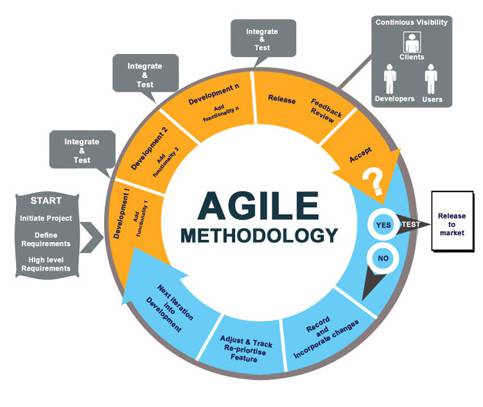


Unfortunately, with every attempt to save money and time, certain aspects of the process and component processes are sacrificed. Miller and Sy (2009), in Agile user experience SIG, outlined the major problems associated Agile UCD, which are:

  • Not enough design time - In agile UCD the emphasis is on speed, which can see developers and usability engineers pushed for time. The pressures on time can move the focus from quality onto the timescale; producing a predictable knock-on effect for each iteration of the product.

  • Each iteration or sprint is too short - This can sometimes mean usability testing is aborted entirely for a particular sprint. In addition, users and customers may not be consulted, observed or tested, which means there are potential ramifications for all proceeding iterations. Perhaps worst of all, there might not be enough time to complete a particular stage, prototype, or the product full stop.

  • Insufficient user feedback - Connected to the problem above; when there is so much pressure on each stage to be completed within a certain timeframe, user involvement is typically seen as the most easily sacrificed part of the process. So, on occasion, developers may be forced to make improvements to a product with very little feedback to guide their adjustments. This means that designers will guess and assume the role of their users when assessing the current design, which is fraught with problems in itself and leads us to the next problem...

  • Non-informed decisions dominate - If the iterative process is driven by 'best-guesses', rather than progressive user feedback, the UCD part of the project is sorely lacking. As a workaround, a usability engineer may be assigned to each sprint or part of the process to act as the 'customer' and guide decision-making.

  • UX part-time for one or more agile team - This means that the overall project becomes similar to the game Exquisite Corpse (cadavre exquis), where each team is working blind or with very little information from the preceding phase or from another team working concurrently.

  • No sprint/cycle planning - A lack of planning can set the project off on the wrong foot, and it is very difficult to wrestle things back. It can also result in an endless backlog of unimplemented features and persistent bugs. Again, this may be counteracted by involving a UX designer/engineer/specialist at each stage.

  • Ignoring User Feedback - Time, budget, stubbornness, suspicion of test users, and a disregard for the benefits of UCD may result in one or more teams ignoring user feedback entirely, which leaves the product much like the original prototype or based on the needs perceived by the various teams.

  • Too local, rather than global focus - Everyone should be reading from the same hymn sheet. Unless everyone is driving toward a common goal, with an eye on the bigger picture, the end result can seem confused and inconsistent.

  • Lack of communication - Unless members of each team discuss their ideas, express their feelings, and provide possible solutions, the process suffers. Each individual team should then liaise with and pass on as much information as possible, to inform and support one another. Unless teams communicate, important factors and problem solutions may be overlooked.

  • Team members in different locations - A lack of proximity can cause communication problems. Additionally, it can upset team dynamics and limit the process of sharing ideas and building positive relations.

  • Dependency issues - The process can be rocky if the team(s) have to consult or involve non-agile teams or members, such as lawyers and accountants.


As you can see, marrying UCD and agile methods is not always a smooth process and there are lots of things to consider when taking such an approach.
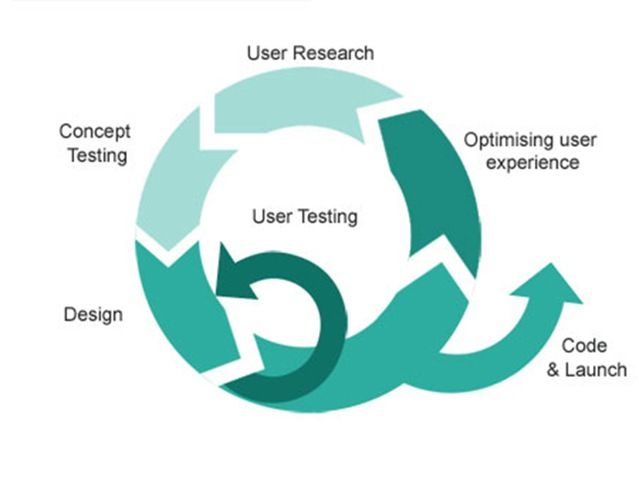


However, as agile UCD usually involves a relatively large number of people from various departments, many of these problems will be out of your hands. To avoid most of these problems, try to sell the benefits of this approach before the process begins, so everyone is pointed in the same direction.


References & Where to Learn More

Course: Interaction Design for Usability

da Silva, T. S., Martin, A., Maurer, F., and Silveira, M User-Centred Design and Agile Methods: A Systematic Review

Denning, S. The Case Against Agile: Ten Perennial Management Objections

Moczar, L. Why Agile Isn't Working: Bringing Common Sense to Agile Principles

Sonmez, J. 5 Things that will make your agile development project fail

Images: Header, Agile Methodology, Agile Process, Comic

Header Image: Author/Copyright holder: Unknown. Copyright terms and licence: Unknown. Img

Learn More in This Course:

AI for Designers

8 days
19 % booked
View Course

What You Should Read Next

  • Read full article
    Why Care about Statistical Significance? - Article hero image
    Interaction Design Foundation logo

    Why Care about Statistical Significance?

    The categorical data depicts the success and failure rate of the low-fidelity wireframe above. There is not a large enough difference between the two to determine if the designs were successful.There is an element of error involved in measuring anything. So, when we want to compare measurements, how

    Social shares
    432
    Published
    Read Article
  • Read full article
    Web Fonts: Definition and 10 Recommendations - Article hero image
    Interaction Design Foundation logo

    Web Fonts: Definition and 10 Recommendations

    Web fonts bring digital content to life. They enhance readability, set the tone, and ensure consistency across various platforms—all vital ingredients. When you understand web fonts and their impact, it can help you with effective website creation—and greatly so. We’ll provide a comprehensive overvi

    Social shares
    781
    Published
    Read Article
  • Read full article
    How to Screen Research Participants - Article hero image
    Interaction Design Foundation logo

    How to Screen Research Participants

    Finding the right participants is crucial for gathering user research. We usually need to do research with participants having a particular set of needs or experience. In this short video, you will find out about the basic need for screening and how we make sure that we have suitably qualified parti

    Social shares
    450
    Published
    Read Article
  • Read full article
    Pitfalls in Recruiting Participants for User Research - Article hero image
    Interaction Design Foundation logo

    Pitfalls in Recruiting Participants for User Research

    The level of participant engagement is an important part of the user research results. Our results are dependent on proper engagement with our participants. In this video we look at some of the issues around participant recruitment and hear practical examples that arose in a large online study.[[vid

    Social shares
    419
    Published
    Read Article
  • Read full article
    How to Fit Quantitative Research into the Project Lifecycle - Article hero image
    Interaction Design Foundation logo

    How to Fit Quantitative Research into the Project Lifecycle

    Quantitative research methods fit into the project lifecycle at different stages of the process.In this video, we see where different quantitative research methods fit into a typical project lifecycle. Bear in mind that even with an iterative process such as Agile, the short cycles still address dif

    Social shares
    510
    Published
    Read Article
  • Read full article
    How to Resolve Conflicts Between Design Thinking and Marketing - Article hero image
    Interaction Design Foundation logo

    How to Resolve Conflicts Between Design Thinking and Marketing

    In the past, designers often reported to marketing managers and were neither expected nor allowed to make business decisions. When traditionally-structured companies transition to a design-driven mindset, there can be friction between the marketing and design teams. Let’s take a closer look at this

    Social shares
    682
    Published
    Read Article
  • Read full article
    Stop the Generic Portfolio Trap! Design a Stand-Out Portfolio for Your UX/UI Niche: User Research - Article hero image
    Interaction Design Foundation logo

    Stop the Generic Portfolio Trap! Design a Stand-Out Portfolio for Your UX/UI Niche: User Research

    User research is indispensable—and without it, well... UX design is guesswork. When you’re a user researcher, you know this well—but it can be hard to communicate your work in a way that grabs the viewer and holds their attention. And that’s what a portfolio is all about—grabbing the attention of yo

    Social shares
    383
    Published
    Read Article
  • Read full article
    Top Service Blueprint Templates - Article hero image
    Interaction Design Foundation logo

    Top Service Blueprint Templates

    Service blueprint tools are vital for effective customer experience design—and for designers to make experiences that are exceptional. Here, we’ll discuss why these tools are so important. What’s more, we’ll explore templates and practical resources to create high-quality, efficient service blueprin

    Social shares
    638
    Published
    Read Article
  • Read full article
    How to Write Research Questions that Lead to Confident Design - Article hero image
    Interaction Design Foundation logo

    How to Write Research Questions that Lead to Confident Design

    Designing with Data provides an extensive background to A/B testing.As with all other research methods, we need to start with a research question. A/B testing concerns itself with changes in user behavior, meaning that our questions need to be centered on measurable goals. In many cases, these will

    Social shares
    450
    Published
    Read Article
  • Read full article
    Getting Started - Article hero image
    Interaction Design Foundation logo

    Getting Started

    We start our introduction to A/B and multivariate testing (MVT) by looking at their basic principles and their differences. Note that the video mentions Google Optimize, which has been withdrawn. Google Firebase can be used for mobile platforms. Third-party solutions are needed for A/B testing on th

    Social shares
    225
    Published
    Read Article

Top Articles

Top Topic Definitions

Feel Stuck?
Want Better Job Options?

AI is replacing jobs everywhere, yet design jobs are booming with a projected 45% job growth. With design skills, you can create products and services people love. More love means more impact and greater salary potential.

At IxDF, we help you from your first course to your next job, all in one place.

See How Design Skills Turn Into Job Options
Privacy Settings
By using this site, you accept our Cookie Policy and Terms of Use.
Customize
Accept all

Be the One Who Inspires

People remember who shares great ideas.

Share on:

Academic Credibility — On Autopilot

Don't waste time googling citation formats. Just copy, paste and look legit in seconds.

Feel stuck? Want Freedom?

Get one powerful email each week, like 325,742 others.

Learn to design a life you love.

Next email in:
5
days
10
hrs
17
mins
3
secs