MatchDog Build Your Portfolio Project: Game Theory

by Daniel Rosenberg • 6 min read

481 Shares

There are many ways that game theory could be applied in the MatchDog supplemental project. We also recommend that you defer trying to introduce game theory while building the first iteration of your interactive prototype. Introducing game theory is both subtle and difficult. It is also not appropriate until the underlying design foundation is solid.

Project Brief

Review the full project brief for MatchDog again, now with an eye to what you want information which you could manipulate and possible system owner priority goals to intentionally steer users towards.

You may draw ideas from the examples in the book regarding MatchDog’s utilization of game theory. The book intentionally scaffolds this project step with examples and discussion of two specific object-action pairs that would be both logical and ethical to gamify. These can be referenced in tables 29 and 30, which are repeated for your convenience below. However, you are the designer, and the decision to intentionally use game theory (or not) is yours alone. If you choose to deploy game theory, then you may determine that, based on the business priorities you defined in the second step of this exercise sequence, the same or alternate object-action pairs will be your target for user behavioral manipulation.

Goal of This Exercise

The goal of this step is first to decide where it would be both ethical and appropriate to apply game theory in support of the MatchDog mission. Then, it’s to determine the mechanics, motivators and technical game design that instantiate those decisions inside your UX prototype.

Activities You’ll Perform in This Exercise

You will take the following steps in this exercise:

  • Decide what object-action pairs (tasks) are appropriate to gamify.
    • Upgrade your conceptual model grammar to reflect these choices.
  • Choose the appropriate behavioral motivators for those tasks and the relevant personas.
  • Identify the game mechanics most suitable to targeting the motivators you have selected.
  • Specify a complete game design including the following:
    • Economy
    • Rules
    • Time boundaries
    • Engagement loop process
    • Cheating disincentives
  • Augment your existing UX prototype with the additional gamified design patterns.

Equipment You’ll Need in This Exercise

  • Paper and pencil to sketch with or a whiteboard
  • A computer with your chosen prototyping software and your existing working MatchDog prototype that covers the basic functionality

Apply Game Theory to Your MatchDog Prototype

Tables 29 and 30 introduce two object-action pairs where it would be both rational and ethical to apply gamification for MatchDog. There are also places where Captology techniques could be applicable. A Gameful flavor IxD alternative is probably not a valid choice, because getting the dog is its own reward.
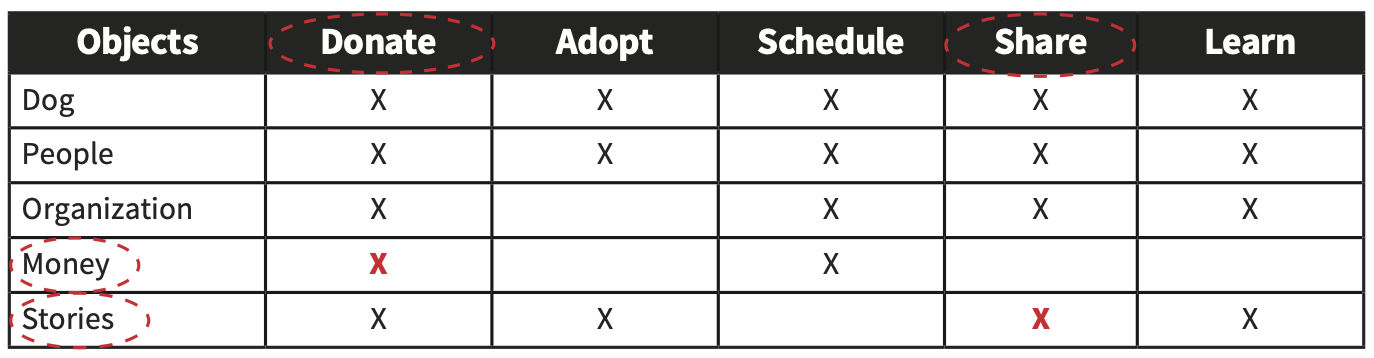
Table 29 from UX Magic: MatchDog conceptual model gamification target actions
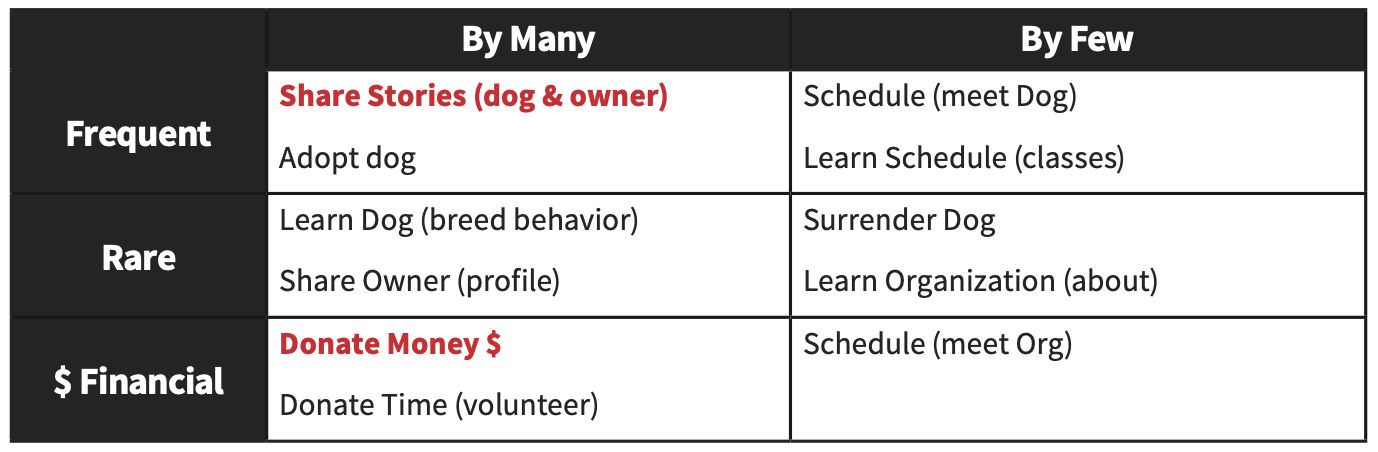
Table 30 from UX Magic: Prioritization matrix adjusted for gamification goals

You could choose the donate and posting tasks or others that align with your specified business owner goals. Next, go back into your completed MatchDog prototype and create alternative/enhanced designs at the grammar, visualization and flow levels that implement the motivators and mechanics for your desired behavioral manipulations.

One reason we suggest doing this as an alternative design is that it makes a great portfolio piece to have one regular and one “gamed” design alternative to present side by side. Most people you will be presenting to at a job interview or consulting pitch will not be familiar with game theory execution. They might pretend to be, but generally 99.8% of them will be clueless. If you present contrasting IxD’s, it will highlight your expertise and make it easier to explain your game design. Your presentation will become a before-and-after discussion, not a business value discussion with non-believers. The contrasting versions will minimize audience comments that confuse usability with the intentional behavioral guidance you have introduced.

Wrap up This Exercise

You have now pushed your MatchDog IxD to the orbital zone of applied game theory. The air gets thin up there, and you have had to consider both ethical and practical business design decisions. You likely have noticed that the cumulative complexity of all these game theory issues and options is actually bigger than the design of the core MatchDog experience itself. This is also a good time to reflect on how you test your game design to make sure that it is truly beneficial to the organization’s mission and does not backfire. The dogs are depending on you to get this right and find them good homes.

Author / Copyright holder: Teo Yu Siang and the Interaction Design Foundation. Copyright terms and license: CC BY-NC-SA 3.0

Learn More in This Course:

AI for Designers

9 days
19 % booked
View Course

What You Should Read Next

  • Read full article
    Why Care about Statistical Significance? - Article hero image
    Interaction Design Foundation logo

    Why Care about Statistical Significance?

    The categorical data depicts the success and failure rate of the low-fidelity wireframe above. There is not a large enough difference between the two to determine if the designs were successful.There is an element of error involved in measuring anything. So, when we want to compare measurements, how

    Social shares
    432
    Published
    Read Article
  • Read full article
    Web Fonts: Definition and 10 Recommendations - Article hero image
    Interaction Design Foundation logo

    Web Fonts: Definition and 10 Recommendations

    Web fonts bring digital content to life. They enhance readability, set the tone, and ensure consistency across various platforms—all vital ingredients. When you understand web fonts and their impact, it can help you with effective website creation—and greatly so. We’ll provide a comprehensive overvi

    Social shares
    781
    Published
    Read Article
  • Read full article
    How to Screen Research Participants - Article hero image
    Interaction Design Foundation logo

    How to Screen Research Participants

    Finding the right participants is crucial for gathering user research. We usually need to do research with participants having a particular set of needs or experience. In this short video, you will find out about the basic need for screening and how we make sure that we have suitably qualified parti

    Social shares
    450
    Published
    Read Article
  • Read full article
    Pitfalls in Recruiting Participants for User Research - Article hero image
    Interaction Design Foundation logo

    Pitfalls in Recruiting Participants for User Research

    The level of participant engagement is an important part of the user research results. Our results are dependent on proper engagement with our participants. In this video we look at some of the issues around participant recruitment and hear practical examples that arose in a large online study.[[vid

    Social shares
    419
    Published
    Read Article
  • Read full article
    How to Fit Quantitative Research into the Project Lifecycle - Article hero image
    Interaction Design Foundation logo

    How to Fit Quantitative Research into the Project Lifecycle

    Quantitative research methods fit into the project lifecycle at different stages of the process.In this video, we see where different quantitative research methods fit into a typical project lifecycle. Bear in mind that even with an iterative process such as Agile, the short cycles still address dif

    Social shares
    510
    Published
    Read Article
  • Read full article
    How to Resolve Conflicts Between Design Thinking and Marketing - Article hero image
    Interaction Design Foundation logo

    How to Resolve Conflicts Between Design Thinking and Marketing

    In the past, designers often reported to marketing managers and were neither expected nor allowed to make business decisions. When traditionally-structured companies transition to a design-driven mindset, there can be friction between the marketing and design teams. Let’s take a closer look at this

    Social shares
    682
    Published
    Read Article
  • Read full article
    Stop the Generic Portfolio Trap! Design a Stand-Out Portfolio for Your UX/UI Niche: User Research - Article hero image
    Interaction Design Foundation logo

    Stop the Generic Portfolio Trap! Design a Stand-Out Portfolio for Your UX/UI Niche: User Research

    User research is indispensable—and without it, well... UX design is guesswork. When you’re a user researcher, you know this well—but it can be hard to communicate your work in a way that grabs the viewer and holds their attention. And that’s what a portfolio is all about—grabbing the attention of yo

    Social shares
    383
    Published
    Read Article
  • Read full article
    Top Service Blueprint Templates - Article hero image
    Interaction Design Foundation logo

    Top Service Blueprint Templates

    Service blueprint tools are vital for effective customer experience design—and for designers to make experiences that are exceptional. Here, we’ll discuss why these tools are so important. What’s more, we’ll explore templates and practical resources to create high-quality, efficient service blueprin

    Social shares
    638
    Published
    Read Article
  • Read full article
    How to Write Research Questions that Lead to Confident Design - Article hero image
    Interaction Design Foundation logo

    How to Write Research Questions that Lead to Confident Design

    Designing with Data provides an extensive background to A/B testing.As with all other research methods, we need to start with a research question. A/B testing concerns itself with changes in user behavior, meaning that our questions need to be centered on measurable goals. In many cases, these will

    Social shares
    450
    Published
    Read Article
  • Read full article
    Getting Started - Article hero image
    Interaction Design Foundation logo

    Getting Started

    We start our introduction to A/B and multivariate testing (MVT) by looking at their basic principles and their differences. Note that the video mentions Google Optimize, which has been withdrawn. Google Firebase can be used for mobile platforms. Third-party solutions are needed for A/B testing on th

    Social shares
    225
    Published
    Read Article

Top Articles

Top Topic Definitions

Feel Stuck?
Want Better Job Options?

AI is replacing jobs everywhere, yet design jobs are booming with a projected 45% job growth. With design skills, you can create products and services people love. More love means more impact and greater salary potential.

At IxDF, we help you from your first course to your next job, all in one place.

See How Design Skills Turn Into Job Options
Privacy Settings
By using this site, you accept our Cookie Policy and Terms of Use.
Customize
Accept all

Be the One Who Inspires

People remember who shares great ideas.

Share on:

Academic Credibility — On Autopilot

Don't waste time googling citation formats. Just copy, paste and look legit in seconds.

Feel stuck? Want Freedom?

Get one powerful email each week, like 325,753 others.

Learn to design a life you love.

Next email in:
5
days
15
hrs
58
mins
57
secs