How to Approach Prioritized Advertisements

• 6 min read

449 Shares

Large companies such as Google and Facebook are experts at showing the right advertisements to the right people. At first glance, this may seem like a pretty nifty feature that actually helps you avoid ads that have nothing to do with who you are or want to be. But it’s actually a dark pattern designed to seduce you into buying more things than you intended. Let’s have a look at how they do it, so you can be more mindful of your users and their real needs when you design for them.

Advertising is a necessary evil, which means designers are constantly trying to find ways that force you into viewing and clicking on links to the sponsors' and advertisers' links. For example, when users sign into their Google mail accounts, what greets them when they choose the 'promotions' option are sponsored advertisements. These are promotions, ones targeting you.
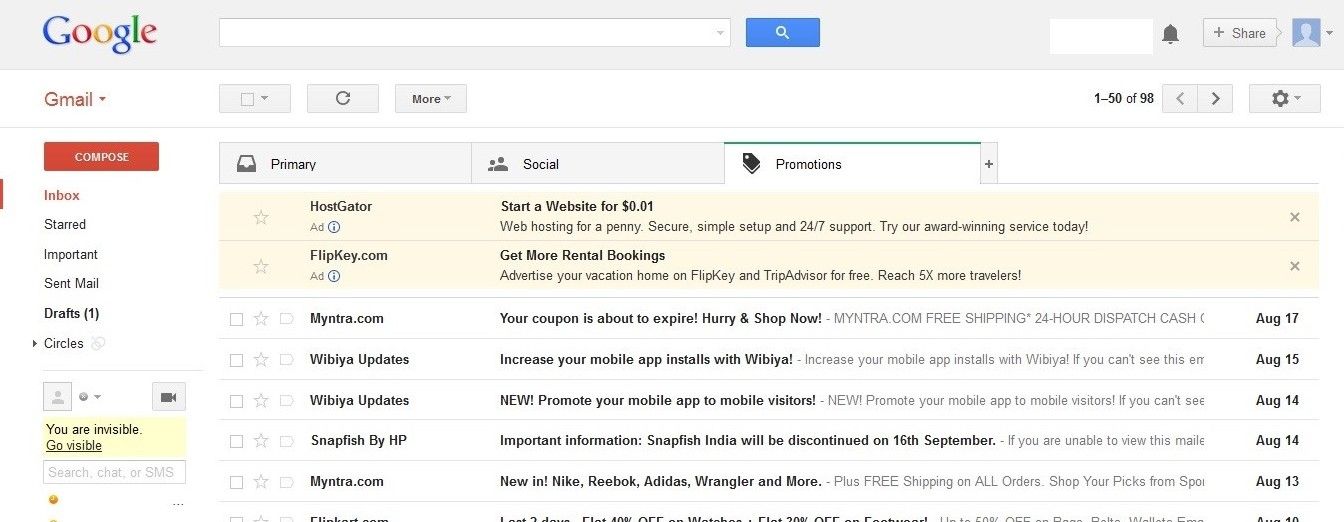
Gmail uses a special Promotions tab to sort out the email messages that have a commercial message. Within this tab, in a screenshot from the 2010s, Google prioritizes advertisements that it adds itself, based on your browsing history. Although indicated with a different background color and the word ‘Ad’, it is an instance of a dark pattern, as the messages serve Google’s own purposes rather than yours.

© Google, Fair Use

Why is this classed as a dark pattern?

Google are prioritizing the contents of your email account on the basis of what serves it (Google) best. Google collects information from your email messages to be able to make its advertisements more and more relevant to the interests you pursue and the activities you undertake. For example, you might be planning a short break in Europe and—within hours—you will receive a sponsored advertisement from a vacation-planning website. Google might give you the impression that providing ever-more relevant advertisements benefits you. By using information from the sponsored links you reject and those you select, Google can improve the economy of advertisements to successful conversions (i.e., websites you visit and make purchases on), which increases its own advertising revenue.

"We Know Where You Are. We Know Where You've Been. We Can More Or Less Know What You're Thinking About."
—Eric Schmidt, former Google CEO
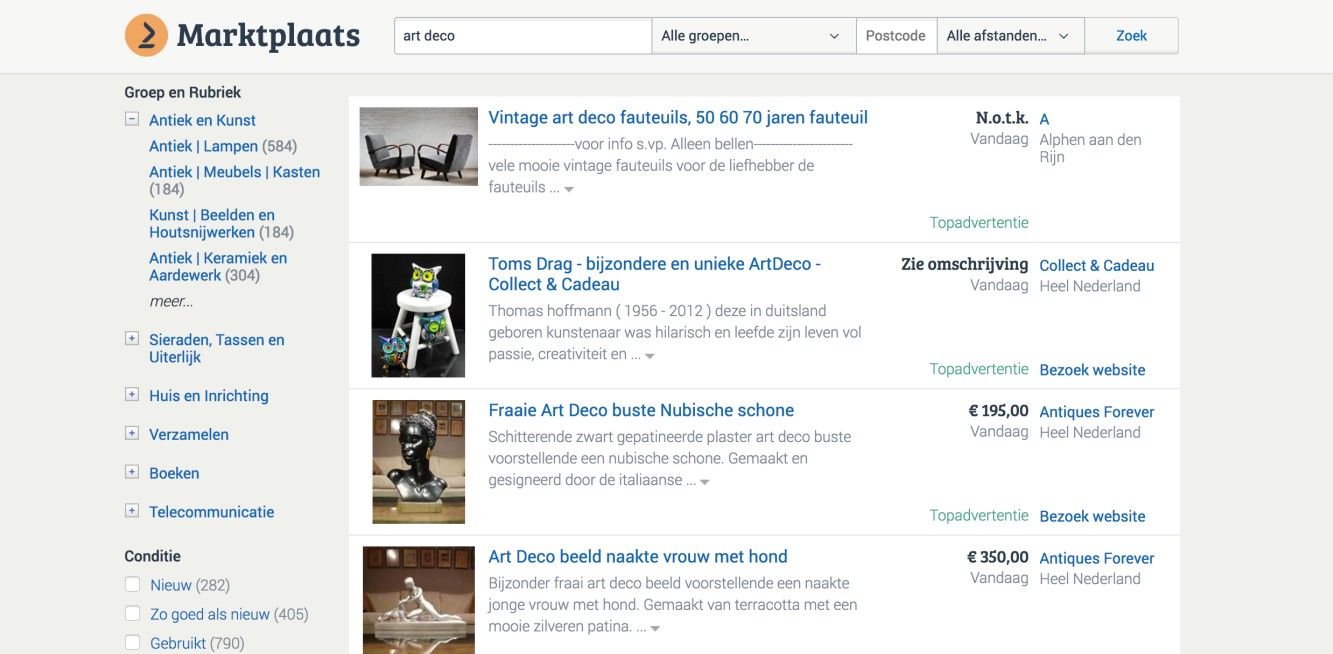
The Dutch Marktplaats (a website where people can sell their personal stuff to others) boldly implemented the prioritized advertisements design pattern—in this years-old screenshot—by placing commercial providers at the top of the list of search results, leaving any private offerings out of first sight. The advertisements can be recognized by the green label ‘Topadvertentie’.

© Marktplaats, Fair Use

In slight defense of Google, the sponsored advertisements here are distinguished from the other promotional emails, with the addition of the word 'Ads' under each message and some slight color difference (as you can see in the image at the top). However, the designers also switched the delete/close function to the right-hand side—unlike all other emails, which have a checkbox on the left-hand side—thus circumventing the users’ automatic approach to deleting messages and making their job harder. Therefore, Google adapted the sponsored advertisements so they are eye-catching and encourage the user to engage with the display consciously in order to work out how to clear the sponsored advertisements. 
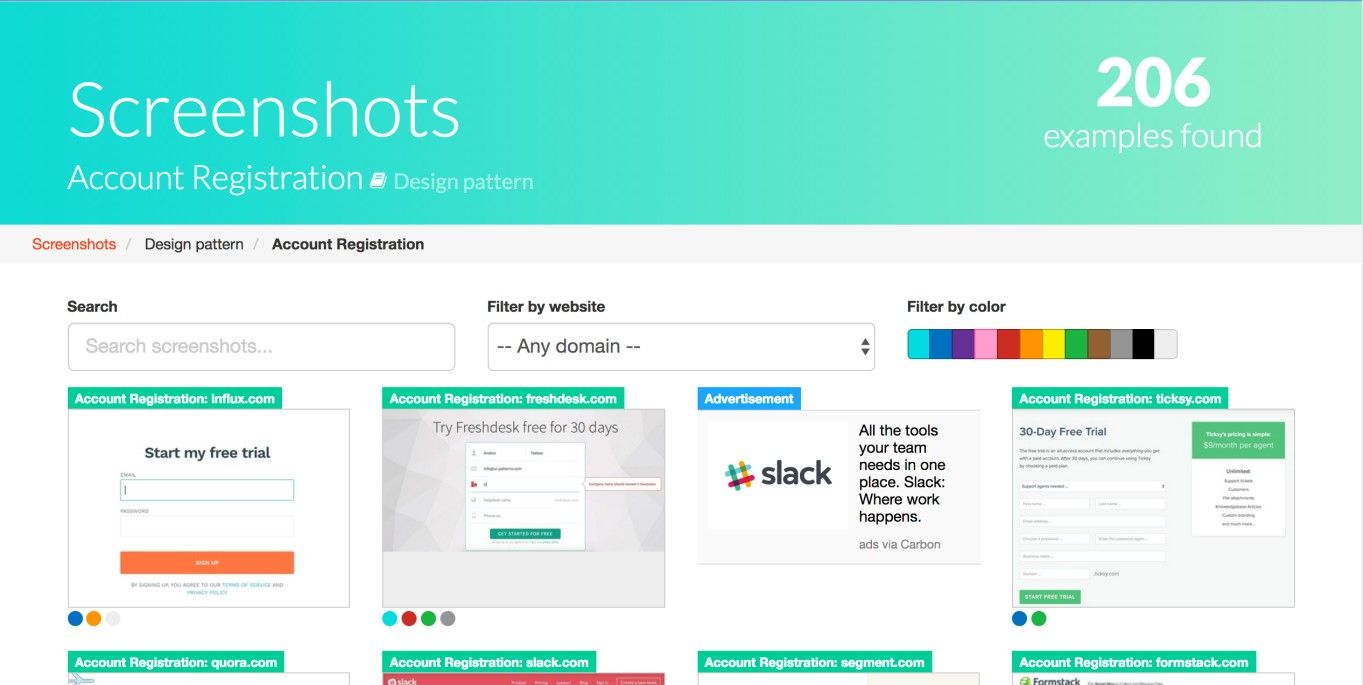
This historical screenshot from the UI Patterns website also sneaks in an advertisement at the top of its search results. Here, advertisements can be distinguished from screenshots of design pattern examples by the blue label ‘Advertisement’.

© UI Patterns, Fair Use

The Take Away

Companies who use the prioritized advertisements design pattern aim to seduce users into buying products or services that third parties offer. It is a dark pattern, because they don’t show users these advertisements because it will help users to do what they want, but rather because it will increase their own revenues. If you want to incorporate prioritized advertisements into your design in a more responsible way, you should at least clearly distinguish the advertisements from the rest of the content. This way, users will be able to ignore the prioritized advertisements while proceeding with their tasks. That means you get the benefit of deriving some traffic in this way while keeping the name of the organization you’re working for that much more clear of cynical, if justified, assumptions.

References and Where to Learn More

Hero Image: © Moyan Brenn , CC BY 2.0.

Jenifer Tidwell, Designing Interfaces: Patterns for Effective Interaction Design, 2010

Martijn van Welie, Pattern Library, 2008

Harry Brignull’s website dedicated to deceptive design

Learn More in This Course:

AI for Designers

12 days
13 % booked
View Course

What You Should Read Next

  • Read full article
    10 Great Sites for UI Design Patterns - Article hero image
    Interaction Design Foundation logo

    10 Great Sites for UI Design Patterns

    You don’t want to spend your whole life redesigning the wheel, do you? No, neither do we. If you are looking for a design that solves a problem that has been solved with a different application before, then the template for your wheel is probably already out there. This lets you save time and make a

    Social shares
    1.4k
    Published
    Read Article
  • Read full article
    Implement Global Navigation to Improve Website Usability - Article hero image
    Interaction Design Foundation logo

    Implement Global Navigation to Improve Website Usability

    When you’re designing a new website, application, or other product, you always start with the global idea and structure before addressing more detailed issues. Designing the navigation on a website is no different. Getting the global navigation right is the first step in designing a great user exper

    Social shares
    826
    Published
    Read Article
  • Read full article
    Split the Contents of a Website with the Pagination Design Pattern - Article hero image
    Interaction Design Foundation logo

    Split the Contents of a Website with the Pagination Design Pattern

    The pagination design pattern is widely used in websites that open up a lot of content to users. From search engines such as Google and Firefox, to e-commerce sites such as Amazon and Asos—the use of pagination is very, very broad. And although it seems straightforward, implementing pagination in th

    Social shares
    817
    Published
    Read Article
  • Read full article
    Best Practices and UI Design Patterns for Help in Mobile - Article hero image
    Interaction Design Foundation logo

    Best Practices and UI Design Patterns for Help in Mobile

    When users start to get to grips with your mobile app, they will need a little help from time to time. The good news is that standard design patterns can reduce design time for help in mobile apps. Here are some practical guidelines that you can use to improve the UX of help in general.You should no

    Social shares
    813
    Published
    Read Article
  • Read full article
    Make it Easy on the User: Designing for Discoverability within Mobile Apps - Article hero image
    Interaction Design Foundation logo

    Make it Easy on the User: Designing for Discoverability within Mobile Apps

    Discoverability sometimes also referred to as “learnability” is the ease at which users can find new features or functions with an app and learn to use the things that they find. While this has always been an important part of user experience design – it becomes even more important in the mobile des

    Social shares
    787
    Published
    Read Article
  • Read full article
    How to Apply Search Boxes to Increase Efficiency - Article hero image
    Interaction Design Foundation logo

    How to Apply Search Boxes to Increase Efficiency

    Have you ever felt overwhelmed with information while you were searching for something specific? Have you ever been lost in the haystack, looking for that one tiny needle? If your users are anything like you, they will sometimes feel overwhelmed or lost, too, unless you minimize their efforts by pro

    Social shares
    742
    Published
    Read Article
  • Read full article
    Use Color to Prevent Confusion and Help Your Users - Article hero image
    Interaction Design Foundation logo

    Use Color to Prevent Confusion and Help Your Users

    As designers, we can use color to guide our users in the right direction to accomplish a task effectively and efficiently. But some designers who focus more on their company’s needs than their users’ can twist things so that colors turn into a bewildering nightmare, hiding buttons and information us

    Social shares
    722
    Published
    Read Article
  • Read full article
    Giving Your Users Freedom with Editable Input Fields - Article hero image
    Interaction Design Foundation logo

    Giving Your Users Freedom with Editable Input Fields

    When you want to purchase something on the internet, no matter what it is, or which e-commerce service you use, you don’t want to encounter any restrictions. Just imagine what your user experience would be like if a web shop presented you with a limited set of options to choose from when asking for

    Social shares
    717
    Published
    Read Article
  • Read full article
    Display Achievements to Encourage Website Usage - Article hero image
    Interaction Design Foundation logo

    Display Achievements to Encourage Website Usage

    You are doing so great; you’re top of the class! Don’t you just love to hear a compliment like this? We’re all human, and this is the way we are wired. We thrive on accomplishment. Whether you want to be better than everyone else or simply be better than your former self, knowing your achievements i

    Social shares
    716
    Published
    Read Article
  • Read full article
    How to Implement Sitemap Footers to Keep Users Going - Article hero image
    Interaction Design Foundation logo

    How to Implement Sitemap Footers to Keep Users Going

    In your attempts to minimize the effort your users need for performing actions on the website you’re designing, you just might be overlooking one major opportunity: sitemap footers. You might think about footers as a page section where you can dump any links or contact information you couldn’t fit a

    Social shares
    714
    Published
    Read Article

Top Articles

Top Topic Definitions

Feel Stuck?
Want Better Job Options?

AI is replacing jobs everywhere, yet design jobs are booming with a projected 45% job growth. With design skills, you can create products and services people love. More love means more impact and greater salary potential.

At IxDF, we help you from your first course to your next job, all in one place.

See How Design Skills Turn Into Job Options
Privacy Settings
By using this site, you accept our Cookie Policy and Terms of Use.
Customize
Accept all

Be the One Who Inspires

People remember who shares great ideas.

Share on:

Academic Credibility — On Autopilot

Don't waste time googling citation formats. Just copy, paste and look legit in seconds.

Feel Stuck? Want Freedom?

Join 326,020+ designers who get one powerful email each week. Learn to design a life you love.

Next email in
1
day
15
hrs
58
mins
4
secs

Free forever. No spam. Unsubscribe anytime.