An Introduction to Responsive Web Design

by IxDF Instructor • 5 min read

572 Shares

With each new technology (or at least variations on a theme), there are new challenges for designers. As of early 2014, the use of mobile exceeded PC internet usage for the first time in history. This shift from PC to mobile was somewhat inevitable once the technology enabled people to connect to the internet just about anywhere they pleased. Now the landscape has changed, designers are dealing with a new set of restrictions, intangibles, and challenges.

The defining challenge is how we develop sites that are able to cross the divide and straddle both mobile and PC, to provide a seamless transition from one device to another. This is the over-arching challenge, but there are thousands of other sub-challenges, such as how we enable the best conditions for reading, navigating, scrolling, resizing, panning, and so on in smaller devices.
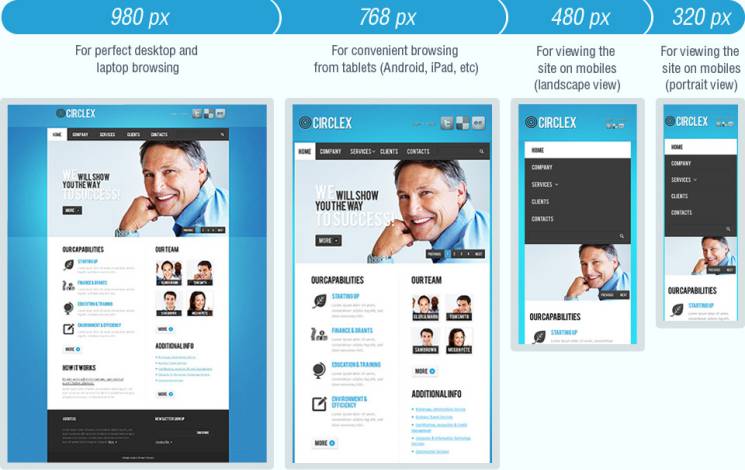


Author/Copyright holder: Flash Mint. Copyright terms and licence: All rights reserved Img source

The Origins of the Term

In 2010,web designer, developer, speaker and author Ethan Marcotte wrote a prescient blog, in which he coined the term Responsive Web Design, declaring,

"rather than tailoring disconnected designs to each of an ever-increasing number of web devices, we can treat them as facets of the same experience. We can design for an optimal viewing experience, but embed standards-based technologies into our designs to make them not only more flexible, but more adaptive to the media that renders them. In short, we need to practice responsive web design".

The technique of adaptive web design predates Marcotte's first use of the term responsive web design. Cameron Adams wrote of this technique in 2004, in the article Resolution Dependent Layout and if you were to trawl the internet you will probably find some earlier mention of adaptive web design.
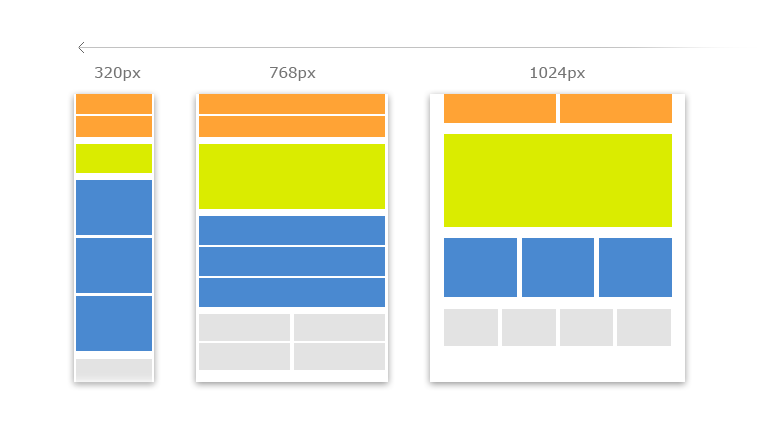


Author/Copyright holder: Quinta Group. Copyright terms and licence: All rights reserved Img source

Responsive Web Design Application
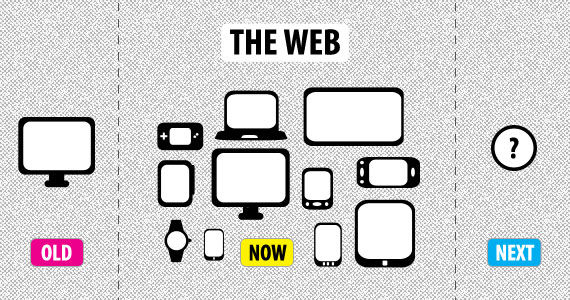

Author/Copyright holder: Unknown. Copyright terms and licence: Unknown Img source

Responsive web designers employ images, fluid grids and media queries to adapt layout according to the screen size of a device, and they are able to exploit feature detection, primarily through the web client, to establish constraints and facilities. These constraints and facilities dictate responsive web design. Luke Wroblewski, current Product Director at Google, states that Responsive Web Design is for designers that

"...want layout adjustments across devices...[that] can live without complete optimisation for specific devices...[that] don't have access to server-side solutions...and [that] really don't trust device detection".

In Summary

Responsive design is

"...based on the idea of flexibility, whereby the structure, imagery or media truly adapts, by either repositioning, changing size, adjusting view state or eliminating content based on the user's needs" (Pannafino, J. 2012).

The movement from PC to mobile is growing; therefore, the need for flexible websites that adapt according to the user's device is of increasing importance.

A List Apart: Responsive Web Design by Ethan Marcotte

(Book) Responsive Web Design by Ethan Marcotte [Please note: This book is in FRENCH]

Responsive Web Design Basics by Pete LePage

Mobilism: jQuery Mobile, An Event Apart: Rolling up Our Responsive Sleeves, and Which One: Responsive Design, Device Experiences, or RESS by Luke Wroblewski

Header Image: Author/Copyright holder: Intel Free Press. Copyright terms and licence: CC BY-SA 2.0


Learn More in This Course:

AI for Designers

1
2
24
47
97 % booked
View Course

What You Should Read Next

  • Read full article
    What is the UX Design Process?  5 Steps to Success - Article hero image
    Interaction Design Foundation logo

    What is the UX Design Process? 5 Steps to Success

    UX designers design every interface to be as intuitive and easy to use as possible, and to do this, and they rely on “design thinking,” a step-by-step guide to the UX design process. Let's explore the UX design process and look at common tasks in each UX design phase and which roles are responsible

    Social shares
    946
    Published
    Read Article
  • Read full article
    What Does a Creative Designer Do? - Article hero image
    Interaction Design Foundation logo

    What Does a Creative Designer Do?

    Creativity is a massive appeal factor for designers (and those who enjoy what we do!) as they bring to bear their creative talents and skill sets on projects and dazzle users, customers, and the brand themselves who launch their design solutions. With that said, though—and for all the digital produc

    Social shares
    747
    Published
    Read Article
  • Read full article
    Your Guide to Hamburger Menus - Article hero image
    Interaction Design Foundation logo

    Your Guide to Hamburger Menus

    The hamburger menu—with its three horizontal lines—simplifies website navigation. Not every interface benefits from its use, but it can help in certain scenarios. That’s why it’s vital to understand when it shines and when alternatives might serve users better. So, learn the pros and cons of using t

    Social shares
    850
    Published
    Read Article
  • Read full article
    Ideation Method: Three-way Comparisons - Article hero image
    Interaction Design Foundation logo

    Ideation Method: Three-way Comparisons

    [[video:94]] Externalization of uncovered tacit knowledge is important, but how do you make that valuable tacit knowledge explicit in a way so you can use it more effectively? Often, this is easier when we’re forced to compare things as we may be able to articulate the difference between things e

    Social shares
    420
    Published
    Read Article
  • Read full article
    Use Circular Design To Reverse Harm - Article hero image
    Interaction Design Foundation logo

    Use Circular Design To Reverse Harm

    Nature is circular. Nothing ever goes to waste. The banana peel we discard degrades into nutritious compost for plants. Even the remains of deceased animals and humans disintegrate into the soil. Human engineering and design, on the other hand, are linear processes. And that has put us on a one-way

    Social shares
    431
    Published
    Read Article
  • Read full article
    Recycling is Not Enough. Let's Design for Reuse - Article hero image
    Interaction Design Foundation logo

    Recycling is Not Enough. Let's Design for Reuse

    “We live in the age of technology and luxury, but we also live in the age of waste,” Don Norman explains. In this video, the grandfather of User Experience Design, Don Norman unpacks the world of waste we have collectively generated. He examines aspects of our daily lives that we take for granted an

    Social shares
    463
    Published
    Read Article
  • Read full article
    Tree Testing: A Complete Guide - Article hero image
    Interaction Design Foundation logo

    Tree Testing: A Complete Guide

    Tree Testing reveals where users lose their way in your navigation. It’s a focused approach to evaluate a site's navigational structure. But it’s more useful in certain scenarios—so, you need to understand where you’ll benefit from tree testing the most. Learn about the pros and cons of testing tool

    Social shares
    690
    Published
    Read Article
  • Read full article
    How to Design Ethically: Expert Advice from Guthrie Weinschenk - Article hero image
    Interaction Design Foundation logo

    How to Design Ethically: Expert Advice from Guthrie Weinschenk

    As UX designers, we wield immense power to influence our users’ lives. We have the dual responsibility of catering to the interests of our users, as well as that of our sponsors (employers, clients and other business stakeholders). This can sometimes put designers in uncomfortable situations and rai

    Social shares
    548
    Published
    Read Article
  • Read full article
    Anything Artificial We Can Design Better - Article hero image
    Interaction Design Foundation logo

    Anything Artificial We Can Design Better

    If you look out the window, you’ll realize many things you see are artificial—buildings, cars, parks, electricity posts, water pipes, etc.—and most of those things were designed by humans. Founding father of UX, Don Norman introduces you to artificiality and how designers shape the world.[[video:142

    Social shares
    415
    Published
    Read Article
  • Read full article
    Stop the Generic Portfolio Trap! Design a Stand-Out Portfolio for Your UX/UI Niche - Article hero image
    Interaction Design Foundation logo

    Stop the Generic Portfolio Trap! Design a Stand-Out Portfolio for Your UX/UI Niche

    Your UX/UI portfolio is your ticket to your dream job, brief or client. It’s your opportunity to show off your expertise, creativity, and the tangible impact of your work. No matter your niche, your portfolio should be as innovative and polished as the projects it represents.Think of your portfolio

    Social shares
    305
    Published
    Read Article

Top Articles

Top Topic Definitions

39% of Today's Skills Will Change by 2030

The World Economic Forum expects 39% of today's skills to be transformed or become outdated by 2030.

The good news is that jobs in UX / UI design and AI are among the fastest-growing professions globally.

See How Design Skills Turn Into Job Options
Privacy Settings
By using this site, you accept our Cookie Policy and Terms of Use.
Customize
Accept all

Be the One Who Inspires

People remember who shares great ideas.

Share on:

Academic Credibility — On Autopilot

Don't waste time googling citation formats. Just copy, paste and look legit in seconds.

Feel stuck? Want Freedom?

Get one powerful email each week, like 321,978 others.

Learn to design a life you love.

Next email in: