Personal Development in UX/UI Design

Your constantly-updated definition of Personal Development in UX/UI Design and collection of videos and articles.
Be a conversation starter: Share this page and inspire others!

2,070 Shares

What is Personal Development in UX/UI Design?

Personal development needs to be a top priority for every designer. Many designers focus on completing tasks, never taking the time to reflect and attune to their personal development.

Instead, rushing on to the next task is becoming the normal thing to do.

Personal development is easy to do. You keep track of your progress and frequently take a break to reflect. The main idea is to practice reflecting.

Personal development is usually practiced by keeping a journal where you log particular moments where you felt accomplished. You can write about recent articles that you’ve read and summarize the main topics. Or take note of something interesting that you’ve learned while speaking to a friend or attending a lecture.

Learn More About Personal Development in UX/UI Design

Make learning as easy as watching Netflix: Learn more about Personal Development by taking the online IxDF Course AI for Designers.

Why? Because design skills make you valuable. In any job. Any industry.

In This Course, You'll

  • Get excited about how quickly you can create meaningful results when you turn AI into your new superpower and combine it with timeless human-centered design skills. As an AI-powered designer, you’ll increase your efficiency and salary potential, and as a human-centered leader, you'll create ethical AI-powered products people love. When these abilities come together, you’ll solve real-world problems faster and make the world a better place. Studies show that AI-driven productivity accelerates growth and helps busy professionals like you achieve in months what once took decades. Now's the time to master the powerful combination that keeps you in demand.

  • Make yourself invaluable when you use AI to accelerate repetitive tasks while applying your irreplaceable human strengths like empathy, critical thinking, and ethical decision-making to guide every solution toward what users truly need. Leaders seek professionals with AI fluency because the people who thrive combine AI efficiency with deep human insight that machines can't replicate. You'll learn to automate and streamline repetitive tasks, make data-driven decisions, and optimize your workflow for innovation and cost savings. No matter your background, you'll easily master AI for Designers. With clear guidance and real-world examples, you'll apply your skills immediately.

  • Gain confidence and credibility as you master the art of text prompts for design. You'll learn how to deal with bias in AI and how to use AI tools to create intuitive user experiences that drive business success. You can fast-track your portfolio of AI-enhanced case studies with step-by-step guidance, practical tips for real-life projects, and downloadable templates. This course gives you the hands-on knowledge to guide AI with timeless human-centered design skills, and that's how you stay in demand in any industry!

It's Easy to Fast-Track Your Career with the World's Best Experts

Master complex skills effortlessly with proven best practices and toolkits directly from the world's top design experts. Meet your experts for this course:

  • Ioana Teleanu: Founder of UX Goodies and former Lead Product Designer (AI) at Miro.

  • Rafael Hernandez: Lead Product Designer at T. Rowe Price.

  • Jarvis Moore: Senior Design Lead, Design Systems at Microsoft.

  • Niwal Sheikh: Product Design Lead at Netflix.

  • Vitaly Friedman: Senior UX Consultant for the European Parliament, and Creative Lead, Smashing Magazine.

  • Pablo Stanley: Designer and CEO of Musho and Lummi.

Get an Industry-Recognized IxDF Course Certificate

Increase your credibility, salary potential and job opportunities by showing credible evidence of your skills.

IxDF Course Certificates set the industry gold standard. Add them to your LinkedIn profile, resumé, and job applications.

Course Certificate Example

Be in distinguished company, alongside industry leaders who train their teams with the IxDF and trust IxDF Course Certificates.

Our clients: IBM, HP, Adobe, GE, Accenture, Allianz, Phillips, Deezer, Capgemin, Mcafee, SAP, Telenor, Cigna, British Parliament, State of New York

All Free IxDF Articles on Personal Development in UX/UI Design

Read full article
The Bandwagon Bias – The Dangers of Groupthink - Article hero image
Interaction Design Foundation logo

The Bandwagon Bias – The Dangers of Groupthink

Groupthink is dangerous to our objectivity. It prevents us from thinking for ourselves and making the best decisions. Designers need to be cautious about falling into the bandwagon bias trap but also be aware of how it can be exploited in their designs to improve user experiences and get users to ma

Social shares
817
Published
Read Article
Read full article
The GROW model: Similarities between Coaching and UX - Article hero image
Interaction Design Foundation logo

The GROW model: Similarities between Coaching and UX

The GROW model is used by coaches to enable individuals to reach their objectives. As you will see while reading about this model, there’s a large overlap with the skills already used by UX designers. As a designer, it can be helpful for you to see the parallels between the two professions – as it a

Social shares
752
Published
Read Article
Read full article
The Bias Blind Spot and Unconscious Bias in Design - Article hero image
Interaction Design Foundation logo

The Bias Blind Spot and Unconscious Bias in Design

It’s useful for designers to understand bias both so that they combat their own biases when they work and so that they can tap into the biases of their users to provide better user experiences. But what happens when we can’t acknowledge our own biases? That’s when we need to understand the bias blin

Social shares
742
Published
Read Article
Read full article
Confirmation Bias – It’s Not What We Think We Know That Counts - Article hero image
Interaction Design Foundation logo

Confirmation Bias – It’s Not What We Think We Know That Counts

Confirmation bias is a pernicious form of bias that can cause real problems in both UX research and our own lives. Learning to recognize and eliminate confirmation bias leads to better decision making, better research and ultimately better products and user experiences.One of the most famous, and fl

Social shares
654
Published
Read Article
Read full article
Outcome Bias – Not All Outcomes are Created Equal - Article hero image
Interaction Design Foundation logo

Outcome Bias – Not All Outcomes are Created Equal

Evaluating the outcomes of our actions makes sense. However, there is a cognitive bias where we place too much weight on the outcome and aren’t critical enough of the process by which we reached that outcome. Learning to avoid the outcome bias can help improve the quality of our decision making proc

Social shares
716
Published
Read Article
Read full article
High Value Activities in Design and the Workplace - Article hero image
Interaction Design Foundation logo

High Value Activities in Design and the Workplace

Hillary Rettig, the author of The Seven Secrets of the Prolific: The Definitive Guide to Overcoming Procrastination, Perfectionism and Writer’s Block says; “High Value Activities (HVAs) are within your mission, leverage, your strengths and create impact or change.”She also says; “They also create cl

Social shares
530
Published
Read Article

Why a UX Professional Should Have a Personal Development Log

Why a UX Professional Should Have a Personal Development Log

Life’s busy isn’t it? Many of us spend so much time racing on to the next challenge that we fail to reflect properly on the things that we’ve learned reaching the last objective. One of the best ways to address is this is to develop a personal development log.

What is a Personal Development Log?
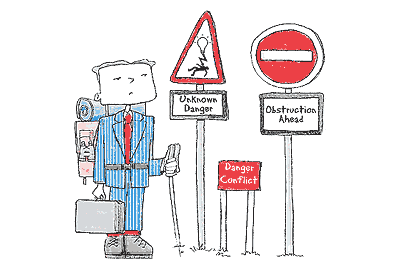

Author/Copyright holder: Unknown. Copyright terms and licence: Unknown

A personal development log is simply a record of things that you’ve learned or done to improve your knowledge. Many people keep very good records of formal training but then they skip recording the things learned in more informal environments. A personal development log is essentially an enhanced version of your training records.

What Goes Into a Personal Development Log?

You can record whatever you like in a personal development log but some ideas would include:

  • Articles you’ve read and key points from them

  • Conversations with your peers and management and key points from them

  • Formal learning you’ve attended and a summary of what you gained

  • Information from your “lessons learned” project wrap ups

  • New software you’ve gained proficiency in

  • Conferences attended and the major learning points

  • Etc.

Why Should I do This?

Firstly, it’s for your benefit. Reviewing learning makes it much more likely to stick. You will find that keeping a personal development log actually cements the lessons you’ve learned and improves your ability to demonstrate those skills in real life. That’s always handy and one of the main complaints of employers is how little responsibility people take for their own learning when in reality the truth is much different.
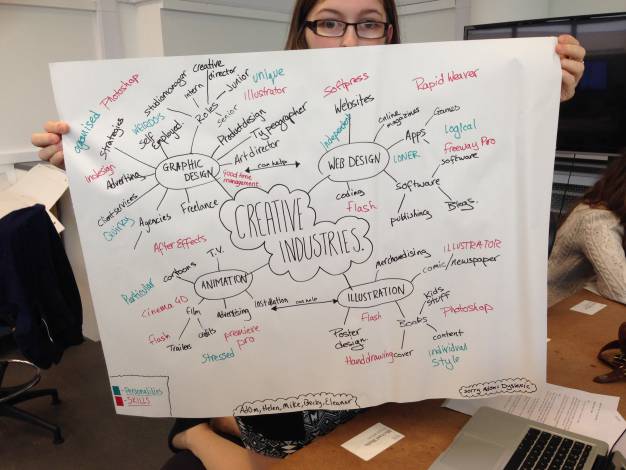


Author/Copyright holder: Eleanor Faye Baines. Copyright terms and licence: All rights reserved

The second benefit is being able to demonstrate that you are responsible for your development. When your annual review comes round (or however often they’re held) – you will be able to sit down and say; “I think I should be promoted/get a pay rise/etc. because I have developed and I am worth more than I was a year ago.” You will be able to show your manager what you’ve done to develop – when your peers, who aren’t keeping a personal development log, will struggle to do so. Think of it as enhancing the UX of you for your employer.

Then there’s the fact that keeping a personal development log makes you more conscious of development and you will start to see lessons in life more readily. 99% of our development takes place on the job and not in a classroom. There’s a definite place for formal learning; after all if there weren’t – we wouldn’t exist. However, formal learning is a small part of our own growth.


Author/Copyright holder: Kevan. Copyright terms and licence: CC BY 2.0

Finally, you will be able to show future employers what you’ve been doing to make yourself a more attractive prospect to them. I’ve held dozens of interviews (and been on the receiving end of a few too) and the ability to show your commitment to self-development is often all it takes to land a position. So many people don’t bother to do it – it’s an easy advantage to take.

Header Image: Author/Copyright holder: Smashing Magazine. Copyright terms and licence: All rights reserved. Img



Feel Stuck?
Want Better Job Options?

AI is replacing jobs everywhere, yet design jobs are booming with a projected 45% job growth. With design skills, you can create products and services people love. More love means more impact and greater salary potential.

At IxDF, we help you from your first course to your next job, all in one place.

See How Design Skills Turn Into Job Options
Privacy Settings
By using this site, you accept our Cookie Policy and Terms of Use.
Customize
Accept all

Be the One Who Inspires

People remember who shares great ideas.

Share on:

Academic Credibility — On Autopilot

Don't waste time googling citation formats. Just copy, paste and look legit in seconds.