Information Overload

Your constantly-updated definition of Information Overload and collection of videos and articles.
Be a conversation starter: Share this page and inspire others!

394 Shares

What is Information Overload?

Information overload describes the excess of information available to a person aiming to complete a task or make a decision. This impedes the decision-making process, resulting in a poor (or even no) decision being made. When designing products (e.g., websites or apps), designers should be especially careful to ensure they prevent information overload from affecting the users' experience.

The term was coined by Bertram Gross, professor of political science, in his 1964 work, The Managing of Organizations. Information overload has been a problem throughout history, particularly during the Renaissance and Industrial Revolution periods. However, the dawn of the Information Age and access to powerful and low-cost data collection on an automated basis have brought us more information than was available at any other point in history. As a result, the problem of information overload is more relevant to designers than ever before.

Today, a crucial part of a user experience (UX) or user interface (UI) designer’s job is to ensure that just the right amount of information appears on a webpage or app screen—enough to make it relevant but not so much that it causes information overload. This is particularly salient because people may experience stress due to information overload. This stress was described as “information anxiety” by Richard Saul Wurman (information visualization pioneer and creator of the term “information architecture”). Wurman argues that information anxiety isn’t caused by the large amount of information in itself, but rather by the large amount of irrelevant information. Designers therefore have the task of designing information in such a way that it matches the information needs of users, a process that involves asking many questions. Nevertheless, by systematically identifying essential and nice-to-know material, designers can reduce the chances that information overload will spoil the user experience.

Learn More About Information Overload

Make learning as easy as watching Netflix: Learn more about Information Overload by taking the online IxDF Course User Experience: The Beginner's Guide.

Why? Because design skills make you valuable. In any job. Any industry.

In This Course, You'll

  • Get excited when you experience how easy it is to transition into tech and land your dream job with User Experience (UX) design skills. No design background? No problem. You already have transferable skills, so it's easy to fast-track your career

  • Learn to combine logical thinking with creativity. Do you enjoy creativity and structure? Do you communicate ideas clearly? UX designers turn ideas into services, experiences, and products. This course helps you structure your existing skills and apply them in an innovative, creative context. You'll use hands-on methods that empower you to continuously test and optimize your products and services from idea to delivery.

  • Make yourself invaluable when you use the very fabric of being human, such as empathy and intuition, to make users and customers smile. More smiles, more impact, greater salary potential. You'll find out what your users need and want, and you'll build products, experiences, and services that help them succeed. You can benefit from UX design in any job, any industry. As AI becomes part of everyday work, timeless human-centered UX design skills help you decide what problems are worth solving and how solutions should actually work for people. This approach turns AI from a tool into your new superpower, keeping your work useful, relevant, and centered around peoples’ needs, even as technologies change.

  • Gain confidence and credibility when you master a range of powerful, real-world UX design skills such as user research, user interviews, personas, customer journey maps, sketching, task analysis, low-fidelity paper prototyping, and usability testing. It's easy with downloadable templates

  • Craft your personal portfolio with step-by-step guidance. It's completely optional. Your portfolio is your gateway to transition into a career in tech or design. You'll be able to apply your new skills immediately in your current job. If you're new to UX design, this course is the best place to start. Your path to tech starts here. UX design is your way in.

It's Easy to Fast-Track Your Career with the World's Best Experts

Master complex skills effortlessly with proven best practices and toolkits directly from the world's top design experts. Meet your experts for this course:

  • Don Norman: Father of User Experience (UX) design, author of the legendary book “The Design of Everyday Things,” and co-founder of the Nielsen Norman Group.

  • Rikke Friis Dam and Mads Soegaard: Co-Founders and Co-CEOs of IxDF. 

  • Mike Rohde: Experience and Interface Designer, author of the bestselling “The Sketchnote Handbook.”

  • Stephen Gay: User Experience leader with 20+ years of experience in digital innovation and coaching teams across five continents.

  • Alan Dix: Author of the bestselling book “Human-Computer Interaction” and Director of the Computational Foundry at Swansea University.

  • Ann Blandford: Professor of Human-Computer Interaction at University College London.

  • Cory Lebson: Principal User Experience Researcher with 20+ years of experience and author of “The UX Careers Handbook.”

Get an Industry-Recognized IxDF Course Certificate

Increase your credibility, salary potential and job opportunities by showing credible evidence of your skills.

IxDF Course Certificates set the industry gold standard. Add them to your LinkedIn profile, resumé, and job applications.

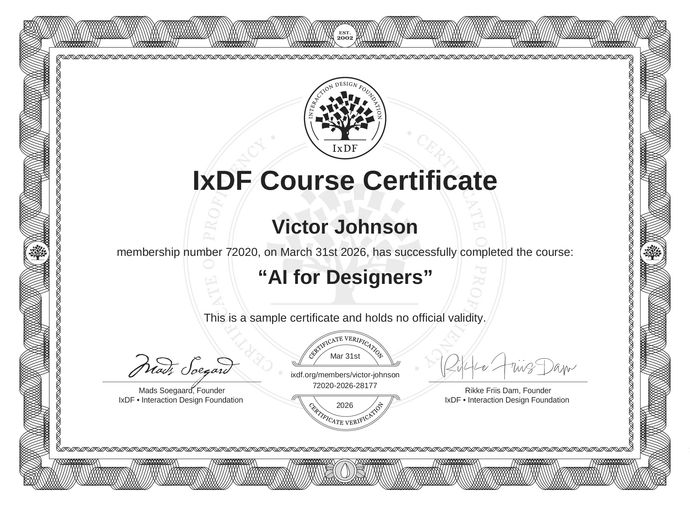
Course Certificate Example

Be in distinguished company, alongside industry leaders who train their teams with the IxDF and trust IxDF Course Certificates.

Our clients: IBM, HP, Adobe, GE, Accenture, Allianz, Phillips, Deezer, Capgemin, Mcafee, SAP, Telenor, Cigna, British Parliament, State of New York

All Free IxDF Articles on Information Overload

Read full article
Stop Yourself from Becoming Content Fried and Free Your Mind to be Productive - Article hero image
Interaction Design Foundation logo

Stop Yourself from Becoming Content Fried and Free Your Mind to be Productive

Content fried is the point we reach when we subject ourselves to too much data. It commonly affects content curators but it can affect any of us. The “always on” Internet may be a blessing much of the time but it can also be a curse. The term “content fried” was defined Beth Kanter, who is a traine

Social shares
595
Published
Read Article
Read full article
Information Overload, Why it Matters and How to Combat It - Article hero image
Interaction Design Foundation logo

Information Overload, Why it Matters and How to Combat It

Designers often need to convey information to the users of their designs. Specialists in information visualization design in particular find themselves presenting data over and over again to their users. However, it’s important when developing your designs that you don’t create “information overload

Social shares
1.2k
Published
Read Article
Read full article
Bad Design vs. Good Design: 5 Examples We Can Learn From - Article hero image
Interaction Design Foundation logo

Bad Design vs. Good Design: 5 Examples We Can Learn From

Looking at examples of bad design alongside counter-examples of good design is not only fun but also draws important lessons for designers. They highlight pitfalls for designers to avoid and let us understand how to translate design theories into solutions that work in the real world. Jared Spool, t

Social shares
1.5k
Published
Read Article
Read full article
Everyone Loves a Story, and We are All Natural Storytellers - Article hero image
Interaction Design Foundation logo

Everyone Loves a Story, and We are All Natural Storytellers

We all enjoy a good story even if what we define as a “good story” differs significantly from person to person. If we can tell stories, we can get our message across more clearly and in a more engaging manner, but what constitutes a natural storyteller? You’ll be surprised to find out the answer. On

Social shares
576
Published
Read Article

Information Overload, Why it Matters and How to Combat It

Information Overload, Why it Matters and How to Combat It

Designers often need to convey information to the users of their designs. Specialists in information visualization design in particular find themselves presenting data over and over again to their users. However, it’s important when developing your designs that you don’t create “information overload” – that is presenting so much data that you leave the user confused and/or unable to make a decision.
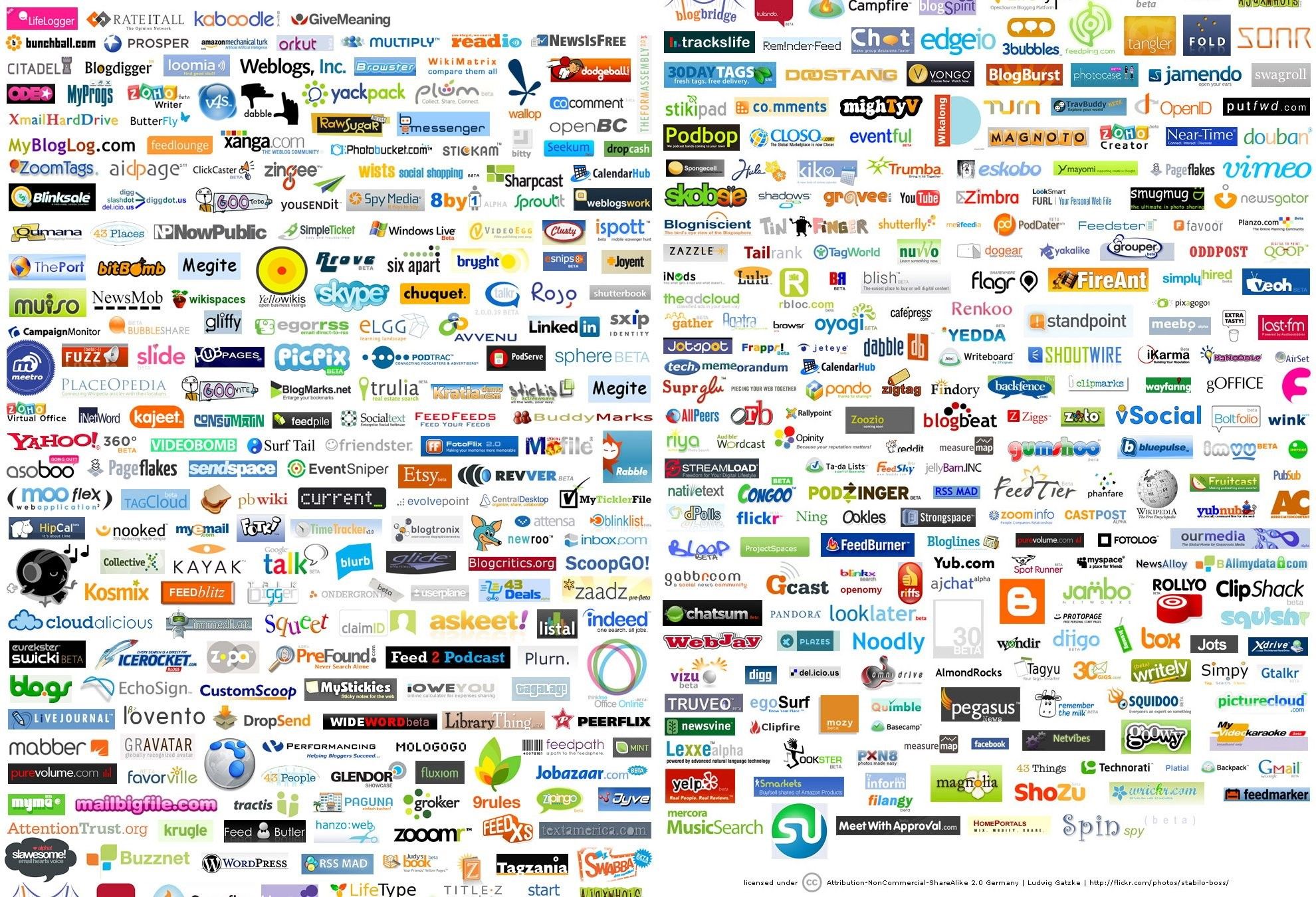

Author/Copyright holder: Pietro Zanarini. Copyright terms and licence: CC BY 2.0

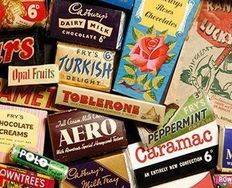
Just look at all these sources of information, above, and they barely represent a fraction of the sources of information available to us today.

A Brief History of Information Overload

The term “information overload” was coined by Bertram Gross, the Professor of Political Science at Hunter College, in his 1964 work – The Managing of Organizations. However, it was popularized by Alvin Toffler, the American writer and futurist, in his book “Future Shock” in 1970.

Gross defined information overload as follows:

“Information overload occurs when the amount of input to a system exceeds its processing capacity. Decision makers have fairly limited cognitive processing capacity. Consequently, when information overload occurs, it is likely that a reduction in decision quality will occur.”

The concept of information overload has been around for longer than the phrase and even in the 3rd (or possibly 4th) century BCE the writer of Ecclesiastes 12:12 was complaining that “of making books there is no end”.

Throughout history there have been complaints about information overload particularly during the Renaissance and the industrial revolution periods. However, the dawn of the information age and access to powerful and low cost data collection on automated basis has brought us more information than at any other point in history.

Managing information in daily life is no longer restricted to a wealthy elite but is a problem which faces nearly everyone. Social media, e-mail, webpages, mobile apps, etc. all spill data into our lives daily.
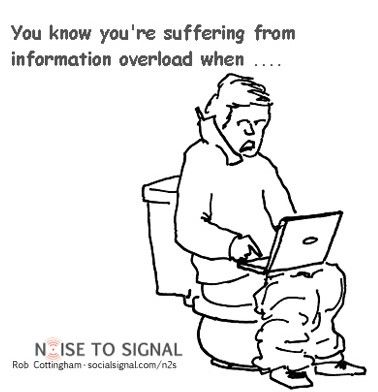

Author/Copyright holder: Cambodia4kids.org Beth Kanter. Copyright terms and licence: CC BY 2.0

The Causes of Information Overload Today

There are, of course, nearly as many causes of information overload as there are bits of information available to us. However, the most common reasons behind modern information overload include:

  • Huge volumes of new information being constantly created

  • Pressure to create and compete in information provision – leading to a quantity over quality effect in many industries

  • The simplicity of creating, duplicating and sharing of information online

  • The exponential increase in channels to receive information by; radio, television, print media, websites, e-mail, mobile telephony, RSS feeds, etc.

  • The increasing weight of historical data available to us

  • High volumes of conflicting, contradictory and plain old inaccurate information

  • No simple methodologies for quickly processing, comparing and evaluating information sources

  • A lack of clear structure in groups of information and poor clues as to the relationships between those groups

Avoiding Information Overload in Designs

The question then becomes; how do we help our users avoid information overload – what can we as designers do to try and alleviate the burden of information?

Tips to avoid information overload in designs include:

  • Keep things simple. The less information you present – the easier it is to understand.

  • Keep it relevant. Information that actually meets the user’s needs is less likely to overwhelm.

  • Keep it clear. Simplicity and relevance are good but information needs clarity to be effective.

  • Provide supporting information. If a user needs more information, make sure it’s easily accessible for them.

  • Provide balanced information. You should present both sides of the coin rather than just one.

  • Make it clear what is to be done with the information. What action should the user take? Why should they take it?

  • Make it easy for the user to take action. If they need to complete a task there and then make it accessible and make it obvious.

And don’t forget…
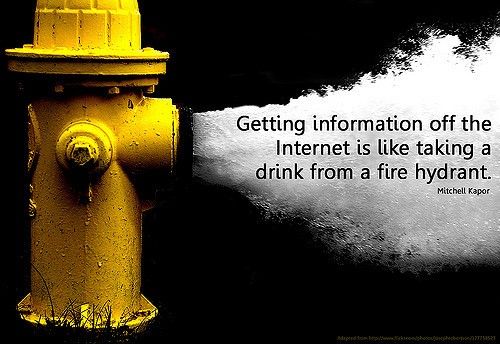

Author/Copyright holder: SparkCBC . Copyright terms and licence: CC BY-SA 2.0

Avoiding Information Overload Ourselves

We also need to ensure that we don’t fall victim to information overload ourselves. This can be done by using any or all of the following tactics:

  • Feel free to ignore information. That doesn’t mean ignore e-mail from your boss or your clients but do recognize you can’t consume every drop of information out there and don’t feel guilty for ignoring some (or a lot) of it.

  • Feel free to take action without all the facts. We all do this at times – ask yourself “what’s the worst that can happen?” when you realize the answer is “probably, not a lot” just take action.

  • Create an information queue and tackle it on a regular basis. Don’t feel pressured to deal with information as it arrives; put it to one side and tackle it in a quiet time of the day.

  • Filter information ruthlessly. Create filters on your e-mail box and ensure that only priority material catches your eye during the day. Use filters in your searches to reduce the amount of information you get on Google. Only deal with what is relevant and/or important.

  • Delegate information responsibilities. If you are part of a team – don’t take responsibility for knowing everything; encourage people to specialize and then rely on their understanding.

  • Learn to skim. Most information really only contains a key point or two – grab those points and move on.
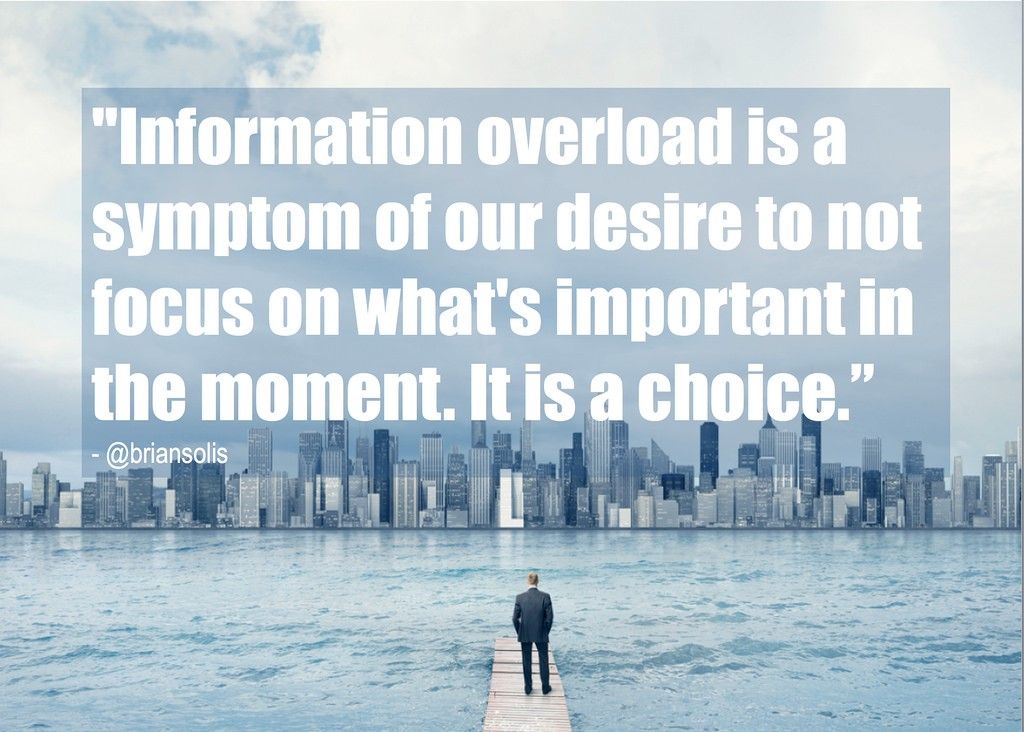

Author/Copyright holder: Brian Solis. Copyright terms and licence: CC BY 2.0

The Take Away

Information overload is a real phenomenon which prevents us from taking decisions or actions because we feel we have too much information to consume. There are some simple tips to minimize both information overload for the users of our designs and which we can use to prevent information overload on ourselves. Following these tips will reduce (though it will never completely eliminate) the information overload that we and our users have to handle.

References & Where to Learn More:

Gross, Bertram M. (1964). The Managing of Organizations: The Administrative Struggle. p. 856

Find out more about Bertram Gross.

Find out more about Alvin Toffler.

Forbes Magazine offers additional tips for conquering information overload.

Hero Image: Author/Copyright holder: Jorge Franganillo. Copyright terms and licence: CC BY 2.0

Feel Stuck?
Want Better Job Options?

AI is replacing jobs everywhere, yet design jobs are booming with a projected 45% job growth. With design skills, you can create products and services people love. More love means more impact and greater salary potential.

At IxDF, we help you from your first course to your next job, all in one place.

See How Design Skills Turn Into Job Options
Privacy Settings
By using this site, you accept our Cookie Policy and Terms of Use.
Customize
Accept all

Be the One Who Inspires

People remember who shares great ideas.

Share on:

Academic Credibility — On Autopilot

Don't waste time googling citation formats. Just copy, paste and look legit in seconds.