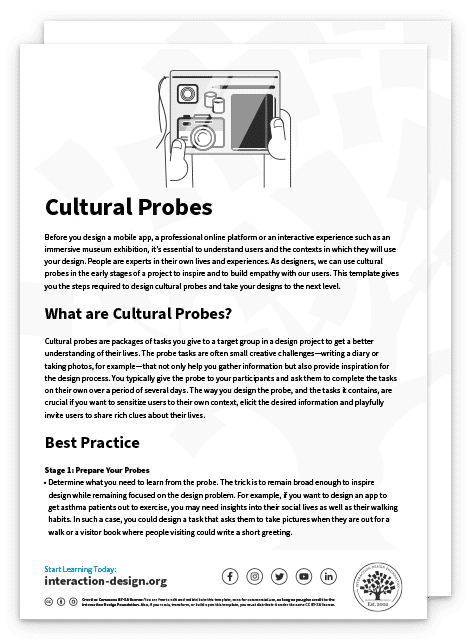
Cultural Probes

Your constantly-updated definition of Cultural Probes and collection of videos and articles.
Be a conversation starter: Share this page and inspire others!

197 Shares

What are Cultural Probes?

Cultural probes are an approach to qualitative user research where face-to-face research is impractical or inappropriate. They consist of prompts, questions and instructions along with artifacts for recording thoughts and feelings. The artifacts may be as simple as a diary or as elaborate as a single-use camera.

Transcript

In many cases, depending on the intended audience, it may be appropriate to ask participants to provide their own recordings using smartphones or to record observations using apps. Similarly, prompts and probes – including video and audio media – could be provided in digital form via phone apps or websites.

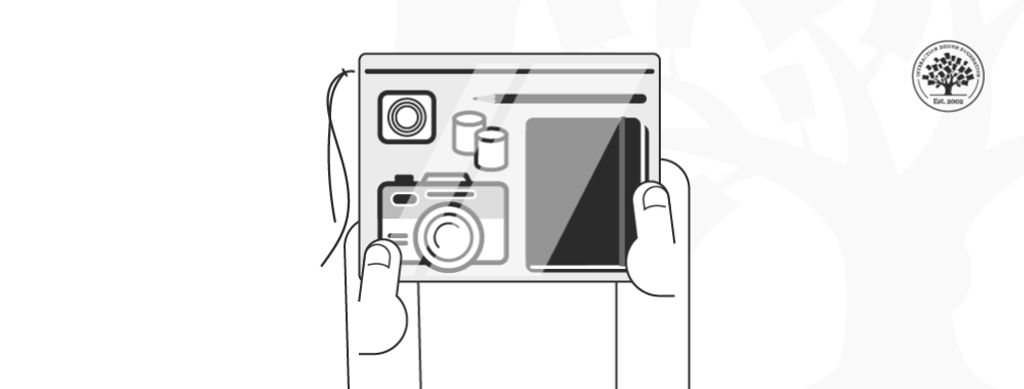
Cultural probe kit showing notebook, pencil, camera and other items

Cultural probes often take the form of small kits of artifacts supplied to participants.

© Interaction Design Foundation, CC BY-SA 3.0

Cultural Probes in Use

Cultural probes can be seen as extensions of more traditional diary studies, but they tend to be more multimedia in nature and lend themselves to the “gamification” of the research process. Since they are primarily used where face-to-face research is difficult or impossible, a gamified approach can replace some of the engagement that is inevitably missing with remote, unsupervised research.

In a frequently-cited case study by William Gavers and colleagues (see Learn More About Cultural Probes), the probe kits included

  • Postcards

  • Maps

  • A disposable camera

  • A photo album and media diary

Their purpose was to elicit thoughts and feelings on a range of topics associated with increasing the presence of the elderly in their local communities. This may sound a slightly unusual approach given the challenges of technology often associated with older users, but this is exactly what happened in many parts of the world during the Covid-19 pandemic. Social networking and messaging groups encouraged interactions that were not only unlikely pre-pandemic but actually impossible during pandemic lockdowns and quarantines. The Gavers study pre-dates the pandemic, but the challenges were similar, in terms of using technology to improve involvement within communities. The researchers described their approach as “pursuing experimental design in a responsive way”, and their aim was to explore the local cultures without constraining the research and subsequent discussions by placing too much emphasis on preconceived issues. Participants were given wide-ranging prompts and probes about their attitudes to their own lives, technology and the local community. Because of the inspirational (as opposed to informational) approach of the probes, a rich assortment of data was supplied to researchers over time. Much of it was sent through the post, although for more technology-oriented audiences electronic means would be equally suitable.

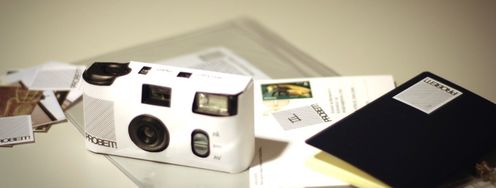
Close up of cultural probe kit showing camera and roll of film

While disposable cameras may be appropriate for less technically-comfortable participants, in other cases it might be appropriate to ask participants to use their smartphones.

© Interaction Design Foundation, CC BY-SA 3.0

How Many Participants?

As with many qualitative methods, cultural probes tend to be fairly open-ended and often address fairly general research questions. The number of participants and the size of the probe kits will be highly dependent on the scope of the project itself. However, if we use other qualitative methods as a guide, the minimum number of participants is likely to be between 8 and 12. The maximum is harder to predict but would typically be in the region of 20 to 30. Because of the inevitably slow return of field data, it may be prudent to over-recruit. When researchers feel that they are no longer learning anything new, they could thank participants and tell them the study is finished. Having to recruit further participants mid-study would not be ideal, with the resulting delays to data collection being just one factor. (Environmental, social and political factors could come into play over extended periods.) Naturally, these estimates relate to a single participant group. If research is to be conducted across different participant types, then the figures need to be multiplied accordingly.

Questions About Cultural Probes?
We've Got Answers!

Why do designers use cultural probes in their research?

Designers use cultural probes to better understand people's lives in a real, unfiltered way. These tools—like photo diaries, postcards, or maps—let users document their own experiences over time. It's a subtle but powerful way to uncover how people think, feel, and behave in their everyday world, especially in contexts where interviews or surveys might not go deep enough.

In UX (user experience) design, cultural probes can help you get rich, emotional insights. For instance, if you're creating an app for caregivers, interviews might miss the stress and small moments that matter. However, a photo diary of a typical day might show you what really counts.

These probes give users a voice on their own terms. The result? Designers build products that truly fit into users' lives, not just ones that look good on a wireframe.

Explore how cultural probes help with user research as Alan Dix, Author of the bestselling book “Human-Computer Interaction” and Director of the Computational Foundry at Swansea University, discusses:

Transcript

What are some real-world examples of using cultural probes in design?

Designers have used cultural probes in real-world projects to understand people's lives more deeply. One example comes from a healthcare design team that gave patients disposable cameras and journals to capture their daily routines and emotions. The goal was to redesign hospital waiting areas based not on guesses but on how patients actually felt in those spaces.

Another case involved elderly people in assisted living. Designers handed out postcards with prompts like “What's the best part of your day?” or “What makes you feel lonely?” These personal responses helped the team design more meaningful social experiences and interfaces for their care apps.

In UX design, cultural probes offer a way to see life through users' eyes. Instead of asking people what they need, designers let them show it, often in ways they wouldn't think to mention in a regular interview.

Find valuable additional insights about how to use probes in our article Probes for Context Mapping – How to Design and Use Them.

How do I design an effective cultural probe?

To design an effective cultural probe, start by knowing your goal. Ask yourself what emotions, behaviors, or routines you want to explore. Then, choose simple, open-ended tools like photo diaries, maps, or postcards with prompts. Make the materials feel inviting and easy to use, so participants feel comfortable sharing honestly.

Great probes spark curiosity. For example, instead of asking “What do you eat for breakfast?”, try “Take a photo of something that makes your morning better.” That prompt opens the door to emotional insights and lifts words that might otherwise be flat and lifeless into a far more relatable plane. Also, give users clear but flexible instructions. Let them share in their own way and time.

Last, but not least, make the process personal. Use language that feels warm, not clinical. That helps users feel like collaborators, not test subjects—and that's when you get the richest, most useful insights.

Discover more about how cultural probes help with user research as Alan Dix, Author of the bestselling book “Human-Computer Interaction” and Director of the Computational Foundry at Swansea University, discusses:

Transcript

What tools or materials can I include in a cultural probe kit?

A cultural probe kit should feel creative and personal, not like a survey. Good tools invite people to reflect and share. Start with a notebook or diary for writing thoughts or stories. Add a disposable camera or ask digital natives to use their phones to take photos of moments, objects, or spaces that matter to them.

Maps work well, too—ask participants to mark places they go, or spots that feel important. Include postcards with open-ended prompts like “Describe a moment today that made you smile.” Stickers, pens, and envelopes add a playful, hands-on touch.

Don't overload the kit. Keep it simple and focused on your research goals. The right mix of materials helps users open up in natural, surprising ways and gives designers rich insights from which to work.

Take a deep dive into Cultural Probes with our course Human-Computer Interaction: The Foundations of UX Design .

How do I tailor cultural probes to a specific user group or culture?

To tailor cultural probes to a specific user group or culture, start by learning their values, habits, and communication styles. What feels natural or respectful in one culture might seem confusing or intrusive in another. For example, older adults might prefer handwritten prompts, while younger users respond better to digital tools or emojis.

Use language and imagery that feel familiar to your audience. Avoid jargon or slang. If you're working with a specific culture, adapt your materials to fit their customs, including visuals, colors, or metaphors they relate to.

Also, consider how and when people can respond. Some groups may need more time or privacy to open up. The more you align the probe with their world, the more honest and meaningful their responses will be.

Get a better feel for how design and culture meet, as Alan Dix explains:

Copyright
Transcript

When should I use cultural probes in the design process?

Use cultural probes early in the design process, especially during the discovery or research phase. This is when you're trying to understand users' lives, needs, and emotions before jumping into solutions. Probes help you gather raw, unfiltered insights that other methods, like surveys or interviews, might miss.

They're especially useful when designing for unfamiliar groups or sensitive contexts, like healthcare, aging, or mental health. Instead of relying on assumptions, you let users show what matters to them through photos, stories, or drawings. This personal input helps you define the real problems worth solving.

Cultural probes can also inspire fresh ideas during concept development. They often surface surprising details or emotional cues that give designers guiding material to create more meaningful, user-centered designs.

Explore additional insights about how to use probes in our article Probes for Context Mapping – How to Design and Use Them.

How long should a cultural probe activity last?

A cultural probe activity usually lasts anywhere from a few days to two weeks. The exact length depends on your goals and the users' routines. If you want quick snapshots, like daily habits or mood shifts, three to five days might be enough. However, if you're digging into deeper patterns or emotional experiences, give people more time to reflect and share.

Keep in mind: longer doesn't always mean better. If the activity drags on, users might lose interest or stop participating. Make the timeline clear upfront and design tasks that feel manageable, such as one photo or journal entry per day.

You can also check in during the activity to keep users engaged and offer support. A well-paced probe makes it easier for people to stay involved and for designers to gather rich, meaningful insights

Take a deep dive into Cultural Probes with our course Human-Computer Interaction: The Foundations of UX Design .

Can cultural probes replace traditional user research methods?

No, cultural probes can't replace traditional user research methods, but they do add a unique layer. Think of them as a complement, not a substitute. While interviews and usability tests focus on what users say or do in structured settings, probes reveal how people feel and behave in their everyday lives.

Probes are especially helpful for exploring emotions, values, and hidden routines. However, they're less suited for answering specific usability questions or measuring performance. That's where methods like task analysis or A/B testing come in.

Used together, these methods give you a fuller picture. For example, probes might uncover users' anxiety during a daily routine. A follow-up interview or prototype test can explore how to ease that stress. Combining both types of research leads to richer insights and better design choices.

Watch as User Experience Strategist and Founder of Syntagm Ltd. William Hudson discusses triangulation, including the wisdom of using quantitative research methods to complement qualitative research.

Transcript

What are common mistakes to avoid with cultural probes?

One common mistake with cultural probes is overloading participants with too many tasks or unclear instructions. Keep things simple. If the probe feels like homework, people won't engage deeply.

Another issue is using overly generic or leading prompts—like “What's your favorite product?” Instead, ask open, personal questions that let users tell their own story.

For some designers, forgetting to consider the user's context is another pitfall. A camera might seem fun to some, but awkward or intrusive in certain cultures or age groups. Also, avoid using materials that feel childish or off-topic; your tools should match the tone of the people you're designing for.

Finally, don't treat probes as data-collection checklists. They're conversation starters. If you're too rigid or analytical, you'll miss the emotional depth that makes cultural probes so powerful.

Context is a vital consideration in design, as Alan Dix explains:

Transcript

What are some recent or highly cited scientific articles about cultural probes?

Gaver, W. W., Boucher, A., Pennington, S., & Walker, B. (2004). Cultural probes and the value of uncertainty. Interactions, 11(5), 53–56.

In this article, Gaver and colleagues revisit the concept of cultural probes, emphasizing the importance of embracing uncertainty and subjectivity in design research. They argue that the strength of cultural probes lies in their ability to inspire designers through ambiguous and interpretive data, rather than providing concrete answers. The authors caution against the trend of over-analyzing probe data, which can strip away the richness and exploratory nature that make probes valuable. By advocating for a design approach that values playfulness and open-ended interpretation, this work has significantly influenced user experience research, encouraging designers to seek inspiration from the nuances of human experience.

Celikoglu, O. M., Ogut, S. T., & Krippendorff, K. (2017). How do user stories inspire design? A study of cultural probes. Design Issues, 33(2), 84–98.

This study investigates the role of cultural probes in eliciting user narratives that inform and inspire design processes. The authors explore how these probes can bridge the gap between structured surveys and ethnographic methods, offering a balance that captures rich, contextual user experiences without imposing rigid frameworks. By analyzing the effectiveness of cultural probes in gathering meaningful user stories, the research highlights their value in generating design-relevant insights. This work contributes to the field of user-centered design by demonstrating how cultural probes can be utilized to capture the nuances of user experiences, thereby informing more empathetic and contextually grounded design solutions.

Krueger, A. E., Pollmann, K., Fronemann, N., & Foucault, B. (2020). Guided user research methods for experience design—A new approach to focus groups and cultural probes. Multimodal Technologies and Interaction, 4(3), 43.

This article introduces "experience focus groups" and "experience probes," adaptations of traditional focus groups and cultural probes tailored for experience-centered design. The authors propose a two-step approach to address "wicked design problems," emphasizing the integration of hedonic aspects into human-centered design processes. A case study on families and digital life illustrates the practical application of these methods, highlighting their effectiveness in eliciting rich, user-centered insights. This work is significant for UX professionals seeking structured yet flexible methodologies to capture nuanced user experiences.

Earn a Gift Earn a Gift, Answer a Short Quiz!

1
2
3
4
1
2
3
4
Question 1
Question 2
Question 3
Get Your Gift
Interaction Design Foundation logo

Question 1

What is the main purpose of cultural probes in user research?

1 point towards your gift

  • To collect quantitative data through surveys
  • To conduct face-to-face interviews and observe users in a lab environment
  • To gather qualitative insights about participants' lives and experiences
Interaction Design Foundation logo

Question 2

Which items do researchers commonly include in a cultural probe kit?

1 point towards your gift

  • Financial reports, marketing campaigns and spreadsheets
  • Postcards, disposable cameras and diaries
  • Software manuals, coding guidelines and digital design tools
Interaction Design Foundation logo

Question 3

Why are cultural probes particularly useful in remote or unsupervised research?

1 point towards your gift

  • Participants can complete them independently with their natural behaviors and thoughts.
  • Participants can complete them without any support from the researchers ever.
  • They are limited to laboratory settings.

Learn More About Cultural Probes

Make learning as easy as watching Netflix: Learn more about Cultural Probes by taking the online IxDF Course Human-Computer Interaction: The Foundations of UX Design.

Why? Because design skills make you valuable. In any job. Any industry.

 In This Course, You'll

  • Get excited about designing products and experiences people truly love. From medical apps that save lives to educational tools that bridge learning gaps, Human-Computer Interaction (HCI) is at the heart of every great User Experience (UX) Design. You'll learn what people enjoy and how to use that knowledge to create meaningful, engaging solutions. No design background? No problem. You already have transferable skills, like empathy, problem-solving, communication, and organizing information, so you have more HCI knowledge than you realize. HCI blends psychology, design, engineering, and ethics to help you craft experiences that feel intuitive and make it easy for people to fulfill their needs and reach their goals. That's what we human beings love. More love means higher business profits and a salary that reflects your value.

  • Make yourself invaluable when you discover the science behind great design. You'll master timeless human-centered design skills like perception, insight, and strategic thinking that become even more powerful in an AI-enhanced world. Turn AI into your superpower with your unique human understanding that no algorithm can generate on its own. Studies show that tech and design-related occupations will grow 23% by 2031, much faster than the average. HCI skills are in demand across every industry. This course helps you structure your existing skills and apply them creatively, from idea to delivery. With your HCI skills, it's easy to drive customer loyalty and business success because you know how to design for people. Level up in your current role or use your new skills to break into a career in design and tech.

  • Gain confidence and credibility as you build experiences so effortless they feel like second nature. It's easier than you think. With ready-to-use templates for global navigation, personas, and more, you'll get everything you need to immediately apply your skills and create user-centered results people keep coming back to. Build a standout portfolio and fast-track your career with optional hands-on exercises. This course will give you real-world human-centered design solutions, such as a website, app, or smart device, to showcase your in-demand skills.

It's Easy to Fast-Track Your Career with the World's Best Experts

Master complex skills effortlessly with proven best practices and toolkits directly from the world's top design experts. Meet your expert for this course:

  • Alan Dix: Author of the bestselling book “Human-Computer Interaction” and Director of the Computational Foundry at Swansea University.

Get an Industry-Recognized IxDF Course Certificate

Increase your credibility, salary potential and job opportunities by showing credible evidence of your skills.

IxDF Course Certificates set the industry gold standard. Add them to your LinkedIn profile, resumé, and job applications.

Course Certificate Example

Be in distinguished company, alongside industry leaders who train their teams with the IxDF and trust IxDF Course Certificates.

Our clients: IBM, HP, Adobe, GE, Accenture, Allianz, Phillips, Deezer, Capgemin, Mcafee, SAP, Telenor, Cigna, British Parliament, State of New York

All Free IxDF Articles on Cultural Probes

Read full article
Probes for Context Mapping – How to Design and Use Them - Article hero image
Interaction Design Foundation logo

Probes for Context Mapping – How to Design and Use Them

Whether you are designing a mobile app, a professional online platform or an interactive museum exhibition, it is essential to understand users and the context in which they will use your design. Traditional methods such as interviews and observations will help you to touch the surface of their live

Social shares
863
Published
Read Article
Read full article
How to Use Cultural Probes to Understand Your Users - Article hero image
Interaction Design Foundation logo

How to Use Cultural Probes to Understand Your Users

While direct user observation is usually considered the most effective research tool, it’s not always possible. Technological solutions such as web conferencing and video recording can help us with more superficial issues, but to get a more detailed understanding of a problem domain or context of us

Social shares
486
Published
Read Article

How to Use Cultural Probes to Understand Your Users

How to Use Cultural Probes to Understand Your Users

While direct user observation is usually considered the most effective research tool, it’s not always possible. Technological solutions such as web conferencing and video recording can help us with more superficial issues, but to get a more detailed understanding of a problem domain or context of use we sometimes need to dig a little deeper. As Alan Dix explains, this is where cultural probes come in.

Transcript

Learn more about cultural probes and how you can use them to improve your designs with this handy guide:

Advance Your Career With This Free Template for “Cultural Probe”
Cultural Probe
We respect your privacy
Get 1 powerful email each week: Design a life you love!

Image

© Eduardo Ferreira and Interaction Design Foundation, CC BY-SA 3.0

Feel Stuck?
Want Better Job Options?

AI is replacing jobs everywhere, yet design jobs are booming with a projected 45% job growth. With design skills, you can create products and services people love. More love means more impact and greater salary potential.

At IxDF, we help you from your first course to your next job, all in one place.

See How Design Skills Turn Into Job Options
Privacy Settings
By using this site, you accept our Cookie Policy and Terms of Use.
Customize
Accept all

Be the One Who Inspires

People remember who shares great ideas.

Share on:

Academic Credibility — On Autopilot

Don't waste time googling citation formats. Just copy, paste and look legit in seconds.