Work in Games

by Janaki Kumar, Mario Herger and Rikke Friis Dam • 8 min read

555 Shares

Very few people look forward to work. If you weren’t working, you could be doing something fun. Yet, work isn’t the opposite of fun. Work can be a lot of fun sometimes. The idea of work appears in almost every game we play.

Can Work Be Fun?

Work and play are not opposites or even mutually exclusive. One of the elements of almost every game you play is work. There are six types of work commonly found in games and gamified experiences (as defined by Janaki Kumar and Mario Herger in their book Gamification at Work: Designing Engaging Business Software). When used correctly, work can increase the fun of games. Let’s take a look, shall we?

High-Stakes Work

If you’ve played a shooter game like Doom or Halo, you’ll know that the consequence of failure is being shot by aliens or eaten by demons. The same is true in a racing simulator such as Need for Speed, especially when the mistake is driving a Porsche into a wall at 120 miles an hour. Fortunately, there will be no physical harm to the player if that happens (apart from pulling out hair in frustration!).

This ability to take part in risky behavior without any real risk to ourselves is fun. It’s work, but it’s not the kind of work we do at a job. It’s fast, exciting work. If we were to recreate the Porsche scenario in real life, it would have deadly consequences.

Author/Copyright holder: PlayStation Europe. Copyright terms and license: CC BY-SA 4.0

The Need for Speed lets us capture the thrills of driving fast cars, and it’s a kind of work, too—high-stakes work.

Busywork

Candy Crush, Farmville, and other games offer endless iterations of the same task. These games keep our hands full and our attention even though the work involved is not remarkably varied. A repetitive and seemingly boring task like mining ore or chopping wood can become fascinating with the right incentive.

Mental Work

Plenty of games, from Scrabble Online to RTS (Real-Time Strategy) games such as Total War, engage our grey matter. Some people get a certain thrill when they outsmart an opponent. Others like to prove they could conquer the world (if they had the proper budget and 200 samurai). For example, in the Civilization series of games, you get to run a nation, potentially the world. If you were to be a real-life ruler of most of the world, that role would undoubtedly come with an immense salary. Even though you’re doing the job pro bono in the game, it's a credit to the ingenious design of Civilization that you commit endless hours to governance with only the joy of doing it as a reward.

Physical Work

Exercise might not be something you’d immediately connect with video gaming. Still, Virtual Reality (VR) and motion control-based consoles like the Nintendo Wii encourage gamers to work up a sweat. People play tennis, dance on a dance mat or even do yoga in video games. This type of exercise game releases endorphins, nature’s happy chemicals. Yes, they’re natural highs, and the more we have in our systems, the more fun we have.
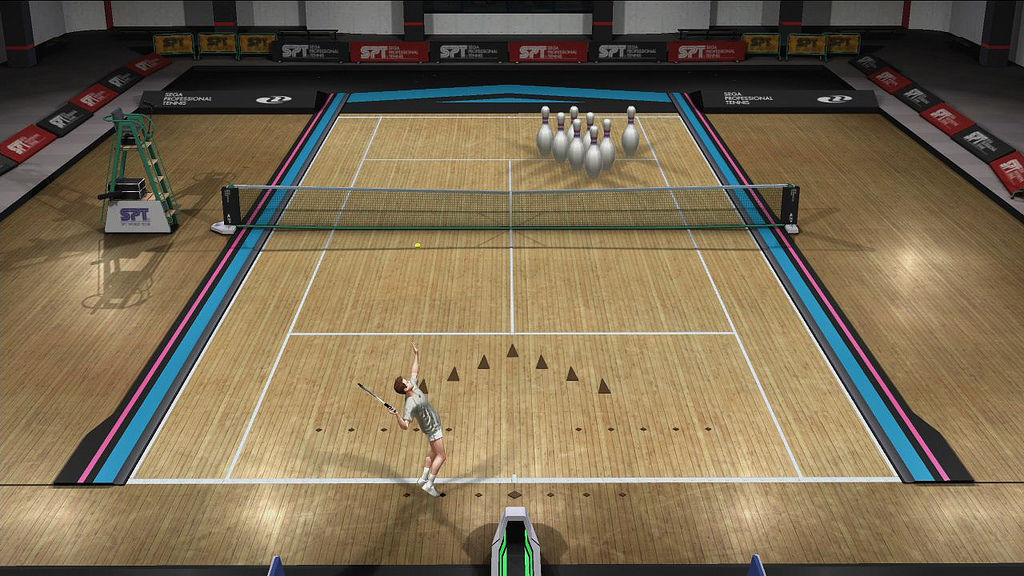
Author/Copyright holder: PlayStation Europe. Copyright terms and license: CC BY-NC 4.0

Many games focus on physical work, such as tennis (above), football, rugby, etc. With increasingly sophisticated sensors in devices, the gameplay is a dead ringer for the actual activity. Just be careful of wearing out the carpet with your golf shoes.

Exploration Work

Discovering new things is cool. We enjoy finding out about things we didn’t know about before. Uncovering the whole map in World of Warcraft is an achievement for a reason. People like to explore. Here again, Sid Meier’s Civilization taps a powerful vein. One way to uncover secrets of technology (such as code of laws, writing, and pottery) is by finding old villages in uncharted regions.

Creative Work

Making our own decisions and jumping outside of boundaries is also fun. People play “real life” over and over again in The Sims. Why do people spend valuable time living someone else’s “life” when real life tends to be hectic enough? The answer is the freedom to make choices they don’t have in their real lives. This freedom keeps the game compelling for these devoted players, turning the mundane into a creative outlet.

Imagine winning the European Cup in Football with 11 goalkeepers on the field. You can try that in Championship Manager and see how it goes. These games provide a safe space to try out risky life decisions.

We do a lot of work in games, but that work doesn’t feel like work—because it’s fun to us. Harnessing these fun aspects of work can give your gamification project a big boost.

Author/Copyright holder: Manager Game. Copyright terms and license: Fair Use

Football Manager offers the chance for creative work—something that managers of all kinds might be able to tap into.

“Fun is good.”
—Dr. Seuss, classic children’s storyteller

The test of effective gamification is if players don't feel like they are doing work. The reward of playing is fun, even if many of the tasks in a game are technically work. We might smile hearing people complain that they can’t harvest their virtual crops in time. Or that airplane travel kept them from collecting their daily reward or mystery prize. In truth, a person with such a dutiful mindset in gaming is likely to be as dutiful when clocking on at work.

Take Away

Strange as it may sound, games involve work, but it’s work that we want to do rather than work we have to do. We’ve all wished to get out of work early on a Friday. But many of us, if given that time, will throw ourselves happily into a different type of work as we play games. One difference may be that the “game work” is self-imposed, whereas “work work” feels enforced. Another difference may be that three hours of game work in our own time evaporates quickly. That same chunk of time spent stuck in an office, buried in work someone else asked us to do, perhaps on a dreary Monday morning, can drag slower than an aircraft carrier’s anchor on the sea bed.

These are essential considerations as you dabble and become proficient in gamification design. Good gamification projects will help work feel less like work and more like fun. All while still completing the work that needs doing.

References & Where to Learn More

Janaki Mythily Kumar and Mario Herger, Gamification at Work: Designing Engaging Business Software, The Interaction Design Foundation, 2014

Hero Image: Author/Copyright holder: Mike Prosser. Copyright terms and license: CC BY-SA 4.0

Topics in This Article

Learn More in This Course:

AI for Designers

12 days
13 % booked
View Course

What You Should Read Next

  • Read full article
    Bartle’s Player Types for Gamification - Article hero image
    Interaction Design Foundation logo

    Bartle’s Player Types for Gamification

    Gamification is not the same as game design, because it adds game-like elements to non-gaming environments. However, there is some overlap between game design and gamification design, and one area in which this is the case is with player types. The better you understand your players, the better you

    Social shares
    1.2k
    Published
    Read Article
  • Read full article
    A Brief History of Games - Article hero image
    Interaction Design Foundation logo

    A Brief History of Games

    Human history and games are inextricably intertwined. Irrefutable evidence resounds down through the ages that fun and games are not frivolous pursuits per se—instead, they come naturally to us as essential parts of being alive. When you understand the evolution of games, you can begin to make intel

    Social shares
    918
    Published
    Read Article
  • Read full article
    A Game Explained (an example of a single game and how it meets the rules of fun) - Article hero image
    Interaction Design Foundation logo

    A Game Explained (an example of a single game and how it meets the rules of fun)

    Fun is the key to how games work, and it’s the key to making gamification work, too. Without fun, gamification is simply another feature of a system or product – with fun, your product or system becomes much more enjoyable to use.There are several criteria which need to be met in order for a game to

    Social shares
    896
    Published
    Read Article
  • Read full article
    Player-Centered Design: Moving Beyond User-Centered Design for Gamification - Article hero image
    Interaction Design Foundation logo

    Player-Centered Design: Moving Beyond User-Centered Design for Gamification

    We’ve all come to think in terms of user-centred design over the years. It’s a critical component of UX design, and it helps us focus on what really matters when developing products. However, user-centred design is not enough for gamification. Here, we introduce the concept of player-centred design,

    Social shares
    744
    Published
    Read Article
  • Read full article
    The Persona Template for Gamification - Article hero image
    Interaction Design Foundation logo

    The Persona Template for Gamification

    For any gamification project, you’ll need to do research on players in order to determine what they will require from the gamified system. The culmination of this research is the development of a player persona; this is similar to a user persona (which most UX researchers will be intimately familiar

    Social shares
    734
    Published
    Read Article
  • Read full article
    Display Achievements to Encourage Website Usage - Article hero image
    Interaction Design Foundation logo

    Display Achievements to Encourage Website Usage

    You are doing so great; you’re top of the class! Don’t you just love to hear a compliment like this? We’re all human, and this is the way we are wired. We thrive on accomplishment. Whether you want to be better than everyone else or simply be better than your former self, knowing your achievements i

    Social shares
    716
    Published
    Read Article
  • Read full article
    Ideas for Conducting UX Research with Children - Article hero image
    Interaction Design Foundation logo

    Ideas for Conducting UX Research with Children

    One of the most challenging realms to conduct user research with is when you have to conduct research with children. There are, obviously, stringent ethical and legal protocols to be kept to if you work with children but it’s not just the moral aspect of this world. Children are not miniature adults

    Social shares
    709
    Published
    Read Article
  • Read full article
    The Use of Story and Emotions in Gamification - Article hero image
    Interaction Design Foundation logo

    The Use of Story and Emotions in Gamification

    Gamification projects can benefit from storytelling features; these features can help arouse emotional connections with players. They can enhance the player experience and improve the longevity and fun factor of the gamified features. Let’s take a closer look at how that might work, even if you don’

    Social shares
    683
    Published
    Read Article
  • Read full article
    Monitoring Player Motivation for Gamification - Article hero image
    Interaction Design Foundation logo

    Monitoring Player Motivation for Gamification

    One of the big questions facing us as gamification designers is, “When will your player get bored of your gamification project, and how can you keep their interest as long as possible?” Fortunately, there are ways to monitor player motivation so that you can respond to them accordingly. In their boo

    Social shares
    655
    Published
    Read Article
  • Read full article
    Happiness in Gaming - Article hero image
    Interaction Design Foundation logo

    Happiness in Gaming

    Audrey Hepburn, the star of the silver screen, said, “The most important thing is to enjoy your life – to be happy – it’s all that matters.” The ultimate goal of games and gamification is to create happiness in the player. Let’s look at how all the elements of fun come together in a single game. Th

    Social shares
    612
    Published
    Read Article

Top Articles

Top Topic Definitions

Feel Stuck?
Want Better Job Options?

AI is replacing jobs everywhere, yet design jobs are booming with a projected 45% job growth. With design skills, you can create products and services people love. More love means more impact and greater salary potential.

At IxDF, we help you from your first course to your next job, all in one place.

See How Design Skills Turn Into Job Options
Privacy Settings
By using this site, you accept our Cookie Policy and Terms of Use.
Customize
Accept all

Be the One Who Inspires

People remember who shares great ideas.

Share on:

Academic Credibility — On Autopilot

Don't waste time googling citation formats. Just copy, paste and look legit in seconds.

Feel Stuck? Want Freedom?

Join 326,029+ designers who get one powerful email each week. Learn to design a life you love.

Next email in
1
day
14
hrs
2
mins
52
secs

Free forever. No spam. Unsubscribe anytime.