Young girl seated at a computer, looking toward the monitor with one hand raised

Ideas for Conducting UX Research with Children

• 8 min read

715 Shares
Save

One of the most challenging realms to conduct user research with is when you have to conduct research with children. There are, obviously, stringent ethical and legal protocols to be kept to if you work with children but it’s not just the moral aspect of this world. Children are not miniature adults and the way we develop and design research will play a big part in whether we get the information we need or whether “children will be children” and they’d rather play in the park than with your product.

Here are some great ideas that might make UX research with children yield better results for you and your team:

Plan to Succeed

The more detailed your plan, the more likely it is to pay off. One great way to incorporate children into UX research is to develop a story for the research that puts the child into the lead role. It’s important to keep things as varied as possible and to remember that children have plenty of curiosity and are imaginative. So use devices to trigger this.

You may also want to think about increasing the number of observers you use for research sessions – it’s a lot harder to stop children from all talking at once than it is to stop adults from doing it and you don’t want to miss a valuable insight.

Recruit for Balance

When you recruit groups of children try to keep the numbers manageable – no more than 12 children per session and ideally a few less.

Most importantly, try to get a mix of personality types so that the children can create ideas together. Ask parents (or guardians) what their children are like – are they naturally talkative or do they prefer to let others do the talking? Are they good with groups of other children quickly or do they need time to get to know them?

This can also help inform the final design of a test as you mould it to the mixture of children that will be coming to the session.

Pay Attention to Communication

While older children might find it very easy to tell you what they think and feel about your product; it’s quite likely that younger children are going to need a bit of help. There’s no point getting frustrated with a bunch of 5 year olds because they can’t articulate what they feel.

Instead considered exercise where children can role play their feelings or draw them on flip chart paper (or any kind of paper). Make sure that drawing implements are suitable for the age group too.

Use Gamification Techniques to Keep Motivation

Don’t forget that most children have fairly short attention spans and try not to conduct research that lasts for hours. However, don’t be afraid to try and win back children’s attention using gamification. Have stars or sweets to hand out for participating in an exercise.

Consider using stick on smiley faces (and sad faces) to help children communicate their ideas too.

Always keep changing things up and try to provide as many different means to communicate and stay engaged as possible and don’t be afraid to improvise if something doesn’t seem to be working. It happens.


Author/Copyright holder: Stefano Montagner.Copyright terms and licence: CC BY 2.0

Have Patience and Learn to Step Back and Observe

It can take much longer for children to run through research than adults. They also have a way of heading off in their own direction and while it can be tempting to try and keep everyone focused all the way through; it can also be very valuable to let children explore in their own way too.

Allow for more time and be patient. Sometimes it’s going to be better to let everyone take their own course than to keep them on track. If things go too far from the beaten path then gently nudge or incentivize a return to the plan but don’t be abrupt about this.

Don’t Make the Research “A Test”

Sure it’s a test of your product but it’s very important that children don’t feel like they’re the ones being tested. In many parts of the world today, children are already under incredible pressure with endless amounts of testing at school. So try not to add to that pressure.

It’s also important to be aware that you may not give this impression consciously. There’s always a bit of a power gap between an adult and a child and they may interpret this gap as being tested. So make certain that you stay neutral and let the child do the leading (rather than leading the child) – you want their opinion not the opinion that they think will please you most.

In many instances this can be easier if you use a second observer to do the writing and note taking while the researcher focuses on working with the child.

Keep the Environment Child Friendly and Safe

It’s important to use the environment to make children welcome. Put up some child friendly posters, make certain that chairs and desks are appropriately sized, use children’s cups, etc. Ideally it should have a hint of “classroom” about it – that will set the scene for the appropriate behaviour from your participants too.
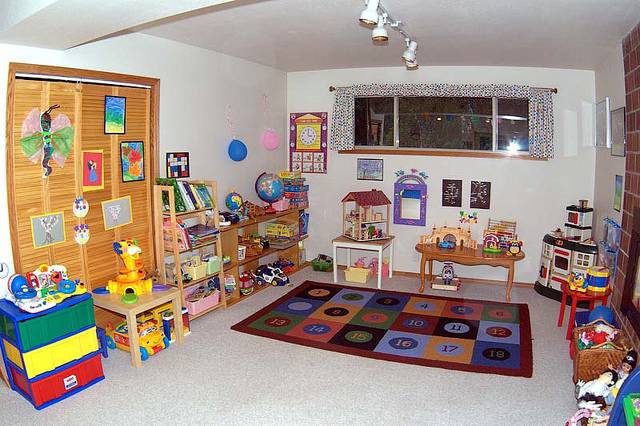

Author/Copyright holder: Vlad B.Copyright terms and licence: CC BY-NC-ND 2.0

Get Their Attention and Keep Them Engaged

It’s always good to start up with a fun introduction exercise. Get kids tell you about their favourite TV shows (or draw them). Make sure they’re familiar with any technology that they’re going to use before moving on too.

Always keep sessions to under an hour and you may want to break once or even twice in that session with a little snack and/or drink. Keep visual distractions to a minimum too or attention spans may wander.

Seek Support from Parents

It’s important that parents be close by and if you find that a child’s not quite involved in the right way – don’t be afraid to seek their parent’s support (though do this subtly). They can also help you explain things more easily to their children sometimes too.

Summary

UX research with children is both challenging and rewarding. The tips above should help you get moving in a direction that works well. Of course, it takes quite a bit of practice to get good at this.

Header Image: Author/Copyright holder: reynermedia. Copyright terms and licence: CC BY 2.0


Learn More in This Course:

Learn Design and AI From the Best

Get one powerful email each week, like 315,445 others.

Next email in:

What You Should Read Next

  • Read full article
    What is Interaction Design? - Article hero image

    What is Interaction Design?

    Interaction design is an important component within the giant umbrella of user experience (UX) design. In this article, we’ll explain what interaction design is, some useful models of interaction design, as well as briefly describe what an interaction designer usually does.A simple and useful unders

    Social shares
    1.5k
    Published
    Read Article
  • Read full article
    Apple’s Product Development Process – Inside the World’s Greatest Design Organization - Article hero image

    Apple’s Product Development Process – Inside the World’s Greatest Design Organization

    Apple’s Product Development Process may be one of the most successful design processes ever implemented. With a valuation that exceeds $2 trillion, there’s a lot that designers can learn from Apple and introduce into their own design environments.Apple is a notoriously secretive business. In Steve J

    Social shares
    1.4k
    Published
    Read Article
  • Read full article
    Shneiderman’s Eight Golden Rules Will Help You Design Better Interfaces - Article hero image

    Shneiderman’s Eight Golden Rules Will Help You Design Better Interfaces

    Follow Ben Shneiderman’s 'Eight Golden Rules of Interface Design' if you want to design great, productive and frustration-free user interfaces. Apple, Google and Microsoft are among some of the highly successful companies whose well-designed products reflect Shneiderman’s rules. The characteristics

    Social shares
    1.4k
    Published
    Read Article
  • Read full article
    How to Change Your Career from Graphic Design to UX Design - Article hero image

    How to Change Your Career from Graphic Design to UX Design

    If there’s an occupation that is 100% linked with the public’s idea of what design is all about, it’s graphic design. From the familiar golden arches of the McDonald’s brand to the typography and colors of movie posters, graphic designers create some of the most iconic and ubiquitous designs around

    Social shares
    1.4k
    Published
    Read Article
  • Read full article
    The Grid System: Building a Solid Design Layout - Article hero image

    The Grid System: Building a Solid Design Layout

    Now that we’ve seen some grids at work in the Rule of Thirds article, let’s examine them a little more deeply. As a concept that deals so fundamentally with the fabric and background of our work as designers, it’s easy to overlook the power of grids and think more about the elements we want to creat

    Social shares
    1.4k
    Published
    Read Article
  • Read full article
    The Principles of Service Design Thinking - Building Better Services - Article hero image

    The Principles of Service Design Thinking - Building Better Services

    Service design is all about taking a service and making it meet the user’s and customer’s needs for that service. It can be used to improve an existing service or to create a new service from scratch. In order to adapt to service design, a UX designer will need to understand the basic principles of

    Social shares
    1.4k
    Published
    Read Article
  • Read full article
    A Simple Introduction to Lean UX - Article hero image

    A Simple Introduction to Lean UX

    Lean UX is an incredibly useful technique when working on projects where the Agile development method is used. Traditional UX techniques often don’t work when development is conducted in rapid bursts – there’s not enough time to deliver UX in the same way. Fundamentally Lean UX and other forms of UX

    Social shares
    1.3k
    Published
    Read Article
  • Read full article
    Dieter Rams: 10 Timeless Commandments for Good Design - Article hero image

    Dieter Rams: 10 Timeless Commandments for Good Design

    Let’s pay a virtual visit to a famous industrial designer’s workshop. By examining the principles of his winning approach, we can incorporate vital elements into our designs in the “less is more” age.As user experience practitioners, most of us have worked with Nielsen and Molich’s 10 heuristics or

    Social shares
    1.3k
    Published
    Read Article
  • Read full article
    The 7 Factors that Influence User Experience - Article hero image

    The 7 Factors that Influence User Experience

    User Experience (UX) is critical to the success or failure of a product in the market but what do we mean by UX? All too often UX is confused with usability which describes to some extent how easy a product is to use and it is true that UX as a discipline began with usability – however, UX has grown

    Social shares
    1.3k
    Published
    Read Article
  • Read full article
    10 Free-to-Use Wireframing Tools for UX Designers in 2026 - Article hero image

    10 Free-to-Use Wireframing Tools for UX Designers in 2026

    Wireframes help you quickly ideate and test your ideas. While paper wireframes are the fastest to create, digital wireframes look more polished and presentable. If you are looking for a pocket-friendly wireframing tool, look no further.Whether you prefer browser-based apps or offline desktop tools,

    Social shares
    1.3k
    Published
    Read Article

Top Articles

Top Topic Definitions

39% of Today's Skills Will Change by 2030

The World Economic Forum expects 39% of today's skills to be transformed or become outdated by 2030.

The good news is that jobs in UX / UI design and AI are among the fastest-growing professions globally.

Build Skills That Keep You Relevant

Privacy Settings

By using this site, you accept our Cookie Policy and Terms of Use.
Customize
Accept all

Be the One Who Inspires

People remember who shares great ideas.

Share on:

Academic Credibility — On Autopilot

Don't waste time googling citation formats. Just copy, paste and look legit in seconds.

Learn Design and AI From the Best

Get one powerful email each week, like 315,445 others.

Next email in: