Why Do We Not Act on Climate Change?

by Laia Tremosa • 12 min read

463 Shares

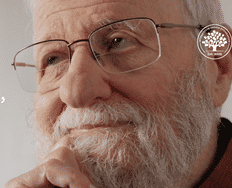
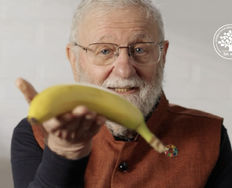
Why do we struggle to act on climate change? In this video, Father of UX design, Don Norman, sheds light on the key reasons behind our inaction. Don will explain why we humans react more effectively to immediate threats and why we often don’t understand and address longer-term, slower-moving, complex problems that don't have immediate, visible symptoms. Don will also investigate why successful and powerful companies are reluctant to change.

Transcript

People Will Respond to Disasters but Not Prevent Them

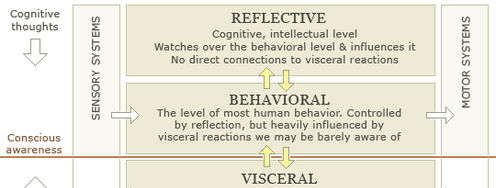
The brain prioritizes the information it receives through the senses. For this reason, people find it difficult to understand issues they cannot directly perceive, such as the effects of climate change. Despite our incredible ability to process abstract information, the brain is more likely to trust stimuli it can see, hear, touch, taste, or smell, as these inputs directly and immediately impact the sensory systems.

Additionally, the brain has limited processing capacity and tends to focus on the most immediate information. Our brains might overlook issues that are not immediately perceptible or do not have a substantial emotional impact.

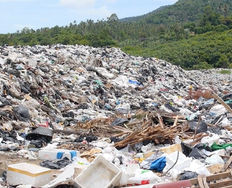
Overall, the brain's reliance on sensory inputs and attentional mechanisms can make it difficult for people to understand complex issues that do not have visible symptoms. Once a disaster has occurred, and people can perceive its negative impact through their senses, they're quick to respond and mobilize. Now that climate change has started to have tangible effects, it might be easier for people to acknowledge the situation's urgency and act to mitigate it.

The Take Away

Humans react to short-term, visible changes over long-term abstract ones. We ignore problems without immediate or obvious impact, such as climate change. Additionally, we tend to think linearly and we often overlook complex issues' interconnected causes and effects. Therefore, it takes time to understand systemic issues and multiple factors that contribute to global, systemic problems.

An additional issue is that the current state of the world rewards successful and powerful companies with wealth and influence. So, they’re reluctant to change as it could endanger their revenue stream and power position. Don Norman encourages both individuals and companies to move from short-term thinking and into long-term thinking—and acting.

The visible and tangible effects of climate change help us move into long-term thinking and acting. Now that we see the effect of our actions, we start to recognize the urgency of the situation. As a result, more and more people will take action to mitigate its effects and change their behaviors to make environmentally conscious decisions.  

References and Where to Learn More

For more on Don Norman’s take on the state of the world, see his book, Design for a Better World: Meaningful, Sustainable, Humanity Centered.

Additional resources from the book “Design for a Better World” are available at the Resources for DBW website.

Read more articles and essays by Don Norman on JND.org.

Read about human behavior and climate change in Psychological science and global climate change: contributions, challenges, and opportunities by Janet K. Swim et al.

Read about the barriers to climate change action in A framework to diagnose barriers to climate change adaptation by Susanne C. Moser and Julia A. Ekstrom.

Topics in This Article

Learn More in This Course:

AI for Designers

11 days
12 % booked
View Course

What You Should Read Next

  • Read full article
    Don Norman’s Three Levels of Design - Article hero image
    Interaction Design Foundation logo

    Don Norman’s Three Levels of Design

    Don Norman is deservedly considered to be one of the greats of usability design. He is founder of the Nielsen Norman Group and he is also a former professor of Cognitive Science (among many, many, many other things). In short, he’s a guy who has spent his whole life researching what makes users tick

    Social shares
    883
    Published
    Read Article
  • Read full article
    Affordances and Design - Article hero image
    Interaction Design Foundation logo

    Affordances and Design

    'Affordance' is a term most designers will have come across at some stage of their studies and careers. Don Norman introduced this term to the design community.Despite Don Norman’s best efforts, the underlying meaning of the term is sometimes misunderstood.How to define 'Affordance'Don Norman first

    Social shares
    811
    Published
    Read Article
  • Read full article
    How Can Designers Adapt to New Technologies? The Future of Technology in Design - Article hero image
    Interaction Design Foundation logo

    How Can Designers Adapt to New Technologies? The Future of Technology in Design

    The design industry is rapidly evolving with the integration of technologies such as artificial intelligence (AI) and 3D printing. While there may be concerns about job displacement, history has demonstrated that new technologies typically create more job opportunities. Don Norman, author of The Des

    Social shares
    667
    Published
    Read Article
  • Read full article
    Don Norman’s Top Tips from the Design for the 21st Century Course - Article hero image
    Interaction Design Foundation logo

    Don Norman’s Top Tips from the Design for the 21st Century Course

    The design field is evolving. It’s been proven that aside from driving business success and delivering beautiful and successful products, design can be pivotal to solving complex human issues. For instance, GE Healthcare used Design Thinking to improve the MR scanner experience for children—which is

    Social shares
    567
    Published
    Read Article
  • Read full article
    How Designers Can Help Companies Design for the Circular Economy - Article hero image
    Interaction Design Foundation logo

    How Designers Can Help Companies Design for the Circular Economy

    The circular economy sounds like a simple idea to resolve the crisis we face as a species. A circular economy generates zero waste. Once a component enters the cycle, it continues to be used for a long time. And once it is unusable, it can degrade naturally. However, as UX pioneer Don Norman explain

    Social shares
    527
    Published
    Read Article
  • Read full article
    Use More Meaningful Measurements in Design and in the World - Article hero image
    Interaction Design Foundation logo

    Use More Meaningful Measurements in Design and in the World

    What we measure and how we do it significantly impact people’s lives. Often, we measure certain things just because they’re easy to measure, and that’s how it’s always been done. But we have to ask ourselves; are the measurements meaningful or not?We measure a country’s Gross Domestic Product (GDP)

    Social shares
    486
    Published
    Read Article
  • Read full article
    Recycling is Not Enough. Let's Design for Reuse - Article hero image
    Interaction Design Foundation logo

    Recycling is Not Enough. Let's Design for Reuse

    “We live in the age of technology and luxury, but we also live in the age of waste,” Don Norman explains. In this video, the grandfather of User Experience Design, Don Norman unpacks the world of waste we have collectively generated. He examines aspects of our daily lives that we take for granted an

    Social shares
    452
    Published
    Read Article
  • Read full article
    Sustainability Is Not Enough - Article hero image
    Interaction Design Foundation logo

    Sustainability Is Not Enough

    Sustainable design. Sustainable fashion. Sustainable living. We often hear these terms in marketing campaigns and popular media. But what does sustainability mean and why does pioneer of User Experience Design Don Norman think that sustainability shouldn’t be our goal when we design?In this video, D

    Social shares
    452
    Published
    Read Article
  • Read full article
    How to Apply Incremental Modular Design to Global Challenges - Article hero image
    Interaction Design Foundation logo

    How to Apply Incremental Modular Design to Global Challenges

    Incrementalism or muddling through offers a flexible way to approach complex problems. However, pitching to funders who want to see concrete results from their investments can be difficult. To address this, Don Norman offers a modified version of incrementalism that borrows concepts from software de

    Social shares
    438
    Published
    Read Article
  • Read full article
    Use Circular Design To Reverse Harm - Article hero image
    Interaction Design Foundation logo

    Use Circular Design To Reverse Harm

    Nature is circular. Nothing ever goes to waste. The banana peel we discard degrades into nutritious compost for plants. Even the remains of deceased animals and humans disintegrate into the soil. Human engineering and design, on the other hand, are linear processes. And that has put us on a one-way

    Social shares
    417
    Published
    Read Article

Top Articles

Top Topic Definitions

Feel Stuck?
Want Better Job Options?

AI is replacing jobs everywhere, yet design jobs are booming with a projected 45% job growth. With design skills, you can create products and services people love. More love means more impact and greater salary potential.

At IxDF, we help you from your first course to your next job, all in one place.

See How Design Skills Turn Into Job Options
Privacy Settings
By using this site, you accept our Cookie Policy and Terms of Use.
Customize
Accept all

Be the One Who Inspires

People remember who shares great ideas.

Share on:

Academic Credibility — On Autopilot

Don't waste time googling citation formats. Just copy, paste and look legit in seconds.

Feel Stuck? Want Freedom?

Join 326,067+ designers who get one powerful email each week. Learn to design a life you love.

Next email in
0
days
20
hrs
9
mins
35
secs

Free forever. No spam. Unsubscribe anytime.