Hand-drawn website wireframes fill a spiral notebook page, with image placeholders, text lines, and interface icons

UX Basics and the Entrepreneurial - Testing Solutions – Wireframes

• 4 min read

475 Shares
Save

Welcome back to our UX basics series for entrepreneurs. If you’ve missed any of the previous episodes in this series you can find them under the UX Daily tab on our website. Today, we’re looking at the process of testing solutions and our next step from sketching is wireframing.

What is Wireframing?

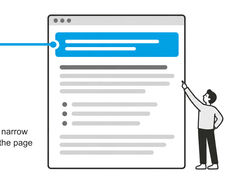
Wireframes are a little more solid than sketches; in general they are used for website and computer applications and may not apply to other types of physical product.

Generally, you will create wireframes on a computer – so they take more effort than sketches. They also tend to be more detailed than the original sketch.

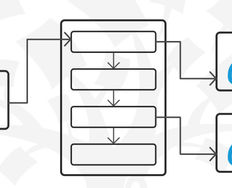
A lo-fidelity wireframe will generally contain little in the way of interactive components (though you may well map a series of interactions using multiple wireframes) and can be generated reasonably quickly. Lo-fidelity wireframes are great for developing your information architecture and process flow without going into too much detail.
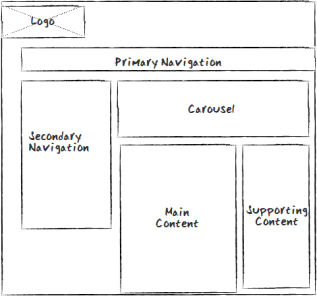


Once you have your lo-fidelity wireframe you can put it into the hands of your potential users for their feedback. One of the drawbacks of this approach is that it involves a fair amount of paper shuffling and it may be that the feedback you get is tainted by the amount of effort that the user has to put in without seeing the results of just touching a button. You need to manage lo-fidelity wireframe testing quite carefully because of this and it may take a little more involvement from the testing team than is readily apparent when you generate the wireframes.

Hi-fidelity wireframes are closer to a prototype they tend not to have any of the graphic design elements attached but the process flow will generally be automated and the user can click buttons, links, etc. and see where they lead them to.
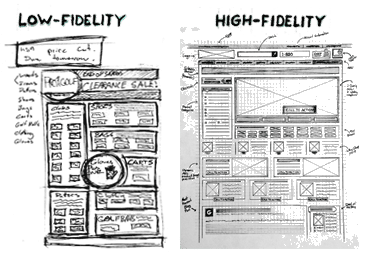


This can offer better insight into what users will actually do rather than what they say they will do at any point in a process. It also has the advantage that you can use analytics software to record the user’s approach and thus eliminate the need to make copious notes on that approach (you just review the analytics data when you want to know how a user behaved).

The downside of hi-fidelity wireframes is that they require a bit more effort in the first instance. It requires some familiarity with a wireframing package; it also means that you’re going to have script interactions etc.

In essence you want to start using hi-fidelity wireframes when you’re nearly ready to prototype the final product. This is your last chance to iron out any major issues before committing large amounts of development resources to solving the issue after you’ve coded the platform. 


Image Source:

Josh Whitney Design (link to image)

UX Stack Exchange (link to image)

Ars Technica (link to image)

Learn More in This Course:

Learn Design and AI From the Best

Get one powerful email each week, like 312,435 others.

Next email in:

What You Should Read Next

  • Read full article
    Turn Your Non-Design Experience into Design Portfolio Gold - Article hero image

    Turn Your Non-Design Experience into Design Portfolio Gold

    Have you ever wondered how to transition into UX and product design from a different career background without feeling insecure? Let's uncover strategies to confidently bridge the gap and showcase your skills to prospective employers with confidence and clarity.In this video, Morgane Peng, Desi

    Social shares
    507
    Published
    Read Article
  • Read full article
    Structure First: The Inverted Pyramid and Visual Organization - Article hero image

    Structure First: The Inverted Pyramid and Visual Organization

    This clip examines two principles that work hand in hand to make web content readable: the inverted pyramid approach to information order and the use of visual structure to help users scan efficiently. William Hudson, UX Strategist and Founder of Syntagm Ltd, describes the theoretical basis and prac

    Social shares
    205
    Published
    Read Article
  • Read full article
    What Is Card Sorting? - Article hero image

    What Is Card Sorting?

    In this video, William Hudson, UX Strategist and Founder of Syntagm Ltd, introduces card sorting: what it is, where it comes from, and the broad range of problems it can help solve.Card sorting is a research technique in which participants organize a set of items into groups that make sense to them,

    Social shares
    172
    Published
    Read Article
  • Read full article
    Design Accessible Navigation for Keyboards and Screen Readers - Article hero image

    Design Accessible Navigation for Keyboards and Screen Readers

    Accessibility is often treated as a finishing touch, but for navigation, it belongs at the foundation. Menus are how users reach everything else on a site, so a menu that works only with a mouse quietly shuts out anyone who depends on a keyboard, a screen reader, or another form of assistive technol

    Social shares
    172
    Published
    Read Article
  • Read full article
    The Scent of Information: Give Users the Confidence to Click - Article hero image

    The Scent of Information: Give Users the Confidence to Click

    William Hudson, UX Strategist and Founder of Syntagm Ltd, introduces the scent of information as a model for understanding how users navigate toward their goals, and sets out the principles for writing navigation links that strengthen that scent.Information Foraging and the Scent of InformationThe s

    Social shares
    172
    Published
    Read Article
  • Read full article
    4 UI Design Tips Every Designer Needs to Know - Article hero image

    4 UI Design Tips Every Designer Needs to Know

    User interface (UI) design can make or break any digital product. A user often won’t even notice when they interact with a great UI. They feel the visual appeal and simply trust it. On the contrary, a bad UI design can prevent the user from interacting with a product intuitively or at all and lead t

    Social shares
    646
    Published
    Read Article
  • Read full article
    How to Design Use Cases in UX - Article hero image

    How to Design Use Cases in UX

    Imagine a new mobile app or an e-commerce site gets launched; it looks great, sure, and it should be a hit because it at least looks like it’s got what it takes, but—drumroll—it tanks in the marketplace, all because people find it hard to complete even the simplest tasks. That’s rough, but—behind th

    Social shares
    804
    Published
    Read Article
  • Read full article
    How to Become a Product Manager: Best Career Advice - Article hero image

    How to Become a Product Manager: Best Career Advice

    Pick any product and you’ll find that product management is vital to how successful it is—and product managers are who make sure that a product’s life cycle runs smoothly, and it means they know how to align strategy, vision, and user needs. Product managers split into multiple roles that have got u

    Social shares
    603
    Published
    Read Article
  • Read full article
    Bad UX Exposed: A Comprehensive Guide to Avoiding Pitfalls - Article hero image

    Bad UX Exposed: A Comprehensive Guide to Avoiding Pitfalls

    In today’s vibrant digital design landscape, creating meaningful connections with users goes beyond offering innovative products or services. It leads us into the world of user experience design (or UX design). This critical factor shapes our interaction with the users and plays a big role in making

    Social shares
    975
    Published
    Read Article
  • Read full article
    Understand the Various Types of Creativity - Article hero image

    Understand the Various Types of Creativity

    When you want to be more creative, you’ll want to learn the techniques for creative thinking and understand the various forms of creativity and creative processes. This video will give you an overview of some of the different forms of creativity. For example, you’ll learn that there are two types of

    Social shares
    578
    Published
    Read Article

Top Articles

Top Topic Definitions

39% of Today's Skills Will Change by 2030

The World Economic Forum expects 39% of today's skills to be transformed or become outdated by 2030.

The good news is that jobs in UX / UI design and AI are among the fastest-growing professions globally.

Build Skills That Keep You Relevant

Privacy Settings

By using this site, you accept our Cookie Policy and Terms of Use.
Customize
Accept all

Be the One Who Inspires

People remember who shares great ideas.

Share on:

Academic Credibility — On Autopilot

Don't waste time googling citation formats. Just copy, paste and look legit in seconds.

Learn Design and AI From the Best

Get one powerful email each week, like 312,435 others.

Next email in: