Tips for Travel for International UX Research

• 8 min read

403 Shares

International UX research is becoming more and more common as we live in an increasingly connected world. You may be called upon to visit the booming markets of Africa, Asia or South America or even to head from one of those markets to Europe or North America. This is a great thing for your users. There’s no substitute for their opinion and the better your localization efforts, the more likely you are to make a successful entry into a new market.

Travel, however, also presents some unusual challenges and ones that you may not always appreciate if you haven’t done much in the way of international travel before. Working in another country is very different to visiting one for a holiday. With that in mind, I’d like to offer up a few tips gained from my own extensive international travel for work to make your international research trips a bit easier.

Insurance is NOT Optional

Years ago I was in Malaysia for a conference. My flight arrived much earlier than my colleagues’ flights and I decide I’d explore KL until they arrived. Then, I went and left my wallet in the back of a taxi. I’d have been $4,000 poorer (most of the countries I travel in don’t have a high-level of credit card acceptance) if it wasn’t for the company’s travel insurance.

It also came in handy a few days later when on a side street in Penang; I fell into a pot hole and twisted my ankle into a violently sprained ankle. It’s much easier to visit a hospital when an insurer’s paying than when you are. Insurance for business travel is simply not optional; medical or other emergencies can be incredibly expensive and inconvenient to deal with at the best of times.

At the worst and without insurance? I know at least two people who have had to fly long haul with a broken leg because they had no insurance. Don’t be that guy.

Do Your Research

The UK’s Foreign Office, the CIA Work Factbook, and the Internet in general can offer some pretty good starting information to plan your trip around. What currency do you need to take with you? Can you use a credit card? Are ATMs easy to find? Do you need to be vaccinated against any nasty endemic diseases? Where are the “no go” zones of the city you’re visiting? And so on…

You can’t guarantee a problem free trip anywhere but you can make it much more likely if you do your homework before you travel.
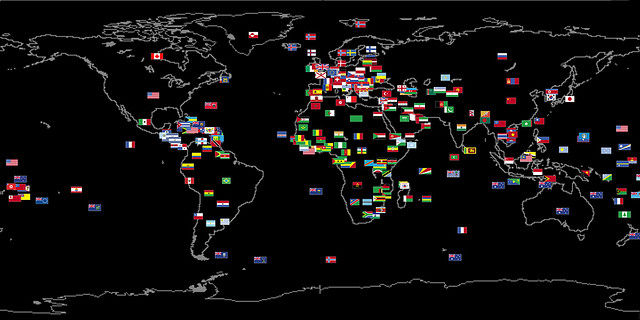


Author/Copyright holder: Steven Kay. Copyright terms and licence: CC BY 2.0

Read Up on the Culture

You can make your research much easier if you don’t offend someone the first time you meet. Knowing that it’s bad form to shake hands with your left hand in much of the world (it has to do with toilet habits) or that giving a Chinese host four of anything is really rude (four sounds like the Chinese word for death and is as unlucky as 13 in the West); gives you a much better chance of making the right impression first time round.

Fortunately, people are generally forgiving of the occasional faux pas but it’s better to avoid them if you can.

Talk to People When You Can

Expats, hotel staff, clients, colleagues, etc. can all help you make the most out of your travel. They’ll be able to give you up-to-date information on what’s going on, where to go, and what to see. Most importantly, they may be able to point you towards the best places to eat with the lowest chances of food poisoning.

Don’t be afraid to engage in conversations with anyone you meet but do be sensible. How many times have you made a best friend while walking down the street at home? Never, right? So be cautious if someone approaches you and tries to get you to accompany them or do something you wouldn’t normally do elsewhere.



Author/Copyright holder: Sascha Kohlmann. Copyright terms and licence: CC BY-SA 2.0

Always Carry The Hotel’s Card

Even if you speak the local language but especially if you don’t – the hotel’s business card can be a life saver. This is doubly true if you stagger out of a local watering hole at 4 a.m. with no idea how to get home. Most hotels print a map as well as their address on their cards now and that makes it much easier for a taxi driver to get you home.

Don’t Be Afraid of Public Transport

Buses can be a little difficult to figure out but most of the world’s trains and subways and even overhead rail networks are very easy to use. They’re usually cheaper than other forms of transport and give you a chance to interact with locals too. Make sure you keep an eye on the rules of the network though; you don’t want to be fined for eating and drinking on the tube if it’s against the law.



Author/Copyright holder: MIKI Yoshihito. Copyright terms and licence: CC BY 2.0

Keep Your Eyes and Ears Open

Look around you and listen to what’s going on. You can often find out useful information from the way other people behave. For example, if no-one on the train is using a smartphone – it’s either because it’s not allowed or because it’s likely to be stolen and you don’t want to get in trouble either way.

You can also find out about more serious issues if you pay attention. I’ve been in several cities where political protests have got out of control during my visit but I’ve always been able to avoid those places by knowing where they’ll take place. Always ask in your hotel if there’s anything you should now.

Small Change is Your Friend

If you travel in the developing world small change is essential to being able to transact with taxi drivers (or tuk-tuks, motos, rickshaws, etc.) or street vendors or a multitude of other people. $100 may not seem like a lot to you but to many people it’s more than a month’s wages. Keeping small change on you makes life easier for you and for everyone around you.

Never Forget Your Phone

Your phone is your emergency lifeline and wherever you travel; don’t leave it behind when you go out. You can always call the hotel and get them to send a car or a colleague and get directions, etc. if you have your phone.

 Header Image: Author/Copyright holder: Experientia. Copyright terms and licence: All rights reserved. Img


Learn More in This Course:

AI for Designers

9 days
19 % booked
View Course

What You Should Read Next

  • Read full article
    Why Care about Statistical Significance? - Article hero image
    Interaction Design Foundation logo

    Why Care about Statistical Significance?

    The categorical data depicts the success and failure rate of the low-fidelity wireframe above. There is not a large enough difference between the two to determine if the designs were successful.There is an element of error involved in measuring anything. So, when we want to compare measurements, how

    Social shares
    432
    Published
    Read Article
  • Read full article
    Web Fonts: Definition and 10 Recommendations - Article hero image
    Interaction Design Foundation logo

    Web Fonts: Definition and 10 Recommendations

    Web fonts bring digital content to life. They enhance readability, set the tone, and ensure consistency across various platforms—all vital ingredients. When you understand web fonts and their impact, it can help you with effective website creation—and greatly so. We’ll provide a comprehensive overvi

    Social shares
    781
    Published
    Read Article
  • Read full article
    How to Screen Research Participants - Article hero image
    Interaction Design Foundation logo

    How to Screen Research Participants

    Finding the right participants is crucial for gathering user research. We usually need to do research with participants having a particular set of needs or experience. In this short video, you will find out about the basic need for screening and how we make sure that we have suitably qualified parti

    Social shares
    450
    Published
    Read Article
  • Read full article
    Pitfalls in Recruiting Participants for User Research - Article hero image
    Interaction Design Foundation logo

    Pitfalls in Recruiting Participants for User Research

    The level of participant engagement is an important part of the user research results. Our results are dependent on proper engagement with our participants. In this video we look at some of the issues around participant recruitment and hear practical examples that arose in a large online study.[[vid

    Social shares
    419
    Published
    Read Article
  • Read full article
    How to Fit Quantitative Research into the Project Lifecycle - Article hero image
    Interaction Design Foundation logo

    How to Fit Quantitative Research into the Project Lifecycle

    Quantitative research methods fit into the project lifecycle at different stages of the process.In this video, we see where different quantitative research methods fit into a typical project lifecycle. Bear in mind that even with an iterative process such as Agile, the short cycles still address dif

    Social shares
    510
    Published
    Read Article
  • Read full article
    How to Resolve Conflicts Between Design Thinking and Marketing - Article hero image
    Interaction Design Foundation logo

    How to Resolve Conflicts Between Design Thinking and Marketing

    In the past, designers often reported to marketing managers and were neither expected nor allowed to make business decisions. When traditionally-structured companies transition to a design-driven mindset, there can be friction between the marketing and design teams. Let’s take a closer look at this

    Social shares
    682
    Published
    Read Article
  • Read full article
    Stop the Generic Portfolio Trap! Design a Stand-Out Portfolio for Your UX/UI Niche: User Research - Article hero image
    Interaction Design Foundation logo

    Stop the Generic Portfolio Trap! Design a Stand-Out Portfolio for Your UX/UI Niche: User Research

    User research is indispensable—and without it, well... UX design is guesswork. When you’re a user researcher, you know this well—but it can be hard to communicate your work in a way that grabs the viewer and holds their attention. And that’s what a portfolio is all about—grabbing the attention of yo

    Social shares
    383
    Published
    Read Article
  • Read full article
    Top Service Blueprint Templates - Article hero image
    Interaction Design Foundation logo

    Top Service Blueprint Templates

    Service blueprint tools are vital for effective customer experience design—and for designers to make experiences that are exceptional. Here, we’ll discuss why these tools are so important. What’s more, we’ll explore templates and practical resources to create high-quality, efficient service blueprin

    Social shares
    638
    Published
    Read Article
  • Read full article
    How to Write Research Questions that Lead to Confident Design - Article hero image
    Interaction Design Foundation logo

    How to Write Research Questions that Lead to Confident Design

    Designing with Data provides an extensive background to A/B testing.As with all other research methods, we need to start with a research question. A/B testing concerns itself with changes in user behavior, meaning that our questions need to be centered on measurable goals. In many cases, these will

    Social shares
    450
    Published
    Read Article
  • Read full article
    Getting Started - Article hero image
    Interaction Design Foundation logo

    Getting Started

    We start our introduction to A/B and multivariate testing (MVT) by looking at their basic principles and their differences. Note that the video mentions Google Optimize, which has been withdrawn. Google Firebase can be used for mobile platforms. Third-party solutions are needed for A/B testing on th

    Social shares
    225
    Published
    Read Article

Top Articles

Top Topic Definitions

Feel Stuck?
Want Better Job Options?

AI is replacing jobs everywhere, yet design jobs are booming with a projected 45% job growth. With design skills, you can create products and services people love. More love means more impact and greater salary potential.

At IxDF, we help you from your first course to your next job, all in one place.

See How Design Skills Turn Into Job Options
Privacy Settings
By using this site, you accept our Cookie Policy and Terms of Use.
Customize
Accept all

Be the One Who Inspires

People remember who shares great ideas.

Share on:

Academic Credibility — On Autopilot

Don't waste time googling citation formats. Just copy, paste and look legit in seconds.

Feel stuck? Want Freedom?

Get one powerful email each week, like 325,759 others.

Learn to design a life you love.

Next email in:
5
days
17
hrs
55
mins
28
secs