Yesterday, we took a look at some of the practical steps that you can take to localize your website or application to improve the user experience. Today, we’re going to take a look beyond the website itself and ask; how can we improve the user experience via localization to further enhance the return on investment (ROI)?
Google is Not Global
It is very easy to spend our efforts pleasing Google. In the Western world it accounts for the majority of search traffic and it’s absolutely essential for us to get our web offerings as high up in the Google rankings as possible. Search Engine Optimization efforts are almost entirely about Google and perhaps one or two others (such as Microsoft’s Bing).
The bad news is that this isn’t going to work for all marketplaces. Google is hampered in China and not the top search in Russia, for example. Chinese users rely on Baidu and Russian users on Yandex much more than Google. Optimizing localized sites for local search engines is going to bring in better results.
This is equally important when it comes to your Search Engine Marketing spend. Paying Google for Chinese clicks just doesn’t make sense.
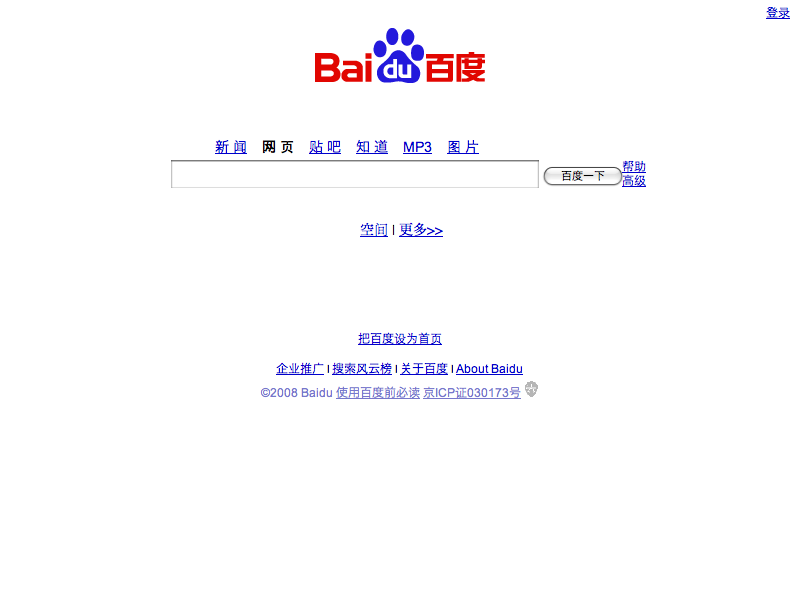
Author/Copyright holder: Barry Schwartz. Copyright terms and licence: CC BY-NC 2.0
Many Other Services Aren’t Global
It’s not just search engines that don’t reach everywhere. There are markets where some of the world’s most popular tools don’t exist. This can be due to censorship and it can be due to a lack of localization for those products too.
If all your embedded videos are found on YouTube, they won’t be viewable in China. Nor will Chinese users be liking and sharing your posts on Facebook. Both of those services are blocked in China. There are local equivalents. Youku is a popular Chinese video sharing site and there are others to choose from too. Sina Weibo is the Chinese social network of choice.
One thing that you should scare you away from shared hosting when you localize is that many IP ranges are blocked by censorious regimes. If your shared host operates a forbidden site, your site will be blocked as a consequence too.
Localizing off your own platform is every bit as important as localizing on that platform.

Author/Copyright holder: Jon Russell. Copyright terms and licence: CC BY-ND 2.0
Make it Legal
The easiest way to reduce your localization ROI is to find yourself in the position where you’re paying large fines for breaching the law.
Almost every country on earth has slightly different regulations that govern things like: user privacy, protection of data, the terms of use and service, complaint handling, refund processing, cash handling (even virtual cash), tax payments, etc.
Before you launch your localization efforts, they need a once over from a legal expert from the environment that you intend to operate in. This is going to be expensive but it’s something that you can’t avoid.
Once you’re fully compliant with local law; you need to ensure that your users can find the information that they need easily and that it’s not confused with the legal information supplied in other places.
Consider Payment Methods Carefully
This may be one of the biggest unexpected headaches of localization programs. Payment methods and customer expectations of payment methods can differ dramatically. PayPal is blocked in many countries, here in Cambodia you can’t use PayPal at all – the banks don’t qualify for the facility. Credit cards may be unknown or rare (another issue in Cambodia). If cards are used; they may not be Visa and Mastercard. China, for example, uses Union Pay for the majority of transactions.
Users in the Netherlands expect to use their bank’s secure payment facilities to buy things. Users in the Netherlands can pay online with a digital form that allows you to take the money from their bank. In Austria, which operates similar payment processing facilities, you must have a hard copy of that form or you’re breaking the law when you take money.
And so on…
You’re not going to get any kind of Return on Investment whatsoever if you can’t take money for your goods, product or service.
Field Test Localization Before You Go Live
This should be second nature to user experience professionals. User testing is, of course, an essential part of the skills required to do the job. However, it can be easy to assume that because you’ve spent a lot of money on localization and because your current offering works well, that it will work well in the new environment too.
You might be wrong.
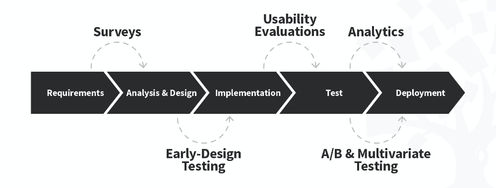
There are service you can find online that will help you recruit users in other countries to do some field tests. It may not be practical to do these tests in person but you can set up web testing, surveys, etc. and use the results of these tests to inform your localization process.
Finding out whether users respond well to your localized efforts is a good idea. If they don’t; you can fix the problems before any embarrassing mistakes permanently damage your ability to do business in a place.
Customer Support
If you’ve localized for the Chinese market, your customers will be less than impressed to find out that any support issues they have need to be dealt with via e-mail in English or over the phone, on a long distance call, in English.
Investing in winning business is important but it’s equally important to invest in keeping it. That means having language skills on hand to call on when an e-mail arrives from someone using that language. It means setting up local numbers in the country (countries) that you intend to support and having them redirect to your helpline – at your expense.
You may also want to localize your help documentation, instructions, etc. to support products as they go out the door.
Repeat business is the highest driver of return on investment. If you can’t support your customers, they have no incentive to stay with you.

Author/Copyright holder: Royce Bair. Copyright terms and licence: CC BY-NC-ND 2.0
Proofreading
It’s also worth remembering that localization and translation experts make mistakes. They’re human. It’s a good idea to invest in proofreading as an additional and separate service. This won’t make your offering error-free but it will reduce the chances of major errors sneaking out in front of your new audience.

Author/Copyright holder: With Associates. Copyright terms and licence: CC BY-SA 2.0
Summary
Localization is important when it comes to winning business in new markets. It offers the opportunity to take even the smallest business global. In order to get this right you need to take into account what will make your product accessible in another language, what will keep it legal and how you will keep the customers you win through your efforts.
Develop a strategy for localization. It’s better to do a good job on one place than to rush into many different locations half-cocked. Work through ideas with your team and address any concerns they have about the project. Hire translation and localization experts carefully; make sure they are right for the job and particularly if you are on a tight budget. (It’s rare that cheap means best). Expect the project to take time.
And most of all, don’t forget to seek feedback once your project has gone live and iterate for a better user experience in the long-term.
Header Image:Author/Copyright Holder: Distimo. Copyright terms and license: All rights reserved Img Source