This article, the one that you are reading, is part of a learning experience. Learning experiences aren’t a matter of classroom delivery – they are any interaction with a user/customer/individual in which the person is going to learn something (which we hope you will in this article).
Products contain a vast array of potential learning experiences from learning the interface, how best to interact with the product, to information provided and through help and support and onboarding too. That means many UX designers are going to get involved in designing learning experiences throughout their careers. The term “learning experience design” may have been coined by Connie Malamed, a learning experience designer, in 2015.
Angus T Jones, the American Actor, said; “everything is a learning experience” and that means learning experience designers have unlimited potential in the real world.
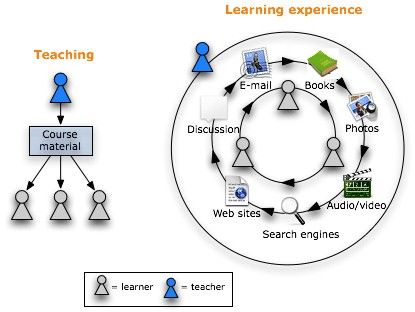
Author/Copyright holder: Alja. Copyright terms and licence: CC BY-NC-SA 2.0
It can really help to see learning experiences as something that happen everywhere and not just in a formal classroom situation.
What Problem Does a Learning Experience Seek to Solve?
A designer, at heart, is a problem solver. Without a problem to solve, a design is of very low value (though it may be aesthetically pleasing all the same). Learning design attempts to solve one or more of 5 types of problem for the learner:
A lack of knowledge. It’s hard to do something if you don’t know what it is you’re meant to do or you fail to understand what might be involved in doing something.
A lack of skill. I may know how to drive a car but if I lack the practice of driving – you don’t want me to drive you to the shops. Skill is the practical application of knowledge.
A lack of confidence. Everyone knows how to speak in public and everyone has the skill to do it – all you need is a voice. Yet, a lot of people struggle to speak publicly (only spiders are more terrifying in fact) because they lack the confidence to do so.
A lack of motivation. You can have all the knowledge, skill and confidence in the world but if you don’t want to do something – it’s unlikely to get done.
A lack of resource or tools. You can’t, for the moment at least, drive a car with no steering wheel. Sometimes the learning is aimed at fixing a problem that exists preventing a motivated, knowledgeable, skilled and confident person from doing what they want to do.

Author/Copyright holder: Rob. Copyright terms and licence: CC BY-NC-SA 2.0
Trying to solve a lack of motivation is incredibly challenging. It may be better to review the user experience than tackle this through learning experience design.
Designing a Learning Experience
The easiest way to design a learning experience is to work backwards from the desired outcome. What do you want someone to be able to do? What will the outcome of them doing that be?
This forms the basis of your requirements for the learning experience. You can then work backwards to ask:
What does someone need to know in order to be able to do this?
What do they need to be able to do in order to complete this?
What equipment or resources must they have in order to deliver the objective?
In general, it is difficult (if not impossible) to address motivation through digital learning and it is assumed that confidence will come through practice.
From there you can begin to decide two things – what content you will need and how you will structure that content.
The Content of Learning Experiences
The content of a learning experience aims to provide the things that your user needs in order to be able to do a task. The structure of your content reflects the most logical order in which the content should be presented to support the completion of a task.
For example; if you wanted to teach someone to park a car. You would need to teach them how to use their mirrors, the gas and brake pedals, the gear stick (to find reverse), how to maneuver the car and what to take into account while doing so. You might also, in a manual transmission, have to teach them about the clutch.
It is pretty clear that you don’t want to teach maneuvering first because if the user doesn’t know how to change gear or move the car with the pedals… they aren’t going to be able to relate to how to maneuver a car.
Your original answers to the three questions above will tell you what content you need. The structure of that content (e.g. the order in which it is delivered) should be based around what needs doing 1st, then 2nd, then 3rd, etc. to get from a start point to an end point.
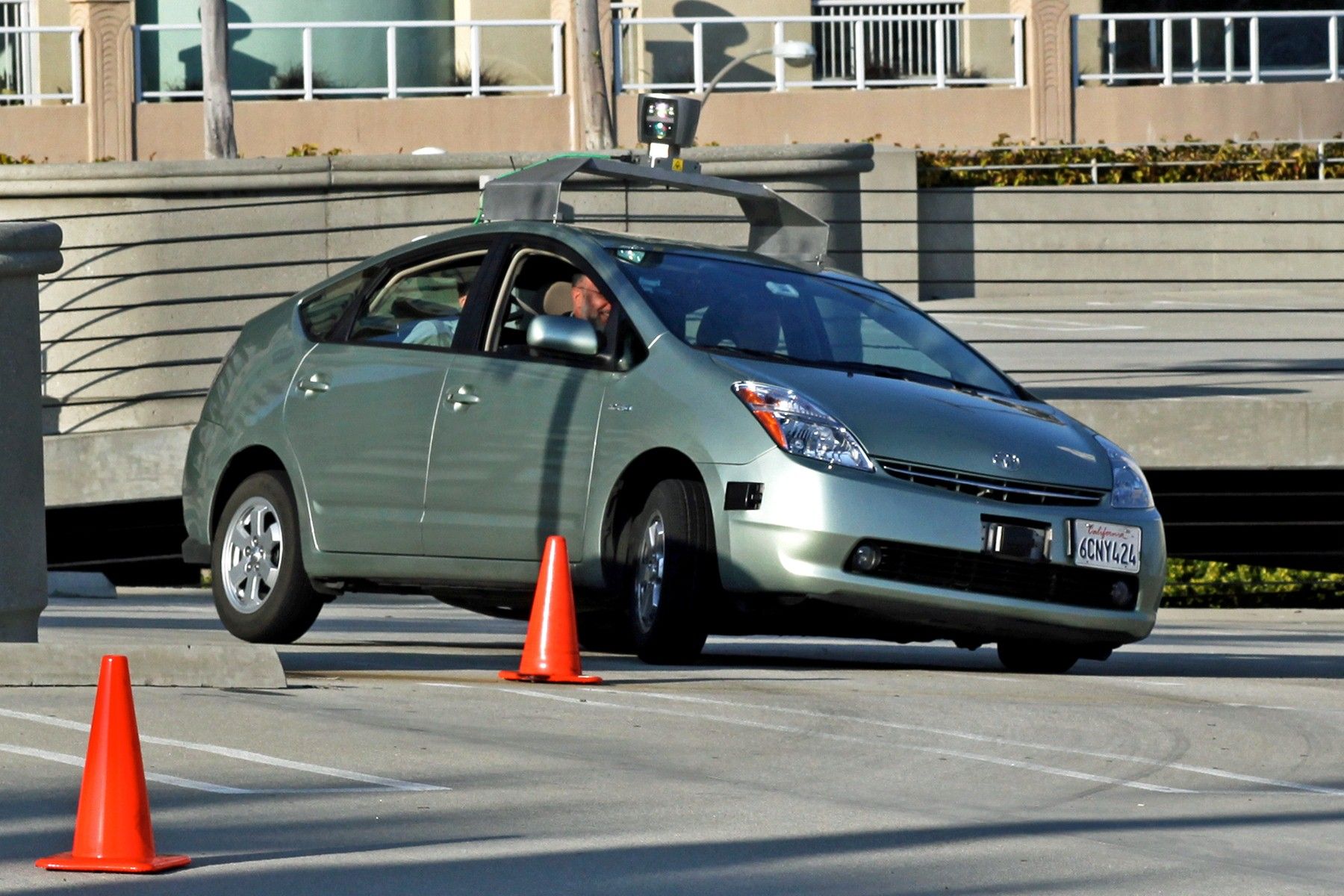
Author/Copyright holder: Unknown. Copyright terms and licence: Unknown.
Learning experiences require processes. Even when the car has no driver. Teaching Google’s driverless car how to drive will have been an incredible task to conduct.
Types of Content – Learning Interaction
Once you have content and you have structure you can start to examine how to deliver that content. Will you use video, audio, or text? Will it require a practical component? (Learning to drive for example cannot be taught with videos, audio or text though the concepts of driving can be – if you want someone to be able to drive, they need to get into a vehicle and drive it).
There are two key considerations to take into account here:
The more varied the learning methods are – the more likely they are to be engaging (too much video or too much text dependence, for example, can destroy a learning experience)
The learning methods should be appropriate for the outcome – don’t choose a video if only practice is going to get the learner to where they want to be
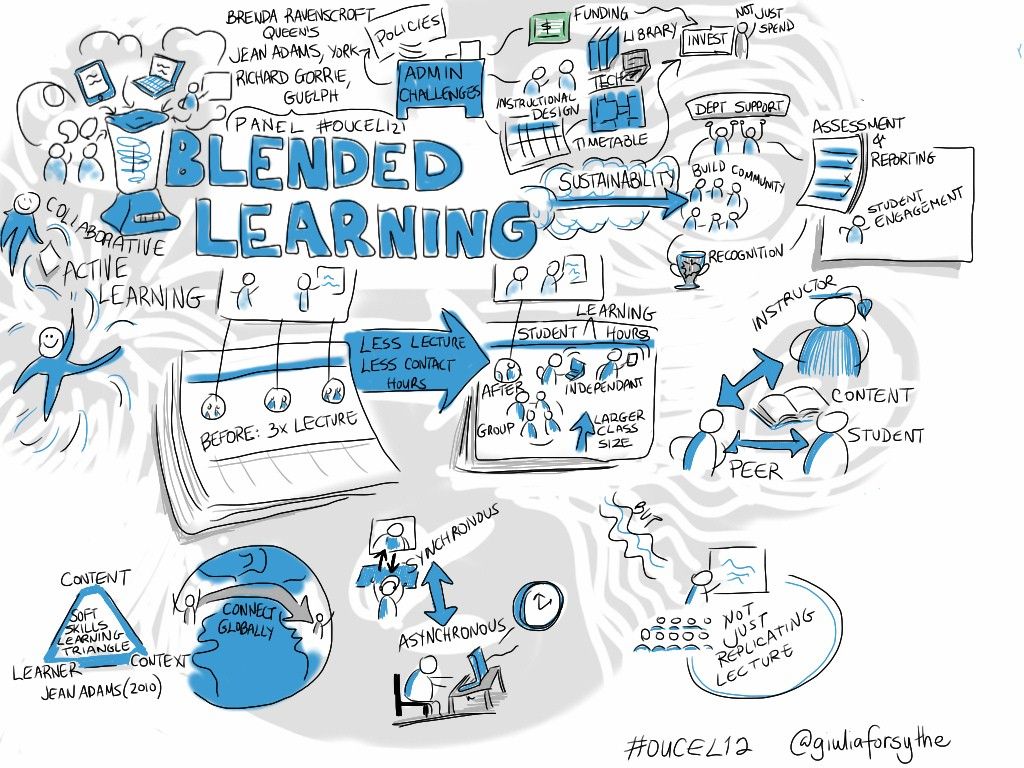
Author/Copyright holder: Giulia Forsythe . Copyright terms and licence: CC BY-NC-SA 2.0
The use of multiple learning methods is usually referred to as “blended learning” and as you can see from the graphic above; there are many options for this.
Content Consistency – Learning Branding
The final consideration is the branding element – how will you ensure that your content looks, feels, sounds and reads in a similar way? There’s a reason that schools don’t swap teachers every 15 minutes in a lesson… the change of voice would distract you from the learning experience itself.
Great learning experiences don’t just provide the learning – they also provide a single continuous look, feel, etc. that complements the learning and doesn’t distract the learner from learning.
The Take Away
Designing learning experiences is a vast topic and the guidelines above are aimed at getting you to think about the high-level components of learning experience design. They are certainly not going to prepare you for every aspect of learning design. However, many of your existing UX skills can be applied to learning experience design from research to testing – learning is a product with a specific set of objectives and can be designed by UX designers as much as any other product.
References
Want to know the difference between instructional design and learning experience design – find out here.
Find out how learning experiences contrast and fit with user experiences here.