I want to tell you about a common term in English and how you can escape it. No, I don’t mean escaping the term; I mean escaping what the term means. When you realize how familiar a situation that term describes, you will surely want to rescue yourself from it.
According to Wikipedia, a rat race is an endless, self-defeating, or pointless pursuit. It conjures up the image of the futile efforts of a lab rat trying to escape while running around a maze or in a wheel.
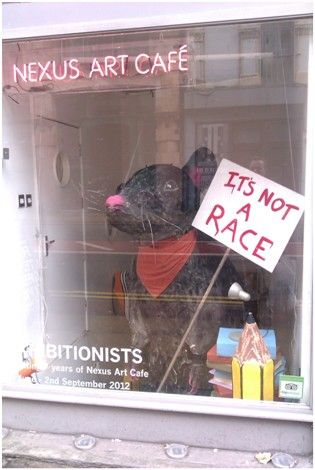
Author/Copyright holder: Duncan Hull. Copyright terms and licence: CC BY 2.0
I learned about the “rat race” metaphor just recently. One of our authors used it, and I wanted to know how well-known this concept was. It turns out that it has a Wikipedia entry (even if it’s pretty short), songs, quotes, Pinterest boards and even images just like the one above. There’s surely much more, too!
The rat race sounds dehumanizing. In French, they have a much softer version: “metro, boulot, dodo” (“subway/underground, work, sleep”). However, the overall meaning is similar: when you live to work. If it’s rush hour, listen to the sound of the town. That’s the music of the rat race: feet treading quickly, car horns blaring, engines thundering. The English expression “can’t see the wood for the trees” sums it up nicely. Most people are too involved in the rat race to be able to stand back and look at it properly. Now that we’re thinking about the rat race, we can see that it’s already found us – we don’t need to search for it; we need to understand it.
The beauty of working in design
Simon Herbert – a Nobel laureate – has this great quote to remind us about our work as designers: “Everyone designs who devises courses of action aimed at changing existing situations into preferred ones”. This, to me, is the reason that working as a designer feels much less like being trapped in a rat race. Of course, you work long hours; of course, you deal with bad managers and clients; of course, you spend lots of energy justifying and advocating; however, you do it for a purpose. We design to make others’ lives easier and better. It’s a rewarding role.
“Everyone designs who devises courses of action aimed at changing existing situations into preferred ones” Herbert Simon
Placing the focus on the outwards design
As professional designers, our work consists of exactly what Herbert Simon said. We start with the business goals and aims; we run competitive analysis and user research to discover the best solution to the stated need or problem; and then we design iteratively to find the best way to our solution. We change existing situations with the aim of improving them.
Whichever part of the user experience continuum you’re working in, you can't feel that your work is pointless or futile, can you?This is the beauty of working as a user experience designer: your focus is always outwards.
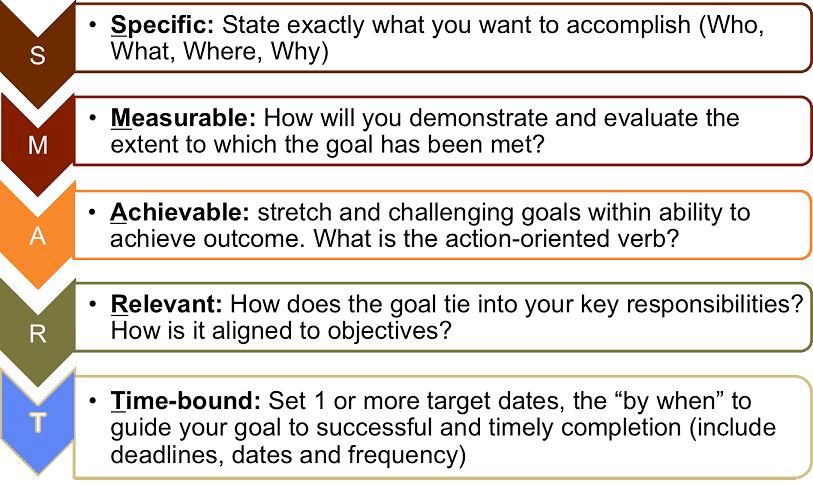
This outside focus is good for you, your colleagues and stakeholders. You’re not ignoring yourself; you’re applying your passion and skill set. To make any team work collaboratively and efficiently, the best you can do is to define a mission that sets a clear target to work towards.Then, define SMART goals for each project. If you do not have those, I would advise you to start working on them.
Author/Copyright holder: Unknown. Copyright terms and licence: Unknown Img source
A team or company mission will always be more meaningful and powerful if it specifies the target audience of the product or service. Do you know that one of Google’s principles is: “Focus on the user and all else will follow”? As stated on their website:
“Since the beginning, we’ve focused on providing the best user experience possible. Whether we’re designing a new Internet browser or a new tweak to the look of the homepage, we take great care to ensure that they will ultimately serve you, rather than our own internal goal or bottom line. Our homepage interface is clear and simple, and pages load instantly. Placement in search results is never sold to anyone, and advertising is not only clearly marked as such, it offers relevant content and is not distracting. And when we build new tools and applications, we believe they should work so well you don’t have to consider how they might have been designed differently.”
Focus on the user and all else will follow. From Google’s list of 10 things we know to be true.
This is a strong and meaningful principle to work by. It also blows the rat race feeling away!
The SMART criteria stand for Specific, Measurable, Achievable, Relevant, and Time-bound. These criteria are commonly attributed to Peter Drucker, an Austrian-born American management consultant, educator, and author. Managing Oneself is one of his many books.
Keeping in mind the inwards design
As you can infer from Drucker’s book title, you can use these SMART criteria for your work activities and projects, and– bonus - for your career development. Here again is where the beauty of working as a designer comes in, even if we are often unaware of it.
The truth is that we all, as human beings, are designers of our own lives. We might not acknowledge it.Sometimes, we even try to hide from it. However, the reality is there: as a free individual, you need to design and manage your life. “I can design and manage my life?” you may ask. Of course, you can! Your life may be so close to you that you don’t consider it, in the same way that most of us don’t think about breathing or drinking a glass of water. Isn’t it handy to be a designer and have the right tools for it?

Author/Copyright holder: Ian Summers. Copyright terms and licence: All rights reserved Img source
As a user experience designer, you know that it is important to run a competitive analysis or benchmarking right at the beginning of every project. So, if you’re looking for a change in your career or a new job, you will start looking at related job offers and other professionals who are where you would like to be. Knowing the industry and knowing who’s doing what in it are vital before you begin.
You will also apply the same approach when conceptualizing and designing your portfolio. Ask yourself: “What are my career goals and what do I want to convey?”;“What is the target audience?”; and so on. Pretty soon, you’ll realize that you don’t have to be a cat to win the rat race. Being a good designer who is aware is enough.
The Take Away
Yes, this is a pretty philosophical UX Daily article. However, it has some subtle take-away that can be useful in your work and growth as a UX practitioner. Let’s have a look at three of them. You can figure out the rest by yourself, right?
“Everyone designs who devises courses of action aimed at changing existing situations into preferred ones.”- Herbert Simon.
You can use this quote to explain the rationale of your work and advocate for the task of UX designers.
“Focus on the user and all else will follow.”- Google’s list about “10 Things we know to be true”.
Isn’t this a great and simple way to explain what user experience stands for and how you should plan, design and implement projects?
“The shoemaker's son always goes barefoot.”
Do you know this idiom? It means that, often, skilled or knowledgeable people fail to use their skills for the benefit of their family and people close to them. Make sure this doesn’t happen to you! Apply your designer skills and tools for your career development. Be a designer at home as well as at work. You’ll soon see that it’s not a job; it’s what you are and love doing!
Where to learn more
To learn the basics of the meaning of rat race and some songs and quotes here.
If you want to know the other things that Google believes in see here.
Peter Drucker’s book,Managing Oneself.
The IxDF Design League - if you’re looking for a design coach or a UX certification.
Canvas business model: both for your projects and company and for you.
Resources
Hero Image: Author/Copyright holder: Ant Jackson. Copyright terms and licence: CC BY 2.0