Have you ever dreamed of breaking away from the 9-to-5 grind and becoming your own boss? Ever wanted to get paid for what you produce and not the endless meetings and corporate politics? Maybe, you’ve even wanted to work from the beach on a tropical island or in a trendy coffee shop in an inspiring urban landscape?
A digital nomad is someone who travels the world and works online at the same time. The truth is that there’s nothing stopping you from doing just that. Going into business for yourself as a freelancer or entrepreneur can be a highly rewarding and exciting way to work. If you can work online, you can work from all over the world as long as there is a stable internet connection. Only your dreams (and your income) are the limit.
When you work online—you can set up in Prague, Delhi, Koh Phangan, Cape Town, Rio, Dubai, or wherever you have your heart set on.
While living like a digital nomad may not make you a millionaire, you have nothing stopping you from living like a millionaire as you will be:
Doing work you have chosen yourself and which you are, therefore, passionate about.
Living where you want.
Travelling and working where and when you want.
Having others preparing and serving your food as well as cleaning your home, which results in getting more free time to spend on your passions and hobbies like kitesurfing, diving, skiing, reading, or relaxing with friends and family.
The author, Timothy Ferriss, who popularized the term “digital nomad” in his hugely popular book The 4-Hour Work Week, nails why the dream of becoming a digital nomad is so popular:
“Gold is getting old. The New Rich (NR) are those who abandon the deferred-life plan and create luxury lifestyles in the present using the currency of the New Rich: time and mobility. This is an art and a science we will refer to as Lifestyle Design (LD). I’ve spent the last three years traveling among those who live in worlds currently beyond your imagination. Rather than hating reality, I’ll show you how to bend it to your will. It’s easier than it sounds. My journey from grossly overworked and severely underpaid office worker to member of the NR is at once stranger than fiction and — now that I’ve deciphered the code — simple to duplicate. There is a recipe. Life doesn’t have to be so damn hard. It really doesn’t. Most people, my past self included, have spent too much time convincing themselves that life has to be hard, a resignation to 9-to-5 drudgery in exchange for (sometimes) relaxing weekends and the occasional keep-it-short-or-get-fired vacation.” “
People don’t want to be millionaires — they want to experience what they believe only millions can buy. Ski chalets, butlers, and exotic travel often enter the picture. Perhaps rubbing cocoa butter on your belly in a hammock while you listen to waves rhythmically lapping against the deck of your thatched-roof bungalow? Sounds nice. $1,000,000 in the bank isn’t the fantasy. The fantasy is the lifestyle of complete freedom it supposedly allows. The question is then, How can one achieve the millionaire lifestyle of complete freedom without first having $1,000,000?”
– Timothy Ferriss
The answer is simple. That’s why the community of digital nomads is growing exponentially day by day. All it really takes to become a digital nomad is the ability to do your work online as a freelancer, business owner or employee – and the wish to travel and explore the world in your free time. Here, you’ll learn some facts which can help you decide if digital nomadism is for you – and how you can get started.
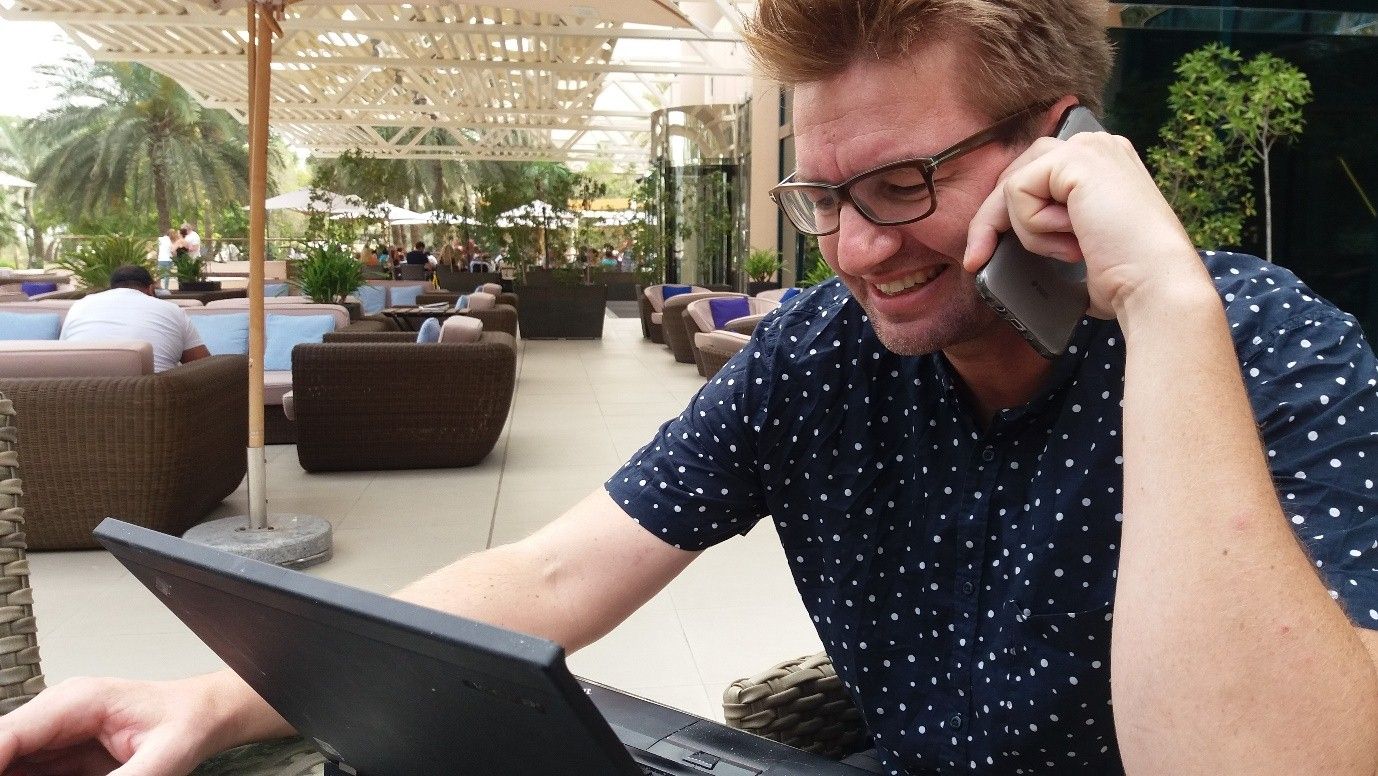 Author/Copyright holder: Rikke Friis Dam and the Interaction Design Foundation. Copyright terms and licence: CC BY-NC-ND
All it really takes to become a digital nomad is the ability to do your work online as a freelancer, business owner or employee – and the wish to travel and explore the world in your free time.
Digital Nomad Facts
Some digital nomads sell, give up or rent out their homes in their own countries. Some retain their homes while travelling. Some move rapidly round their own countries or slowly shift from city to city or state to state. Some move on an international scale, from Thailand to Venezuela and from Krakow to New York. Some rent out their homes for half a year, find new homes based abroad for half a year, and then move back home for half a year, and so forth.
There are digital nomads everywhere around the world today. Some digital nomads are freelancers; others are business owners with large businesses, and many are employees who are able to work online once in a while or all the time. Some digital nomads bring their families, partners or friends, but most travel and work around alone.
Freelance businesses often make the perfect businesses to support a digital nomad lifestyle. Clients can be won online and contracts executed online. Payment can be made via PayPal, bank transfer, Western Union, etc. so that there’s no need to cash a cheque or turn up looking for cash. Most freelance businesses simply require a computer, power and an internet connection, and while these facilities aren’t always 100% reliable, there are very few places in the world today where they aren’t available, either.
Digital nomads are also often referred to as location-independent professionals (LIPs) or perpetual travellers (PT).
The number of digital nomads is growing exponentially, and there are now global conferences for them, such as DNX, and specialized travel services for digital nomads that take care of the headaches of arranging good internet, reliable power, etc.
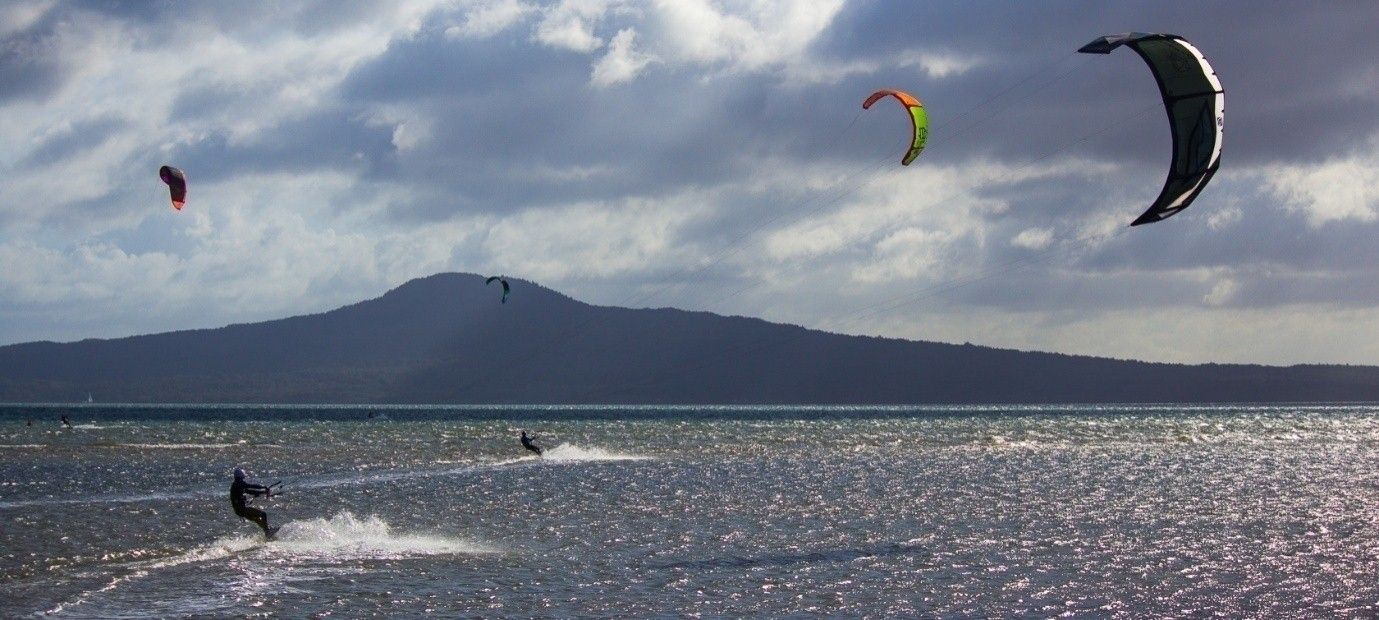 Author/Copyright holder: Andym5855. Copyright terms and licence: CC BY-SA 2.0
It’s very popular for digital nomads to go kitesurfing, diving and hiking when they’ve finished the daily work or during the lunch break.
The Most Common Digital Nomads
There are two common digital nomad lifestyles. If you’re considering exploring this lifestyle—you should give some thought as to which lifestyle suits you best before you buy your first plane ticket.
Energetic Low-cost Travels
The first is the rapid travel or fast-moving approach. These nomads tend to wake up in the morning and pack their things if they feel like it or stay another week if they love the location and the people they hang out with. These nomads travel light with backpacks. They stay in a place for one week to a month before moving on to the next.
Their work schedules tend to be pretty hectic with late nights and early mornings being used for work and their days used to explore their temporary homes. It’s very popular for digital nomads to go kitesurfing, diving and hiking – and partying at night. The energetic low-cost digital nomads normally stay in hostels, cheap hotels or rooms found on Airbnb.
While, anyone may work like this, the majority of digital nomads in this category are young (under 30) because the pace of this lifestyle can be hard to manage. It also tends to be a temporary lifestyle with one or two years of work on the road before a return to “real life” or a transition to the second type of digital nomad.
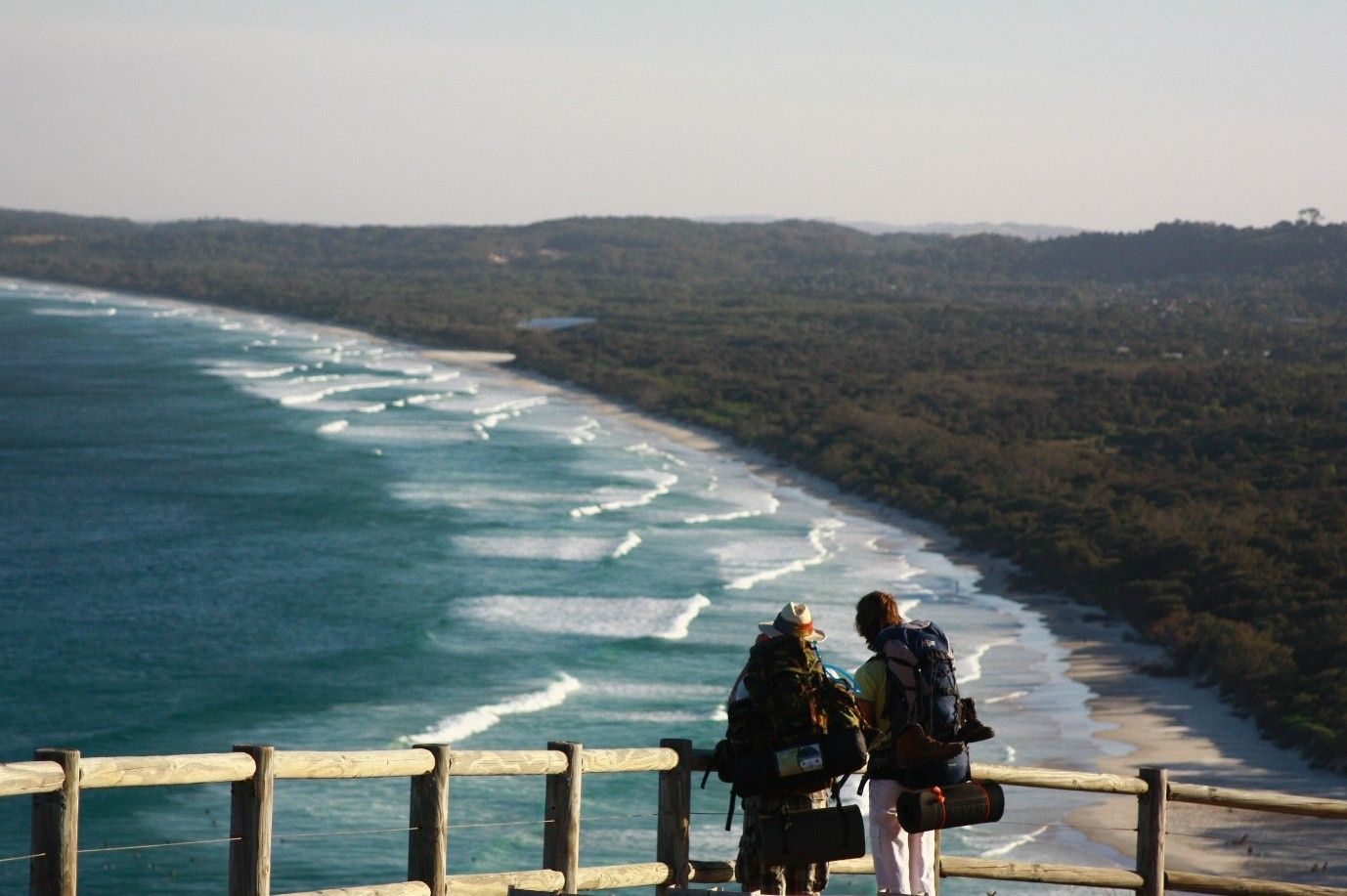 Author/Copyright holder: taki Lau. Copyright terms and licence: CC BY-SA 2.0
The fast-moving digital nomads typically carry their lives in their backpacks. It can be a wearing existence after a while. That’s why it tends to be a temporary lifestyle with 1–2 years of work on the road before a return to “real life” or a transition to the second type of digital nomad.
Stable and Continuous Travels with Home Bases
The second type of digital nomad is the slow traveller. They tend to choose a base in a country and settle in for longer—typically 3–6 months (but even 2–3 years isn’t unheard of). They work as they would anywhere else in the world and use their downtime to travel around the country or region and explore.
These nomads will normally rent a home or an apartment in their new country. Typically, they are more likely to pay a premium for accommodation which offers nicer facilities, guaranteed internet and—in some parts of the world—backup power solutions.
Slow travellers are more likely to have a family or a partner in tow than the rapid traveller; it’s hard to maintain good relationships at a breakneck pace of travel for very long. Many slow travellers eventually settle down overseas and become expats. Still, many return to their home countries for extended periods before setting out to pastures new, too.
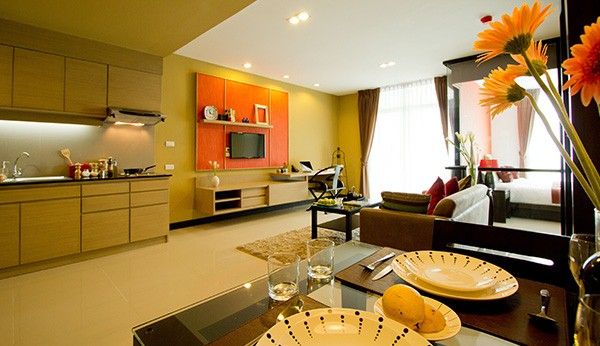
Author/Copyright holder: Nick Kellingley. Copyright terms and licence: CC BY-NC-ND
Digital nomads who stay longer in places can often leverage cheaper living costs to get beautiful homes in developing nations which serve as a base for their travelling lives.
Where do Digital Nomads Work?
Digital nomads can choose where they work, just like any freelancer or entrepreneur working online. The most common options are working:
from the hostel/hotel/apartment/etc., just like any home-working freelancer or entrepreneur.
from a co-working space which is a shared-office arrangement with other digital nomads. You can usually buy daily, weekly or monthly access. In return, you will get internet, power, meeting rooms, coffee, etc. as well as a desk – and meet other digital nomads whom you can have fun with in your spare time. Often there’re also film nights, yoga classes, kitesurfing lessons, and diving classes you can attend.
from cafes, bars and restaurants.
and pretty much anywhere else you can get internet access, which also includes tropical beaches... if you can find good internet or buy your own local SIM card.
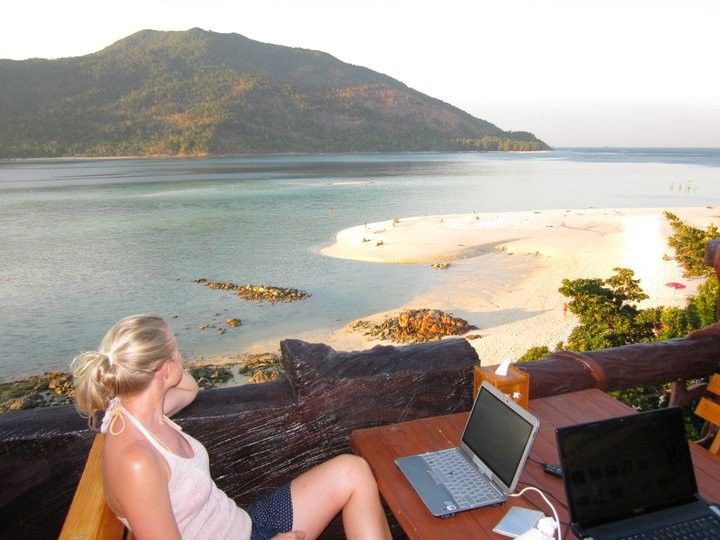
Author/Copyright holder: Rikke Friis Dam and the Interaction Design Foundation. Copyright terms and licence: CC BY-NC-ND
You can work from the beach or from a restaurant. It’s also very popular to join a co-working space where you can meet up with other digital nomads. The founders of the IxDF, Rikke Friis Dam and Mads Soegaard, love to work from Thailand, where they can keep living expenses at a minimum and focus their time on work as hotels offer cleaning—and it’s cheaper to eat at Thai restaurants than it is for them to cook their own food at home. Here, it’s Rikke working from Koh Lipe in Southern Thailand.
How do Digital Nomads Work?
While, technically, having a computer and an internet connection is enough to work as a digital nomad, it’s worth noting that most nomads will have additional strategies to try and ensure good client relations and security for their work. Techniques include:
Cloud backup, for remote secure storage of data.
Local drive backups, for instant restoration of lost data.
Pre-built PC configurations held in the cloud and on a local drive, so if their computer fails—or is stolen, etc.—they can get another and start up again immediately. Deadlines can be seriously damaged if you have to wait a week in Kazakhstan for somebody to fix a machine for you.
VoIP (Voice over Internet Protocol) and IM (Instant Messaging) technologies (such as Skype) for meetings with clients—headsets are a must if you’re working in a range of different locations, too.
Project management tools such as Basecamp, Trello or Slack to ensure that more complex projects are well co-ordinated wherever individual team members are located.
They also tend to ensure that they have high-quality health insurance and travel insurance to protect themselves as they travel.
What Are the Advantages of Being a Digital Nomad?
The digital nomad life offers a number of advantages to the adventurous freelancer, entrepreneur or employee:
A chance to experience new places and new cultures
A chance to meet other digital nomads and create other businesses or partnerships
A chance to live tax free in many parts of the world
A chance to live cheaply while managing your start-up (the Interaction Design Foundation did much of its early start-up work in Thailand – which is much cheaper to work from than Denmark, for example)
A chance to learn a new language or skills that can’t be learned at home
A chance to decide—freely—where, when and how to get work done.—Freedom and responsibility are the most key words.
Of course, there’s also a lot of fun to be had. It’s worth remembering that being a digital nomad is not the same as going on holiday, though—you still have to work no matter how amazing your destination is. Some people find that very challenging to come to grips with, and without applying even more self-discipline than the average freelancer or entrepreneur, it’s possible to spend too much time lounging around and not enough time producing as a digital nomad, too.
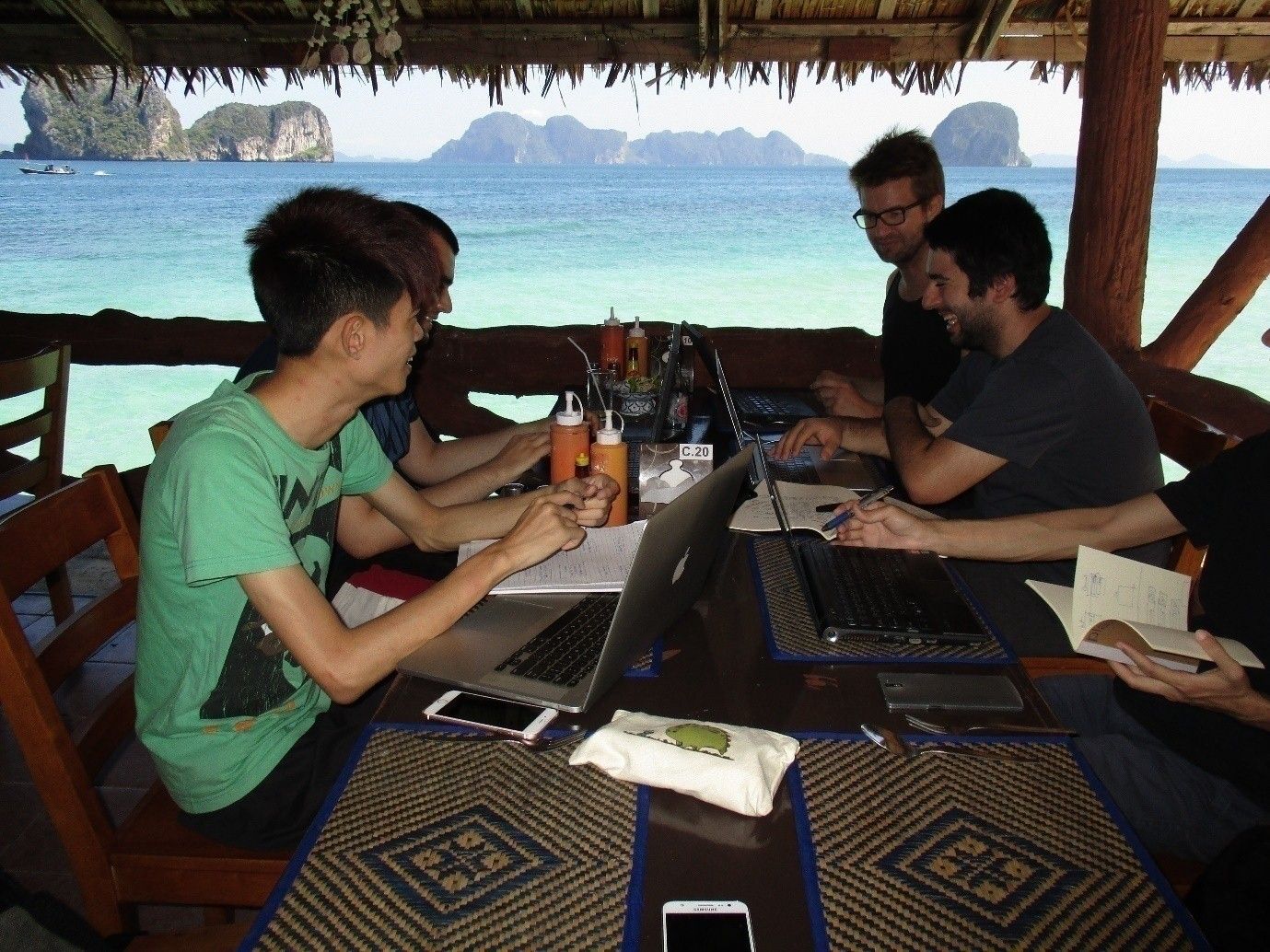 Author/Copyright holder: Rikke Friis Dam and the Interaction Design Foundation. Copyright terms and licence: CC BY-NC-ND
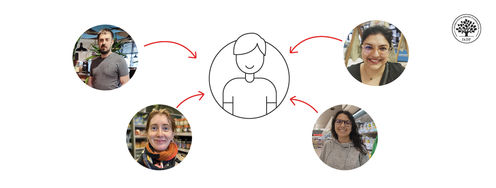
The Interaction Design Foundation encourages their employees and loyal freelancers to explore the world as digital nomads as the whole team works online. However, apart from the daily Skype meetings, they meet up to touch base, work hard, and have fun once in a while. Here is a part of the dedicated team and the founder, Mads Soegaard, working from a tiny Thai Island – with great Internet, of course.
What Are the Disadvantages of Being a Digital Nomad?
There are challenges with the digital nomad lifestyle for people, too:
Family and friends can struggle with the idea you’re not going to be around all the time – and so can you.
It can get lonely, particularly in the first few days of being in a new location. That’s one of the reasons why co-working spaces are so popular.
You may have to deal with a lot of unfamiliar bureaucracy in some places (it pays to read up on a location before you arrive). But in many countries, such as Thailand or Malaysia, you only have to make sure that you have a valid tourist VISA.
You may have to work at odd times of the day (or night) in order to accommodate clients in different time zones.
Some parts of the world (especially third world countries) can present real challenges for internet access, healthcare, etc. You can always check out whether there’s a Facebook group for digital nomads in the country you want to visit and ask other digital nomads about their experiences and advice before you go there.
None of these challenges are insurmountable, and it’s normal for any kind of lifestyle to have drawbacks. The digital nomad lifestyle isn’t for everyone, but for those who love it, the advantages far outweigh the disadvantages.
Several digital nomad hotspots all over the world are popular because there’s only a little bureaucracy, access to high speed internet, good healthcare and—very important for the newbie freelancers and entrepreneurs—low living costs, making it possible to live like a millionaire without being one.
Are you Cut out To Be a Digital Nomad?
Only you can tell if this is the lifestyle for you. If you have a hunch that you would love to work and travel as a digital nomad, we’ll give you these last words to consider:
"20 years from now you will be more disappointed by the things that you didn’t do than by the ones you did do. So throw off the bowlines. Sail away from the safe harbor. Catch the trade winds in your sails. Explore. Dream. Discover."
– Mark Twain
 Author/Copyright holder: Pexels. Copyright terms and licence: Free to Use
Working from coffee shops is a very popular way of life for many digital nomads – they usually have free Wi-Fi and waiter service whenever they need a drink!
The Take Away
Digital nomads are those who work online and travel while doing so. They can be found everywhere in the world, and their numbers are growing. The increased number of freelance and entrepreneurial opportunities in the job market and the arrival of decent internet nearly everywhere have made becoming a digital nomad increasingly easy over the last few years. The digital nomad lifestyle is even accessible for a growing number of employees who just need an internet connection and an understanding manager to get their regular work done while travelling.
The key to success as a digital nomad is to do your research on your destination and prepare for the worst (all the while hoping for the best) so that you can always be relied on to deliver on your promises for your clients.
References & Where to Learn More
Hero Image: Author/Copyright holder: Steven Zwerink. Copyright terms and licence: CC BY-SA 2.0
This quote is widely attributed to Mark Twain (but—most likely—he didn’t say it).
Tim Ferriss, The 4-Hour Workweek, 2007