curb ramp

3 Reasons Why Accessible Design Is Good for All

by Ditte Mortensen and Frank Spillers • 24 min read

765 Shares

Most designers probably agree that accessibility matters: We want to create designs and interfaces that don’t exclude users with disabilities. There are plenty of obvious moral reasons that accessibility matters, but, unfortunately, accessibility considerations are often one of the first things to get cut when resources or time becomes scarce. From a business perspective, it seems reasonable that it’s better to release something that the majority of people will be able to use, than to delay a product or website launch. After all, users with disabilities only make up a smaller percentage of the customer group. As you might already suspect, the truth is a lot more complex, and choosing not to create accessible designs for financial reasons is not only often illegal but also short-sighted in terms of the business value you can gain from accessibility.

Here, we’ll look at a few examples from the history of designing for accessibility which illustrate why accessibility is great for users and for business. We’ll also take you through the primary reasons for why you should care about accessibility in the digital domain. If you’re a designer, we’re probably preaching to the choir when we say that accessibility and digital inclusion matter, so use our examples and arguments next time you have to argue for the importance of accessibility in a project in your own organization.

The Curb-Cut Effect

One of the primary reasons that accessibility has wider benefits than allowing people with disabilities to use your products is the curb-cut effect. The curb-cut effect refers to the fact that designs created to benefit people with disabilities often end up benefiting a much larger user group. The curb-cut effect takes its name from the ramps cut into the surfaces of sidewalks – as you see in the image above. In many countries, curb cuts are omnipresent in areas with foot traffic, allowing people with strollers, bikes, etc. easy access to the street when they need to cross the road. While curb cuts are used by all kinds of pedestrians, they were originally created for the sole purpose of allowing people in wheelchairs to cross the road. Curb cuts only started to become commonplace through the hard work of political activists who demanded that wheelchair users should be able to move freely about in cities, but they turned out to have more universal benefits. Most of us no longer think of curb cuts as accessible design, but simply as the most logical and user-friendly way to design sidewalks – hence the term “curb-cut effect”.
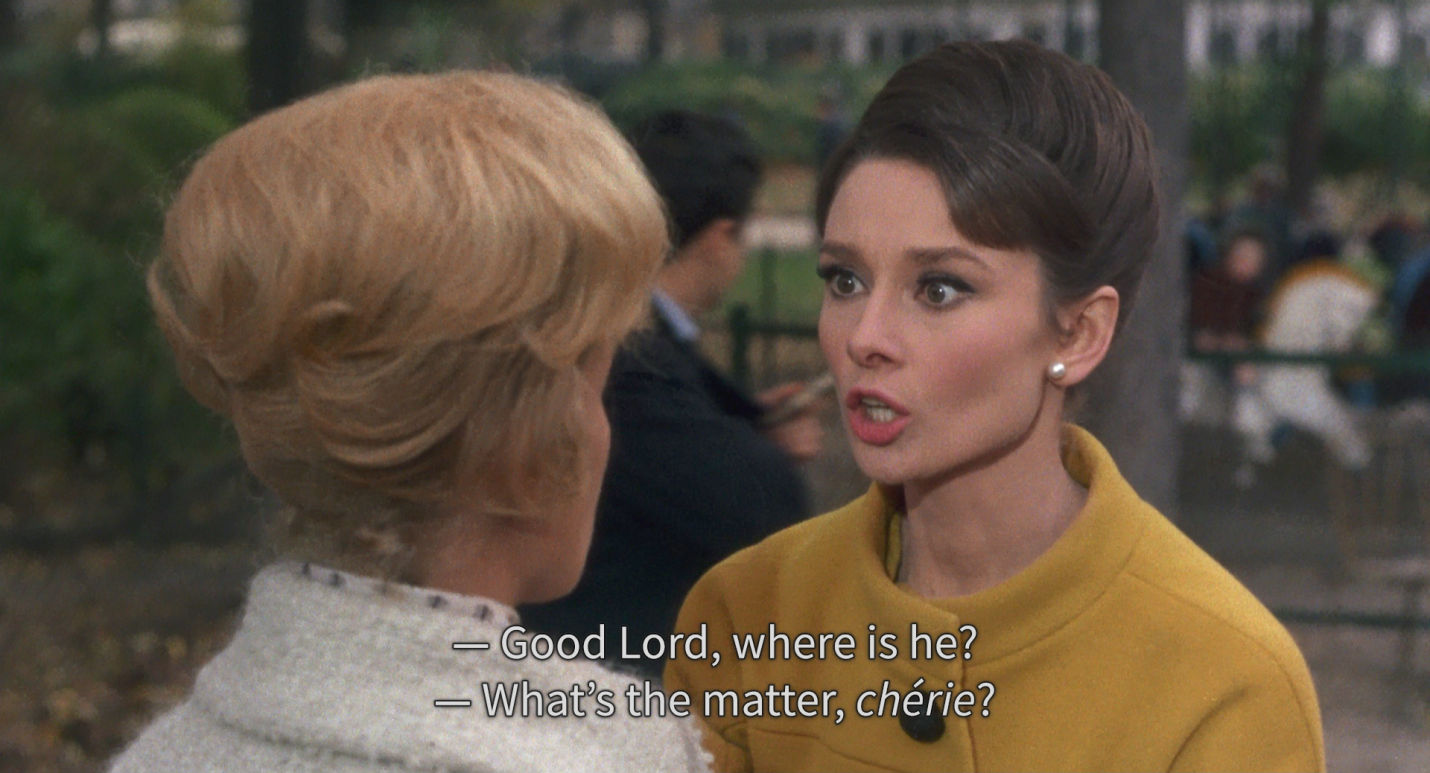
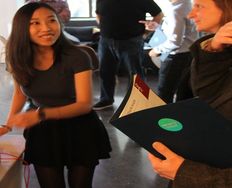
Closed captions were created for people with hearing impairments, but they are also great for watching videos in a noisy environment.
© Stanley Donen, CCO

Another great example of the curb-cut effect is closed captioning on video material. Captions were originally created for people with hearing impairments (who, indeed, still use them), and thus intended for a limited user group. They turned out to be a great help for much larger user groups, such as people who watch videos in noisy environments and foreign viewers who read translated spoken content in different languages – meaning that closed captioning or subtitles have become a huge business.

Legal, Moral and Business Reasons for Designing for Accessibility

In both of our examples, legal, moral and business reasons go hand in hand to create a triple-layered win-win situation, but is that still the case for more current design challenges such as web design? In this video, Frank Spillers, CXO and founder of the award-winning UX firm Experience Dynamics, will argue why accessibility is essential for web design for legal, moral and business reasons.

Transcript

The Takeaway

Accessibility is often one of the first things to be cut from designs, given that the gains to be had from creating accessible designs seem small compared with the cost of delaying a launch or redesigning a product. Here, we have argued that skimping on accessibility is short-sighted and that there are important reasons for placing such emphasis on designing for accessibility. The most obvious is the moral reason – you should create accessible designs to ensure that everyone has equal access. The second reason that many of us think of when we consider accessibility, is the legal one. Many countries have laws stating that you must design with accessibility in mind and not doing so leaves you vulnerable to lawsuits. The final reason that’s sometimes overlooked is that accessibility is actually good for business. Creating accessible designs means that you expand your user base, and it’s also good for SEO and usability.

References and Where to Learn More

Hero Image: © team Beast, CC BY-SA 3.0

Course: “Accessibility - How to Design for All”

You can learn more about the history behind “the curb-cut effect” here.

Accessibility is part of UX (it isn't a swear word)

Web content accessibility guidelines

Learn More in This Course:

AI for Designers

11 days
12 % booked
View Course

What You Should Read Next

  • Read full article
    The 7 Factors that Influence User Experience - Article hero image
    Interaction Design Foundation logo

    The 7 Factors that Influence User Experience

    User Experience (UX) is critical to the success or failure of a product in the market but what do we mean by UX? All too often UX is confused with usability which describes to some extent how easy a product is to use and it is true that UX as a discipline began with usability – however, UX has grown

    Social shares
    1.3k
    Published
    Read Article
  • Read full article
    Occam’s Razor: The simplest solution is always the best - Article hero image
    Interaction Design Foundation logo

    Occam’s Razor: The simplest solution is always the best

    You may have heard of Occam’s Razor; did you know that you can apply it to web design? When you’ve got it in your “toolbox”, you’ll have an edge in the marketplace.Occam’s Razor, put simply, states: “the simplest solution is almost always the best.” It’s a problem-solving principle arguing that simp

    Social shares
    1.1k
    Published
    Read Article
  • Read full article
    Learn to Create Accessible Websites with the Principles of Universal Design - Article hero image
    Interaction Design Foundation logo

    Learn to Create Accessible Websites with the Principles of Universal Design

    “Productivity is never an accident. It is always the result of a commitment to excellence, intelligent planning and focused effort.”— Paul J. Meyer, premier international authority on goal setting, motivation, time management, and personal and professional development Accessibility is not t

    Social shares
    1k
    Published
    Read Article
  • Read full article
    Bad UX Exposed: A Comprehensive Guide to Avoiding Pitfalls - Article hero image
    Interaction Design Foundation logo

    Bad UX Exposed: A Comprehensive Guide to Avoiding Pitfalls

    In today’s vibrant digital design landscape, creating meaningful connections with users goes beyond offering innovative products or services. It leads us into the world of user experience design (or UX design). This critical factor shapes our interaction with the users and plays a big role in making

    Social shares
    945
    Published
    Read Article
  • Read full article
    Understand the Social Needs for Accessibility in UX Design - Article hero image
    Interaction Design Foundation logo

    Understand the Social Needs for Accessibility in UX Design

    As UX designers, we have a lot on our plates. The term “UX Unicorn” exists for a reason. We are responsible for our clients’ goals as well as our users’ needs. You might ask then, why should you think about Accessibility in your UX Design process?Imagine going into a design workshop and telling your

    Social shares
    928
    Published
    Read Article
  • Read full article
    Accessibility: Usability for all - Article hero image
    Interaction Design Foundation logo

    Accessibility: Usability for all

    Let’s examine a topic we often take for granted to understand what it’s really about. Doing so, you’ll be able to proceed with a broader appreciation of how users engage your designs.The Overlooked, Misunderstood Nature of Accessibility© WhisperToMe, Public DomainA design is only useful if it’s acce

    Social shares
    925
    Published
    Read Article
  • Read full article
    Your Guide to Hamburger Menus - Article hero image
    Interaction Design Foundation logo

    Your Guide to Hamburger Menus

    The hamburger menu—with its three horizontal lines—simplifies website navigation. Not every interface benefits from its use, but it can help in certain scenarios. That’s why it’s vital to understand when it shines and when alternatives might serve users better. So, learn the pros and cons of using t

    Social shares
    841
    Published
    Read Article
  • Read full article
    Healthcare UX: Design that Saves Lives - Article hero image
    Interaction Design Foundation logo

    Healthcare UX: Design that Saves Lives

    UX (user experience) design has the potential to improve people’s everyday lives. The stakes are even higher if you work as a UX designer in the healthcare industry. The health-tech sector is among the fastest-growing in the world, with expected revenue of USD 1,305.1 billion in 2030, according to G

    Social shares
    824
    Published
    Read Article
  • Read full article
    10 Principles of Accessibility - Article hero image
    Interaction Design Foundation logo

    10 Principles of Accessibility

    Do you want to get serious about accessibility, but finding it hard to know where to start? In this video, we’ll take you through 10 principles you can use to get started creating great accessible websites and interfaces that are digitally inclusive right now. Among other things, you’ll learn how to

    Social shares
    823
    Published
    Read Article
  • Read full article
    What are the Five Elements of UX Design? - Article hero image
    Interaction Design Foundation logo

    What are the Five Elements of UX Design?

    When you think about user experience design (UX design) and what the ingredients for users to enjoy great experiences are—and so, what you need to think about presenting to them in innovative and delightful ways they can hit the ground running with—does it seem a little overwhelming sometimes? Does

    Social shares
    761
    Published
    Read Article

Top Articles

Top Topic Definitions

Feel Stuck?
Want Better Job Options?

AI is replacing jobs everywhere, yet design jobs are booming with a projected 45% job growth. With design skills, you can create products and services people love. More love means more impact and greater salary potential.

At IxDF, we help you from your first course to your next job, all in one place.

See How Design Skills Turn Into Job Options
Privacy Settings
By using this site, you accept our Cookie Policy and Terms of Use.
Customize
Accept all

Be the One Who Inspires

People remember who shares great ideas.

Share on:

Academic Credibility — On Autopilot

Don't waste time googling citation formats. Just copy, paste and look legit in seconds.

Feel Stuck? Want Freedom?

Join 326,039+ designers who get one powerful email each week. Learn to design a life you love.

Next email in
1
day
5
hrs
13
mins
48
secs

Free forever. No spam. Unsubscribe anytime.