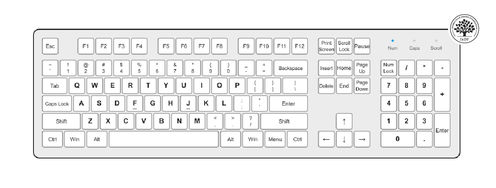
An empty shopping cart sits on a laptop keyboard, representing an abandoned online purchase

The UX of E-Commerce – Winning Customers Back after They Abandon the Cart

• 5 min read

402 Shares
Save

Many years ago, I worked as a salesman in a call center. One of the techniques we used to use to persuade slightly reticent prospects to become clients was called the “lost sale close”. It worked something like this:

The Lost Sale Close

Let’s say I’d just spent 30 minutes on the phone with a really good potential customer. They’d made the appropriate noises of delight during the process. They’d sounded really excited by the offering. Then when I asked for the deal… they asked for more time to think or they flat out said; “Thanks but no thanks.”


This is incredibly frustrating because as a salesman there are not enough hours in the day to have long calls fail. It’s also frustrating because you know you were doing nearly everything right but you couldn’t put your figure on what went wrong.

So… what we’d do is this. If someone’s client was nearly there and then said “No thank you”. One of the other salespeople would call that client and pretend to be their manager. They’d say something like this;

“Hi, I’m Jim and I’m Nick’s manager. I overheard the conversation you’ve just had with Nick and I was wondering, for the purpose of making Nick a better salesman, if you could explain why you decided not to take the product?”

In about 50% of cases this would then lead to the customer raising their objection, your colleague would handle this objection and the sale would be made.

The Abandoned Cart and the Lost Sale Close

Now, it’s not going to be possible for most e-commerce teams to call around the world endlessly to ask why their customers abandoned their shopping carts. However, you can apply a similar principle to your abandoned carts.


You can create an e-mail (well at least assuming that you at least got the prospect’s e-mail address before they jumped ship on your cart – this can be easily addressed by making entering an e-mail address the very first thing in your cart process) that is sent to the people who abandoned your cart.

You can make this conciliatory; e.g. you can say that you’ve noticed that they abandoned the shopping cart and that you hope this wasn’t due to an internet outage etc. You can then include a link back to the cart (ideally with their goods still in it) to enable them to continue shopping now.

Alternatively, if you think that your ordinary sales process is a bit too long for some people – you could include a link to a truncated process and get them shopping again.

There are claims that this can enable 30%+ of shoppers to come back and complete the shopping cart process. We’d be a bit cautious of those numbers but we do know that a single sale recovered is always worth having. Creating abandoned cart e-mail letters is a no-brainer if you’re looking to improve the UX of your e-commerce processes to increase sales.

Image Sources: Cart Rescuer (link to image), Business 2 Community (link to image), Mashable (link to image)



Learn More in This Course:

Learn Design and AI From the Best

Get one powerful email each week, like 312,434 others.

Next email in:

What You Should Read Next

  • Read full article
    The Relationship Between Visual Design and User Experience Design - Article hero image

    The Relationship Between Visual Design and User Experience Design

    A common perception about UX designers is that we are artists who can create beautiful interfaces from a blank canvas. While the aesthetics of products are important, visual design is only one aspect of the design process – in which team members with different skillsets and expertise collaborate

    Social shares
    802
    Published
    Read Article
  • Read full article
    You’re Not Bad at Presenting; You Just Haven’t Mastered the Right Way (Yet) - Article hero image

    You’re Not Bad at Presenting; You Just Haven’t Mastered the Right Way (Yet)

    Ever walked out of a presentation thinking, “That could’ve gone so much better, maybe I’m just not a presenter”? You’re not alone. And you’re not the problem. You simply haven’t been shown an easy, clear, repeatable way to prepare, deliver and follow up.Presenting is not an innate talent; it’s a ski

    Social shares
    358
    Published
    Read Article
  • Read full article
    The Power of Mapping - Article hero image

    The Power of Mapping

    The map is one of the earliest and most important human inventions. It helps us to navigate our complex world. Maps simplify complex spaces, create shared understanding, reveal hidden insights and help us coordinate action. Around 25,000 B.C. a person carved the earliest known map into a mammoth tus

    Social shares
    588
    Published
    Read Article
  • Read full article
    The Past, Present, and Future of Virtual Reality - Article hero image

    The Past, Present, and Future of Virtual Reality

    Virtual Reality (VR) has come a long way since its humble beginnings—with stereoscopic images back in the 1800s—“astronomically” far, in fact! Twenty-first century VR catapults users into immersive and interactive 3D environments, ones that let them experience something far beyond what they find in

    Social shares
    647
    Published
    Read Article
  • Read full article
    Turn Your Non-Design Experience into Design Portfolio Gold - Article hero image

    Turn Your Non-Design Experience into Design Portfolio Gold

    Have you ever wondered how to transition into UX and product design from a different career background without feeling insecure? Let's uncover strategies to confidently bridge the gap and showcase your skills to prospective employers with confidence and clarity.In this video, Morgane Peng, Desi

    Social shares
    507
    Published
    Read Article
  • Read full article
    Structure First: The Inverted Pyramid and Visual Organization - Article hero image

    Structure First: The Inverted Pyramid and Visual Organization

    This clip examines two principles that work hand in hand to make web content readable: the inverted pyramid approach to information order and the use of visual structure to help users scan efficiently. William Hudson, UX Strategist and Founder of Syntagm Ltd, describes the theoretical basis and prac

    Social shares
    206
    Published
    Read Article
  • Read full article
    What Is Card Sorting? - Article hero image

    What Is Card Sorting?

    In this video, William Hudson, UX Strategist and Founder of Syntagm Ltd, introduces card sorting: what it is, where it comes from, and the broad range of problems it can help solve.Card sorting is a research technique in which participants organize a set of items into groups that make sense to them,

    Social shares
    173
    Published
    Read Article
  • Read full article
    Design Accessible Navigation for Keyboards and Screen Readers - Article hero image

    Design Accessible Navigation for Keyboards and Screen Readers

    Accessibility is often treated as a finishing touch, but for navigation, it belongs at the foundation. Menus are how users reach everything else on a site, so a menu that works only with a mouse quietly shuts out anyone who depends on a keyboard, a screen reader, or another form of assistive technol

    Social shares
    173
    Published
    Read Article
  • Read full article
    The Scent of Information: Give Users the Confidence to Click - Article hero image

    The Scent of Information: Give Users the Confidence to Click

    William Hudson, UX Strategist and Founder of Syntagm Ltd, introduces the scent of information as a model for understanding how users navigate toward their goals, and sets out the principles for writing navigation links that strengthen that scent.Information Foraging and the Scent of InformationThe s

    Social shares
    172
    Published
    Read Article
  • Read full article
    4 UI Design Tips Every Designer Needs to Know - Article hero image

    4 UI Design Tips Every Designer Needs to Know

    User interface (UI) design can make or break any digital product. A user often won’t even notice when they interact with a great UI. They feel the visual appeal and simply trust it. On the contrary, a bad UI design can prevent the user from interacting with a product intuitively or at all and lead t

    Social shares
    646
    Published
    Read Article

Top Articles

Top Topic Definitions

39% of Today's Skills Will Change by 2030

The World Economic Forum expects 39% of today's skills to be transformed or become outdated by 2030.

The good news is that jobs in UX / UI design and AI are among the fastest-growing professions globally.

Build Skills That Keep You Relevant

Privacy Settings

By using this site, you accept our Cookie Policy and Terms of Use.
Customize
Accept all

Be the One Who Inspires

People remember who shares great ideas.

Share on:

Academic Credibility — On Autopilot

Don't waste time googling citation formats. Just copy, paste and look legit in seconds.

Learn Design and AI From the Best

Get one powerful email each week, like 312,434 others.

Next email in: