Schemas: Designing According to Users' Expectations

by IxDF Instructor • 8 min read

570 Shares

In everything we do, we are bound by our previous experiences. We make judgements on the basis of our interactions and experiences with the world. Someone catching ball positions themselves according to the environmental information and their understanding of how objects behave under certain conditions. For example, if it is windy, the catcher might stand further to their left or right, depending on the direction of the wind. Alternatively, if they can see the ball is made from rubber they would prepare themselves differently to when the ball is hard, such as a leather ball found in cricket.

We adjust our bodies and minds to fit in with our surroundings, and to give ourselves the best chance of success in whatever we are doing. From the moment we enter the world, we are acquiring information, learning associations between things, and making incremental improvements in how we judge these things in terms of what we can see, hear, smell, taste and feel.
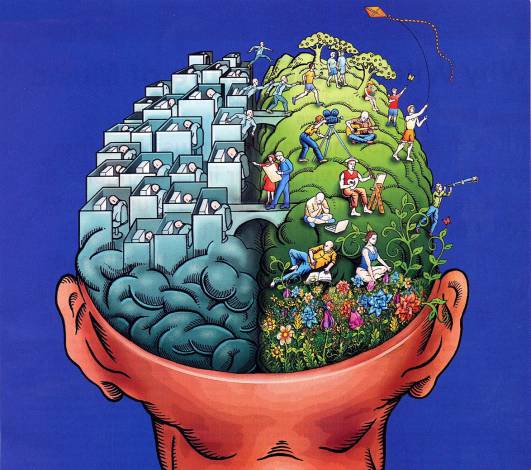

Author/Copyright holder: TZA. Copyright terms and licence: CC BY-NC 2.0

Our brains are amazingly adept at 'filling-in-the-blanks' when we are moving around our environment and consuming sensory information. We are only capable of taking in a tiny percentage of what goes on around us at any one time, but the experience is constant and meaningful, in spite of the holes in our conscious experience. And it is through experience or direct contact with the world that we become better and better at filling the blanks. Our brains store representations of the world and use this information to complete our present experiences.

Consider the experience of going to a doctor's surgery. You walk into the consulting room, take a seat, talk to the doctor or nurse, and then leave. What did you take in during this time? Did you look around the room and see some personal artefacts? Did anything stand out in the room? Or do you not remember anything in particular? Now, what would you expect to have seen? Just take a minute to think of some of the things you might expect to find in a doctor's surgery.

If you thought of anything at all, you are demonstrating an understanding of the context, which is based on prior experience. We don't just have individual expectations, we have whole systems, frameworks, and mental structures to inform our understanding of the world. These organised patterns of thought are referred to as Schemas, a term coined by Developmental Psychologist Jean Piaget.

Think of the doctor's surgery example; you tapped into your schema for this scenario, to pull out specific items that you would typically find in this setting. As part of this process, you may have thought about the roles the doctor or nurse perform, the tools of the trade, and the building in general. All of these factors are the building blocks of schemas, or the mental structures that prop up information processing as we are reliant on attention, which is a limited cognitive resource.

If we were capable of attending to everything in our surroundings we could create a whole, complete, and constant representation of our environment without the need for schemas, but they are an essential part of human information processing. Our preconceptions and expectations save time and mental energy. We can focus on the parts of our experience that are most personally meaningful and relevant, whilst schemas help to fill out the rest of the experience unconsciously.
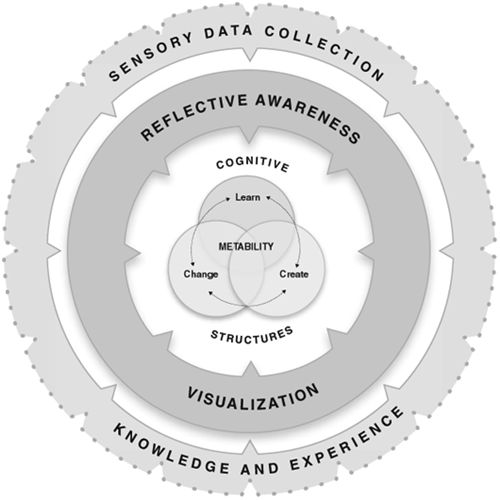


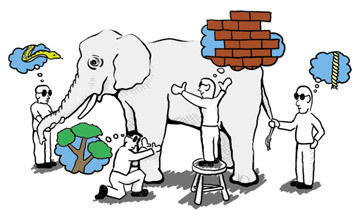
Author/Copyright holder: ASCD. Copyright terms and licence: All rights reserved Img source


Schemas also influence our conscious experience; they don't operate purely at an inaccessible level of human thought. We consciously apply our experiences to help us determine what to focus on and make a whole range of other decisions, such as establishing whether our actions have been successful or whether we are in the right place.

As schemas play an integral part in all human experience, they are an important consideration for designers. When users interact with a website, tangible product, or user interface for the first time, they bring a wealth of knowledge and experience with them. So, while designers might feel they are dealing with a blank slate, they are not. Users arrive with expectations and deep-rooted ideas of how things should look, feel, and behave in response to their interactions.
Author/Copyright holder: Unknown. Copyright terms and licence: Unknown Img source

Designers may look upon schemas as a nuisance, as they constrain the design process, but expectations can help shape products. When we are presented with an ill-defined task, it is difficult to decide what we are mean to, but constraints, such as users' schemas, guide and inform the process. Conforming to expectation is an option that simplifies the design process, as there are existing methods, practices, standards, and conventions to implement. And, conversely, if you want to influence the user experience by going against expectation, schemas offer us the necessary insights.

In Summary

A schema is a mental framework, which is developed over time following interaction with and experience of our environment. Schemas are effectively our expectations, but they are representative of whole ideas, notions, and experiences, not just isolated elements or items in our surroundings. They enable us to interact with and have a continuous experience of the world, even though human attention is limited.

We have schemas for products, websites, and all the other things that we now use on a daily basis. To provide positive user experiences, it is important to consider the expectations or schemas users bring with them when they are using your products. Otherwise, people must maintain a higher-than-usual level of attention and concentration when using products, to ensure their prior experience does not inhibit or negatively impact on their current experience.

Header Image: Author/Copyright holder: Ana Zdravic. Copyright terms and licence: All Rights Reserved


Learn More in This Course:

AI for Designers

0
15
42
7
97 % booked
View Course

What You Should Read Next

  • Read full article
    What is the UX Design Process?  5 Steps to Success - Article hero image
    Interaction Design Foundation logo

    What is the UX Design Process? 5 Steps to Success

    UX designers design every interface to be as intuitive and easy to use as possible, and to do this, and they rely on “design thinking,” a step-by-step guide to the UX design process. Let's explore the UX design process and look at common tasks in each UX design phase and which roles are responsible

    Social shares
    946
    Published
    Read Article
  • Read full article
    What Does a Creative Designer Do? - Article hero image
    Interaction Design Foundation logo

    What Does a Creative Designer Do?

    Creativity is a massive appeal factor for designers (and those who enjoy what we do!) as they bring to bear their creative talents and skill sets on projects and dazzle users, customers, and the brand themselves who launch their design solutions. With that said, though—and for all the digital produc

    Social shares
    747
    Published
    Read Article
  • Read full article
    Your Guide to Hamburger Menus - Article hero image
    Interaction Design Foundation logo

    Your Guide to Hamburger Menus

    The hamburger menu—with its three horizontal lines—simplifies website navigation. Not every interface benefits from its use, but it can help in certain scenarios. That’s why it’s vital to understand when it shines and when alternatives might serve users better. So, learn the pros and cons of using t

    Social shares
    850
    Published
    Read Article
  • Read full article
    Ideation Method: Three-way Comparisons - Article hero image
    Interaction Design Foundation logo

    Ideation Method: Three-way Comparisons

    [[video:94]] Externalization of uncovered tacit knowledge is important, but how do you make that valuable tacit knowledge explicit in a way so you can use it more effectively? Often, this is easier when we’re forced to compare things as we may be able to articulate the difference between things e

    Social shares
    420
    Published
    Read Article
  • Read full article
    Use Circular Design To Reverse Harm - Article hero image
    Interaction Design Foundation logo

    Use Circular Design To Reverse Harm

    Nature is circular. Nothing ever goes to waste. The banana peel we discard degrades into nutritious compost for plants. Even the remains of deceased animals and humans disintegrate into the soil. Human engineering and design, on the other hand, are linear processes. And that has put us on a one-way

    Social shares
    432
    Published
    Read Article
  • Read full article
    Recycling is Not Enough. Let's Design for Reuse - Article hero image
    Interaction Design Foundation logo

    Recycling is Not Enough. Let's Design for Reuse

    “We live in the age of technology and luxury, but we also live in the age of waste,” Don Norman explains. In this video, the grandfather of User Experience Design, Don Norman unpacks the world of waste we have collectively generated. He examines aspects of our daily lives that we take for granted an

    Social shares
    463
    Published
    Read Article
  • Read full article
    Tree Testing: A Complete Guide - Article hero image
    Interaction Design Foundation logo

    Tree Testing: A Complete Guide

    Tree Testing reveals where users lose their way in your navigation. It’s a focused approach to evaluate a site's navigational structure. But it’s more useful in certain scenarios—so, you need to understand where you’ll benefit from tree testing the most. Learn about the pros and cons of testing tool

    Social shares
    690
    Published
    Read Article
  • Read full article
    How to Design Ethically: Expert Advice from Guthrie Weinschenk - Article hero image
    Interaction Design Foundation logo

    How to Design Ethically: Expert Advice from Guthrie Weinschenk

    As UX designers, we wield immense power to influence our users’ lives. We have the dual responsibility of catering to the interests of our users, as well as that of our sponsors (employers, clients and other business stakeholders). This can sometimes put designers in uncomfortable situations and rai

    Social shares
    548
    Published
    Read Article
  • Read full article
    Anything Artificial We Can Design Better - Article hero image
    Interaction Design Foundation logo

    Anything Artificial We Can Design Better

    If you look out the window, you’ll realize many things you see are artificial—buildings, cars, parks, electricity posts, water pipes, etc.—and most of those things were designed by humans. Founding father of UX, Don Norman introduces you to artificiality and how designers shape the world.[[video:142

    Social shares
    415
    Published
    Read Article
  • Read full article
    Stop the Generic Portfolio Trap! Design a Stand-Out Portfolio for Your UX/UI Niche - Article hero image
    Interaction Design Foundation logo

    Stop the Generic Portfolio Trap! Design a Stand-Out Portfolio for Your UX/UI Niche

    Your UX/UI portfolio is your ticket to your dream job, brief or client. It’s your opportunity to show off your expertise, creativity, and the tangible impact of your work. No matter your niche, your portfolio should be as innovative and polished as the projects it represents.Think of your portfolio

    Social shares
    305
    Published
    Read Article

Top Articles

Top Topic Definitions

39% of Today's Skills Will Change by 2030

The World Economic Forum expects 39% of today's skills to be transformed or become outdated by 2030.

The good news is that jobs in UX / UI design and AI are among the fastest-growing professions globally.

See How Design Skills Turn Into Job Options
Privacy Settings
By using this site, you accept our Cookie Policy and Terms of Use.
Customize
Accept all

Be the One Who Inspires

People remember who shares great ideas.

Share on:

Academic Credibility — On Autopilot

Don't waste time googling citation formats. Just copy, paste and look legit in seconds.

Feel stuck? Want Freedom?

Get one powerful email each week, like 321,976 others.

Learn to design a life you love.

Next email in: