The prospect of winning a new client is something that leaves us all a little excited. Yet, the more clients we bring on, the more we realize that there are great clients and there are clients with whom every interaction sucks our will to live. Signing the former is a great shot in the arm and leaves us enthusiastic and signing the latter usually turns out to be far more effort than it is worth.
So how do we protect ourselves against terrible clients and moreover how do we deal with them if we do make the mistake of signing on the dotted line with them?
You Have to Be Upfront From the Word Go
Most clients, including the good ones, tend to send vague request for proposals or information when they first deal with us. Something like; “I am opening up a new business. It needs a website. What will that cost and how long will it take?”
That tells you nothing of value. How big will the website be? What technologies do they want to use? How much design will you need to do? The list of questions we have is important and more importantly we need to know their budget. There’s no point quoting for a web project if your client only has $25 to spend.
You can start to sort the wheat from the chaff by using a template e-mail response. One in which you ask the relevant questions (feel free to tweak them) and see what the response will be. A template saves you putting any time into the relationship until you’ve got some clarity where things are going.
A potential client that won’t share deadlines or budgets… is a client to be avoided. The answer is almost always 1 day for a site the size of Amazon with a budget of the sum total of a McDonald’s Happy Meal.
Have another form letter handy to eliminate those clients that won’t share the details you need from them. Don’t waste time writing an angry mail back to them. If you’re feeling particularly creative recommend a competitor in your e-mail and let them deal with the terrible client instead.
Author/Copyright holder: brett jordan. Copyright terms and licence: CC BY 2.0
You Have to Be Strong Enough to Say No
The most miserable designers in the world are the one who can’t say no. Sure, today turning down business might mean a few days downtime but it leaves you free to pick up a good client with a project that pays well and that you enjoy.
You will also find that clients you turn down for having poor budgets or bad specifications often come back long-term. Once they’ve been burned by a rank amateur desperate for business at any cost – they start to see the value in paying properly and putting together detailed specs.
You Need a Quotation Template
This has two advantages, first it looks professional. Second, it allows you to get the client to complete all the details in one place. Later on when things are going through one of those inevitable rocky patches of “that’s not what I asked for” you can put the quote template down and show that it’s exactly what was asked for.
Determine:
- What sections are needed (and ideally how many page types are needed)
- What those sections are supposed to do
- What design requirements are needed on top of the pages
- What the deadline is
- What the overall budget is
Get the client to fill in the form and then turn it round as a quote. There can’t be any arguments when the client’s handwriting (typing) specifies what should be done.
You Need to Handle First Meetings With A Certain Caution
The objectives of the first meeting are for you to get answers to what the client wants. They’re also to help the client understand the way your design process works. If the client doesn’t listen or refuses to agree on the simple stuff – it might be time to walk away rather than keep going. If you can’t deal with each other at the start of the project, what’s it going to be like when the details come up for review?
You Need a Deposit
Suckers work for payment on completion. This is 100 times more true when you’re working with a new client. If the client won’t put down a deposit, how easy will it be to extract payment at the end of the project?
I also use a gated payment process for new clients. With payments for each deliverable so that I’m only due a small percentage at the end of the project. I like to be able to pay my rent and bills and I can’t when my money is in the client’s pocket and needs a court battle to get hold of it.
Never start work until the deposit is in the bank. If the deposit doesn’t arrive by the start date. Send the client an e-mail explaining that the project will have to go on hold until the deposit does arrive. Don’t be rude about this but do be firm about it.
Sketches and Wireframes Are Your Friends
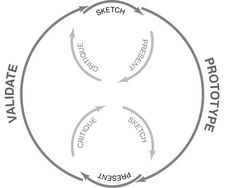
When working with a new client baby steps are a good idea. Start by sending sketches and wireframes as the first deliverable. It’s much easier to fix these than it is to fix a fully designed product. Make sure that you use a formal sign off process (with actual signatures) before you move on to the work itself.
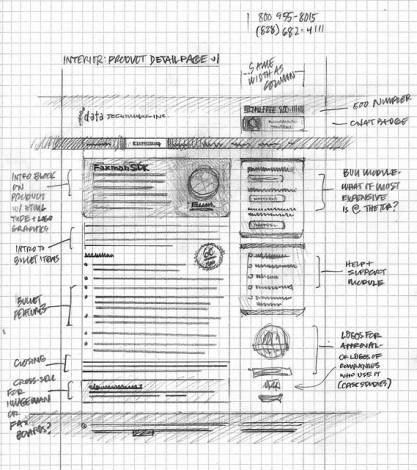
Author/Copyright holder: Mike Rohde. Copyright terms and licence: CC BY-NC-ND 2.0
You Need Clear Communication Processes and You Need to Stick to Them
Get this fixed in the original quotation you provide. Agree how things will be communicated, the turnaround time for responses, and what happens if a response isn’t forthcoming. Don’t agree to a process that puts you at a massive disadvantage. Concentrate all communications efforts on moving the project forward, don’t get into arguments and do be clear when the changes asked for are out of scope and will require increased charges in order for them to be done.
You Need to Be Clear About the Client’s Responsibilities
Some designers provide copy. Most do not. If the client is required to provide copy make sure that delivery dates are contractual. Make sure that you have charges built in to cover delays etc. You have to meet your deadlines but so does your client.
You Need to Limit Rework
Agree a contractual number of rework opportunities at each stage. If the client still wants more changes make sure the contract specifies the cost for those additional changes. Whatever you do – don’t get stuck in an “unlimited changes” loop. Even the best clients can become monsters if you don’t get this bit clear.
You Want to Delivery to Come After Final Payment
The client needs to see a finished working product on your servers. They don’t get the product on their servers until they have paid for it. The major cause of that last payment going missing is the designer giving up all their work and having no leverage. Make certain that you’ve specified this in the contract too.
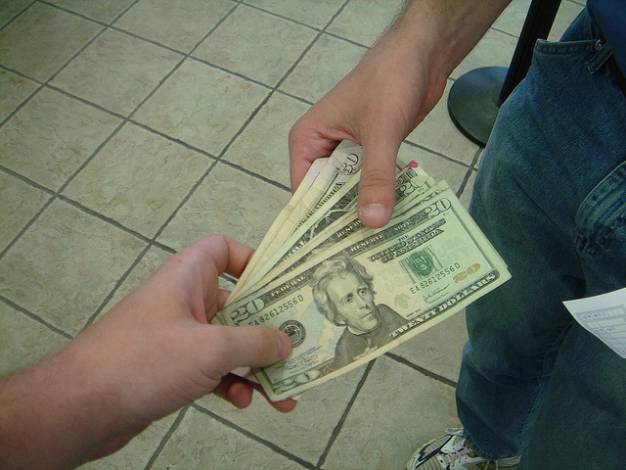
Author/Copyright holder: Quazie. Copyright terms and licence: CC BY 2.0
Summary
Terrible clients are often of our own making. Using the processes detailed above reduces the chances of banging heads with your clients and significantly increases the chances that you’ll get the job done on time and get paid. Of course, you do need to show some flexibility at times – a touch of “reasonable” can make the rest of the process easier to swallow for the client too.
Header Image: Author/Copyright holder: Unknown. Copyright terms and licence: Unknown. Img Source