After more than 40 years in the field, Human Computer Interaction (HCI) is already a well-established design discipline. Now, the pervasiveness of big data, new data collection and interaction techniques is giving rise to a new but related discipline: Human Data Interaction (HDI). This is likely to be a field with major new opportunities for designers and analysts in the coming decades.
Human Data Interaction, until recently, has been as prosaic as the data itself; small sets of data which were manipulated for specific purposes. With the advent of massive databases and new tools with which to collect, manipulate and analyse data there is a need to examine these interactions in greater detail.
Important Data Concepts
Data is simply a collection of information but when it is combined with other ideas it becomes more relevant to the discipline of HDI (as proposed by University Lecturer Richard Mortier from the University of Cambridge et al.):
Data trails – the records of transactions of data.
Data smog – when data becomes an overwhelming and confusing collection of information.
Big data – cloud and mass scale computing leads to large collections of data which may be challenging to manipulate and manage.
The interaction between these three concepts gives rise to the demand for HDI.
The Principles of HDI
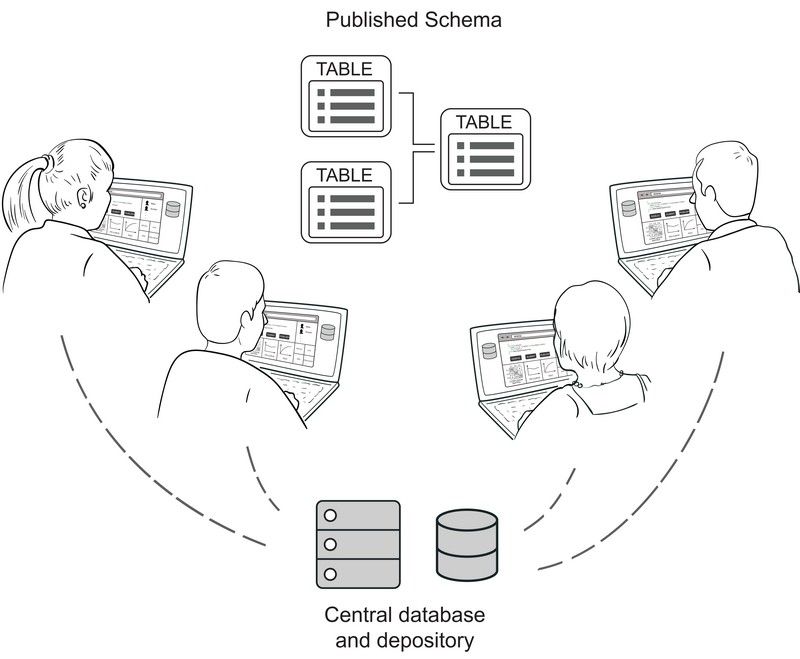
Author/Copyright holder: Massachusetts Institute of Technology. Copyright terms and licence: All rights reserved Img source
According to Mortier et al. (in Human-Data Interaction: The Human Face of the Data-Driven Society), there are three key principles which underpin HDI as a discipline:
Legibility – this is an examination of how the use of data and the way it is processed is clear to the people that the data concerns. What data is used? What ways are inferences deduced from the data set? This is important from both an ethical and legal perspective and may clash with the need to keep proprietary techniques concealed in order to protect the intellectual property connected to these processes.
Agency – this is about how the individual may consent (or withdraw/withhold their consent) to the use of their data and to the processes that others may wish to conduct on that data. This is not to say that this needs to always be an explicit choice but that there will be times that this is essential possibly in relation to damaging uses of data.
Negotiability – this is concerned with the societal contract surrounding the use of data. The way that our cultural interaction with data may change over time and how legal and ethical frameworks may develop in relation to the use of data.
Principles Associated with Legibility
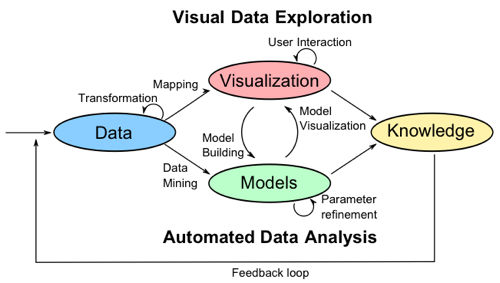
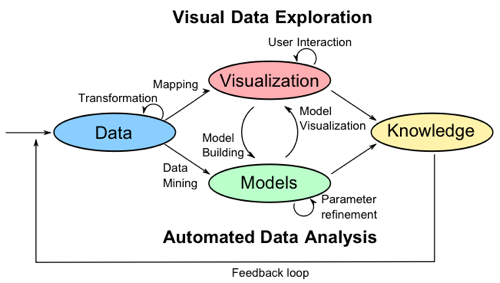
Author/Copyright holder: Visual-Analytics.eu. Copyright terms and licence: All rights reserved Img source
It is difficult for us to see how our data is used from credit ratings to health insurance; large databases are used to examine and interrogate our data and to draw inferences from that data. This leads to a need for legibility and with that some simple principles:
We need to be aware that our data is being collected (for example – the EU regulations on Cookies gave people insight into the ways that online providers track their behaviour)
We need to be aware of the data themselves and the implications of that data – this is a more challenging concept. In particular, there be many varying viewpoints on the acceptable use of data and that all viewpoints may be valid (think about the right to be forgotten imposed on Google and search engines by the EU – there are many sides to this argument and there is no simple “right way”
How could this be tackled in practice? It might possibly be through data visualization (or even artistic interpretation of this) and other forms of public explanation. This doesn’t negate the complexity of the challenge – some data sets are likely to be insanely complex to explain through visual means.
The Principle of Agency
This is an even more challenging area to address. Not only do we need the ability to consent to others’ use of our data – we also need to be able to challenge the use of that data if we believe the inferences drawn from it are harmful or just plain wrong.
Concerns regarding agency involve not just privacy and inference but also the management of our data. It is more and more common for data to be shared between many different data management companies and to be accessed by all those companies.
While, in many instances, people may have no intention of becoming involved in this process – it is important that they can, even if their interest is simply based on curiosity.
There may also need to be a “common good” applied to the use of data. Your data may, for example, be able to use to predict or report on traffic flows. This is not intrinsically harmful to any individual and the issue of agency becomes cloudy because if enough users were to be able to exert their right to withdraw from such use of their data – the efficiency of these valuable systems would be degraded.
The Principle of Negotiability
In a world where our data may be traded at will; there is a need for the subjects of the data to be able to negotiate on how this value may be used and traded. At the current moment, it is clear that the balance of power lies too far in the hands of the data collectors and aggregators.
There is a need for people to be able to understand the context in which their data is used, manipulated and traded for commercial value. It seems unrealistic for people to manage all of their own personal data in an instance by instance, transaction by transaction model and thus legal and regulatory frameworks may need further development to address these concepts on a larger scale.
There is also a requirement to ensure that, once again, societal benefits are also considered beyond the needs of the individual. For example, data sharing within the scientific community is becoming standard and driving the pace of innovation and development. It is important that these benefits are not impeded unnecessarily.
Finally there are a mass of cultural and contextual considerations to be taken into account and data interaction will need to be studied within specific communities so that guidelines and laws can become effective in all situations.
The Take Away
Human Data Interaction (HDI) is a new and exciting sphere of design and IT practices. The concepts outlined here are intended to begin the development of this field and to show the opportunities and challenges that this discipline will begin to address in the near future.
Resources
To read the full paper by R Mortier et al. and their in depth analysis of the issues surrounding these developments go here: https://arxiv.org/pdf/1412.6159.pdf
Examine MIT’s take on HDI and their contributions to the development of the discipline here: https://alfagroup.csail.mit.edu/human-data-interaction-project
For some real life HDI issues and their handling check out this piece in Forbes’ magazine: http://www.forbes.com/sites/teradata/2014/12/17/the-ergonomics-of-human-data-interaction/
A nice article summing up why HDI is necessary at the MIT Technology Review: http://www.technologyreview.com/view/533901/the-emerging-science-of-human-data-interaction/
Hero Image: Author/Copyright holder: Tony Werman. Copyright terms and licence: CC-BY 2.0