man and computer not getting along

A Brief History of Human-Computer Interaction

• 4 min read

820 Shares

Human Computer Interaction is the academic discipline that most of us think of as UI design. It focuses on the way that human beings and computers interact to ever increasing levels of both complexity and simplicity.

It’s a Very New Discipline

It’s perhaps easy to see that until the mid to late 1970s this discipline wasn’t particularly important. The few people who had access to computers were academics or professionals with a few incredibly dedicated (and wealthy) hobbyists thrown into the mix. Without a broad base of users; it wasn’t necessary to focus on how those users interacted with computers – they just made do with whatever was to hand or created what they needed themselves.

Then with the dawn of personal computing; the flood gates opened. The masses wanted computing and they didn’t want to go through complicated rigmarole to do what they wanted with a computer. They weren’t prepared to build and program their own joysticks for the games they bought, they didn’t expect to design the mouse before they could use a word processor and so on…

Cognitive Sciences

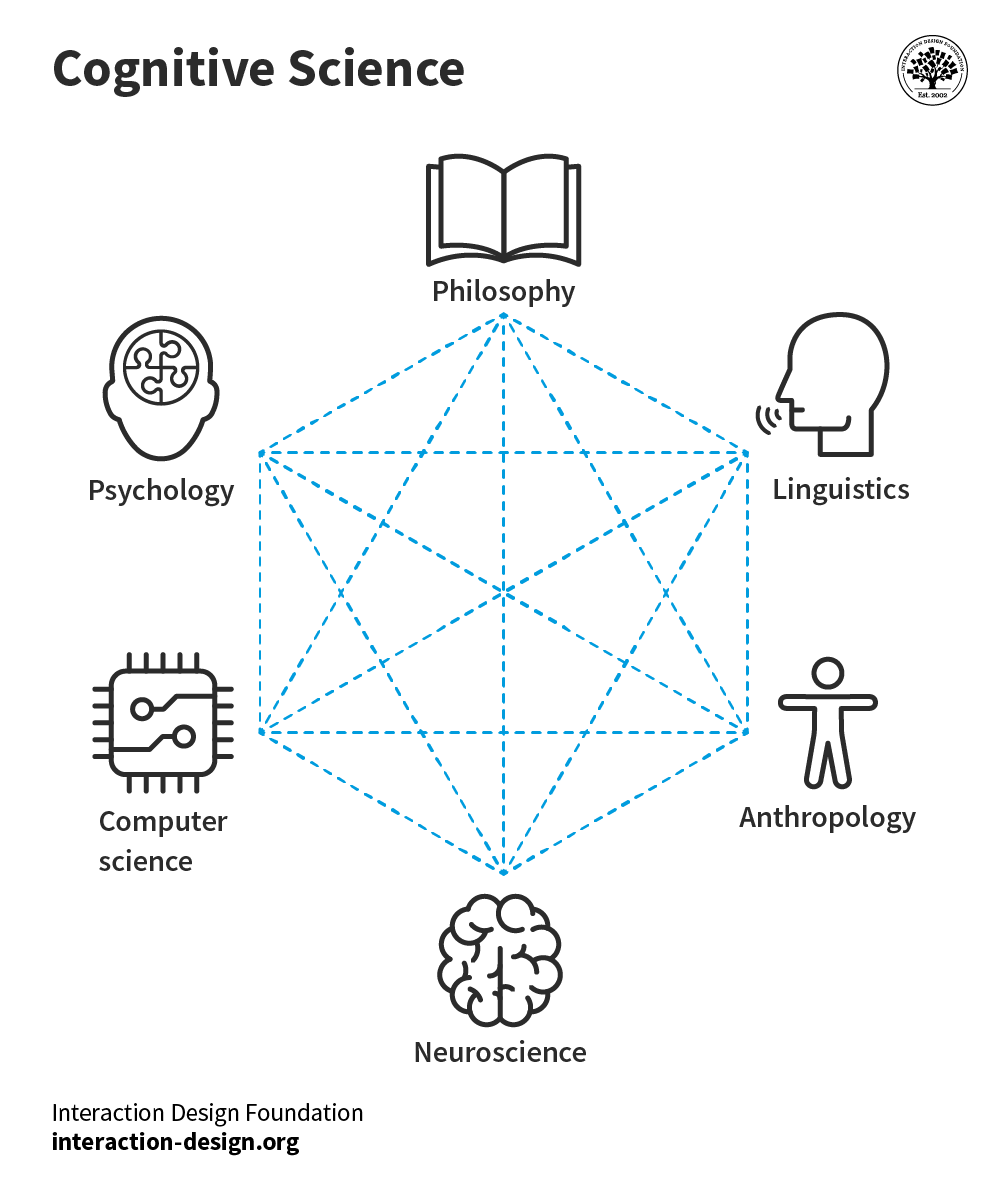
Luckily, for the masses, there was a discipline waiting in the wings to help with the tasks that lay ahead. Cognitive sciences (a broad and heady mix which includes psychology, language, artificial intelligence, philosophy and even anthropology) had been making steady progress during the 1970s and by the end of the decade they were ready to help articulate the systems and science required to develop user interfaces that worked for the masses.
Engineering

This is known as “cognitive engineering” e.g. building things that work with our thoughts. And once again the engineering discipline had also come on leaps and bounds during the 1970s in order to support this change. In aviation, for example, engineering had already started to simplify the user interface of complex airplanes. It was natural for some of this work to move into the UI field for computing devices.

Documentation

It’s also important to recognize the challenge of documenting these developments. New systematic approaches needed to be taken in order to record developments and to share these with other practitioners of the new discipline worldwide. There really is, after all, no advantage in reinventing the mouse over and over again.

John Carroll the Edward Frymoyer Chair Professor of Information Sciences and Technology at the Pennsylvania State University says that the discipline of Human Computer Interaction was born (or perhaps “emerged” is a better word) in 1980 as all these separate disciplines began to realign around a single objective; making computing easier for the masses.

You can read the full text of John’s book on Human Computer Interaction here on the IxDF website. It’s completely free to read online and our members can also download a free copy to their preferred e-book reader.

References & Where to Learn More:

Header Image: Author//Copyright holder: Glasbergen. Copyright terms and licence: All rights reserved. Img

Course: “Human-Computer Interaction: The Foundations of UX Design”

Imgs: Cognitive Science, Robotics, Diagram

Topics in This Article

Learn More in This Course:

AI for Designers

12 days
13 % booked
View Course

What You Should Read Next

  • Read full article
    Design Iteration Brings Powerful Results. So, Do It Again Designer! - Article hero image
    Interaction Design Foundation logo

    Design Iteration Brings Powerful Results. So, Do It Again Designer!

    The iterative design process is a simple concept. Once, through user research, you have identified a user need and have generated ideas to meet that need, you develop a prototype. Then you test the prototype to see whether it meets the need in the best possible way. Then you take what you learned fr

    Social shares
    1.2k
    Published
    Read Article
  • Read full article
    How to Use Mental Models in UX Design - Article hero image
    Interaction Design Foundation logo

    How to Use Mental Models in UX Design

    Mental models are important in Human-Computer Interaction (HCI) and interaction design because they provide information about how users perceive the world and interact with products or services. Let’s explore this concept more closely.Mental models indicate what a user expects to happen based on exp

    Social shares
    1k
    Published
    Read Article
  • Read full article
    Human Data Interaction (HDI): The New Information Frontier - Article hero image
    Interaction Design Foundation logo

    Human Data Interaction (HDI): The New Information Frontier

    After more than 40 years in the field, Human Computer Interaction (HCI) is already a well-established design discipline. Now, the pervasiveness of big data, new data collection and interaction techniques is giving rise to a new but related discipline: Human Data Interaction (HDI). This is likely to

    Social shares
    693
    Published
    Read Article
  • Read full article
    How to Become a Digital Designer: The Complete Guide - Article hero image
    Interaction Design Foundation logo

    How to Become a Digital Designer: The Complete Guide

    In a digital world—for that’s what it pretty much is—what could be more natural than for every brand, company, and digital professional to want to make a mark? No surprise, then, that with 93% of all brand communication being visual, a great deal of that is all about digital design—so a digital desi

    Social shares
    652
    Published
    Read Article
  • Read full article
    Learn the Role of Perception and Memory in HCI and UX - Article hero image
    Interaction Design Foundation logo

    Learn the Role of Perception and Memory in HCI and UX

    Have you ever wondered how your brain makes sense of the world? It's a fascinating process! If you want to design helpful products and services that people love, you must first understand how they think. A large part of human interaction relies on perception, our ability to see, hear and feel our su

    Social shares
    650
    Published
    Read Article
  • Read full article
    How to Improve Your UX with HCI Insights - Article hero image
    Interaction Design Foundation logo

    How to Improve Your UX with HCI Insights

    Design plays a role that’s utterly crucial in our daily lives—it bridges functionality with aesthetics to meet user needs. In product development, it’s design that determines how user-friendly and appealing a product is. The field of human-computer interaction (HCI) is foundational to UX design. To

    Social shares
    578
    Published
    Read Article
  • Read full article
    Cognitive Maps in UX | IxDF - Article hero image
    Interaction Design Foundation logo

    Cognitive Maps in UX | IxDF

    Cognitive maps in UX show how users think about a product or service. Designers use these visual representations so they can understand the user's mental model—something that helps them make intuitive designs that match the user's expectations and improve their overall experience.Think about the las

    Social shares
    537
    Published
    Read Article
  • Read full article
    Guidelines for Design for Appropriation - Article hero image
    Interaction Design Foundation logo

    Guidelines for Design for Appropriation

    Appropriation occurs when a user takes a design and puts it to use in a way that wasn’t anticipated by the designer. This can have real benefits for a product; it enables the product to become more useful and can increase the product’s appeal to different audiences and increase its market life too.

    Social shares
    534
    Published
    Read Article
  • Read full article
    Start Your UX Journey: Essential Insights for Success - Article hero image
    Interaction Design Foundation logo

    Start Your UX Journey: Essential Insights for Success

    One in three consumers (32%) will abandon a brand they love after a single poor experience—yes, all it takes is just one bad experience. It’s a statistic that drives home the point that designers can’t afford to gamble against user feedback. What users think is a reality that’s total for you as a de

    Social shares
    464
    Published
    Read Article

Top Articles

Top Topic Definitions

Feel Stuck?
Want Better Job Options?

AI is replacing jobs everywhere, yet design jobs are booming with a projected 45% job growth. With design skills, you can create products and services people love. More love means more impact and greater salary potential.

At IxDF, we help you from your first course to your next job, all in one place.

See How Design Skills Turn Into Job Options
Privacy Settings
By using this site, you accept our Cookie Policy and Terms of Use.
Customize
Accept all

Be the One Who Inspires

People remember who shares great ideas.

Share on:

Academic Credibility — On Autopilot

Don't waste time googling citation formats. Just copy, paste and look legit in seconds.

Feel Stuck? Want Freedom?

Join 326,013+ designers who get one powerful email each week. Learn to design a life you love.

Next email in
1
day
17
hrs
23
mins
40
secs

Free forever. No spam. Unsubscribe anytime.