Mental models

How to Use Mental Models in UX Design

• 7 min read

1,033 Shares

Mental models are important in Human-Computer Interaction (HCI) and interaction design because they provide information about how users perceive the world and interact with products or services. Let’s explore this concept more closely.

Mental models indicate what a user expects to happen based on experience; they help us construct expected interactions with reality. One famous example is the "Norman Door": what is the expectation for push or pull? Many “pull doors” are only pushable—the opposite of the label and implied interaction. Likewise, many “push doors” are only pullable. 

The reason why Norman Doors are so frustrating is that they break our mental models. We expect doors to work in a certain way based on our past experiences with similar doors, and when they don't, we become confused and frustrated.

© Brent Manke, CC BY-NC 2.0

In most instances, the stored expectation will, to a certain extent, resemble the real-life model or prior UI experience. This is important because users will plan and predict future actions within a system based on their mental models. It's also why consistency is so important in UI design. 

Designers often make the mistake of designing based on their own mental models, which can cause a mismatch with the users' mental models. Users may understand differently how a product or service should work, and if the design doesn't match their mental model, it can lead to confusion and frustration.

It is worth noting that a mental model can evolve and may change based on the use of other products, the interaction with other users, and even learning from other sources. The more a user sees the same UI pattern, the more it becomes familiar and expected. This leads to the formation of a mental model that guides their interaction with similar products or services. For example, frequent social media platform users develop a mental model of how social media interfaces work, and they will expect other social media sites to have similar interfaces.

Mixed-Up Mental Models

Jakob Nielsen observes that many users need help to distinguish between the search field on Google and the URL entry field in a browser. This produces inefficient searching habits, such as using Google to search for the name of a well-known website instead of simply entering the name plus ".com" in the URL bar.

To address this issue, some browsers like Google Chrome have implemented features that make it easier for users to navigate to websites directly from the address bar.

Google Chrome has a feature that allows users to enter search queries and URLs into the same bar. Then, Chrome will suggest relevant results based on the user's input.

© Google, Public Domain.

If a designer tries to challenge a user's mental model, they must ensure that the perceived value of their product is high enough for the user to try to adapt to it. Otherwise, users may become frustrated and seek products or services that align with their mental models.

When altering the design to match the user's mental model is impossible, you should take additional steps to help users adapt to new models. Provide instructions, labels, tutorials, and visual cues that support the new model to become embedded in the user's mind. 

However, altering the design to match the user's mental model will be the best course of action in most cases. This approach eliminates any need for users to overcome inertia and allows them to interact seamlessly with your product without confusion or frustration. As a result, users are more likely to have a positive experience with your product and may even recommend it to others.

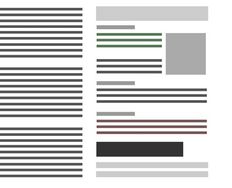
Mental models are subjective and differ between individuals. They are based on a combination of past experiences, assumptions and knowledge.

© Interaction Design Foundation, CC BY-SA 4.0

The Take Away

Mental models provide designers with a shortcut when developing user interfaces. When designers learn the users’ mental models and do not rely on their own internal mental model, they can create an experience that users expect as well as one that’s intuitive and easy to follow. This approach saves time and resources that would otherwise be spent on extensive user training.

When you design interfaces that align with users' mental models, you can improve a product's or service's overall usability. Users who encounter familiar concepts and language within a design are more likely to navigate it seamlessly without confusion or frustration.

But tread with caution when challenging users' mental models: when you introduce new concepts or features that don't align with users' current mental models, they can get frustrated and confused. Therefore, take extra steps to ensure that the transition to a new model is as easy as possible for the user and provide clear instructions, labels, tutorials, and visual cues.

References and Where to Learn More

Read Jakob Nielsen’s paper on Mental Models from the Nielsen Norman Group.

If you're interested in learning about mental models and how they've evolved, be sure to check out this interview with data scientist and author Indi Young.

Read this book by Kenneth Craik, who said, “the mind constructs small-scale models in reality” to anticipate and explain events:

The Nature of Explanation. 1967. Kenneth Craik.

Hero Image: © Interaction Design Foundation, CC BY-SA 4.0

Learn More in This Course:

AI for Designers

12 days
13 % booked
View Course

What You Should Read Next

  • Read full article
    10 Great Sites for UI Design Patterns - Article hero image
    Interaction Design Foundation logo

    10 Great Sites for UI Design Patterns

    You don’t want to spend your whole life redesigning the wheel, do you? No, neither do we. If you are looking for a design that solves a problem that has been solved with a different application before, then the template for your wheel is probably already out there. This lets you save time and make a

    Social shares
    1.4k
    Published
    Read Article
  • Read full article
    Shneiderman’s Eight Golden Rules Will Help You Design Better Interfaces - Article hero image
    Interaction Design Foundation logo

    Shneiderman’s Eight Golden Rules Will Help You Design Better Interfaces

    Follow Ben Shneiderman’s 'Eight Golden Rules of Interface Design' if you want to design great, productive and frustration-free user interfaces. Apple, Google and Microsoft are among some of the highly successful companies whose well-designed products reflect Shneiderman’s rules. The characteristics

    Social shares
    1.4k
    Published
    Read Article
  • Read full article
    User Interface Design Guidelines: 10 Rules of Thumb - Article hero image
    Interaction Design Foundation logo

    User Interface Design Guidelines: 10 Rules of Thumb

    Learn to design with your user’s needs and expectations in mind by applying Jakob Nielsen and Rolf Molich’s Ten User Interface Guidelines. These heuristics have been reflected in many of the products designed by some of the most successful companies in the world such as Apple, Google, and Adobe. Fur

    Social shares
    1.4k
    Published
    Read Article
  • Read full article
    Repetition, Pattern, and Rhythm - Article hero image
    Interaction Design Foundation logo

    Repetition, Pattern, and Rhythm

    Let’s look at three subjects that, at first glance, may strike you as being incredibly basic and self-explanatory. However, although they may seem like they should need no introduction, we should study them. By understanding these concepts, you’ll be able to apply them more effectively to captivate

    Social shares
    1.4k
    Published
    Read Article
  • Read full article
    The Grid System: Building a Solid Design Layout - Article hero image
    Interaction Design Foundation logo

    The Grid System: Building a Solid Design Layout

    Now that we’ve seen some grids at work in the Rule of Thirds article, let’s examine them a little more deeply. As a concept that deals so fundamentally with the fabric and background of our work as designers, it’s easy to overlook the power of grids and think more about the elements we want to creat

    Social shares
    1.4k
    Published
    Read Article
  • Read full article
    The Golden Ratio - Principles of form and layout - Article hero image
    Interaction Design Foundation logo

    The Golden Ratio - Principles of form and layout

    Now, we’re going to look at a subject that comes directly from mathematics and that we can also find all around us – the golden ratio. Don’t worry; we’re not going back into the classroom for long. We will examine what this concept is and exactly how much it is a fundamental part of making designs p

    Social shares
    1.3k
    Published
    Read Article
  • Read full article
    10 Free-to-Use Wireframing Tools for UX Designers in 2026 - Article hero image
    Interaction Design Foundation logo

    10 Free-to-Use Wireframing Tools for UX Designers in 2026

    Wireframes help you quickly ideate and test your ideas. While paper wireframes are the fastest to create, digital wireframes look more polished and presentable. If you are looking for a pocket-friendly wireframing tool, look no further.Whether you prefer browser-based apps or offline desktop tools,

    Social shares
    1.3k
    Published
    Read Article
  • Read full article
    Principle of Consistency and Standards in User Interface Design - Article hero image
    Interaction Design Foundation logo

    Principle of Consistency and Standards in User Interface Design

    Learn to design with consistency and standards in mind and understand the reasons why they’re important to incorporate them into your work. Derived from Jakob Nielsen and Rolf Molich’s Ten User Interface (UI) Guidelines, ‘Consistency and Standards’ are evident in many of the widely-used produc

    Social shares
    1.3k
    Published
    Read Article
  • Read full article
    Adaptive vs. Responsive Design - Article hero image
    Interaction Design Foundation logo

    Adaptive vs. Responsive Design

    The differences between responsive and adaptive design approaches spotlight important options for us as web and app designers. Choosing with insight can empower you to plan and execute your designs with better aim, purpose and results.With the pervasiveness and diversity of mobile devices, as design

    Social shares
    1.3k
    Published
    Read Article
  • Read full article
    Visual Hierarchy: Organizing content to follow natural eye movement patterns - Article hero image
    Interaction Design Foundation logo

    Visual Hierarchy: Organizing content to follow natural eye movement patterns

    Let’s look at a topic that deals with, oddly enough, how we look at designs. Once you understand how the human eye processes these, you’ll find yourself better able to arrange your elements more effectively.Content in any digital page layout will follow a specific hierarchy. Headers appear above bod

    Social shares
    1.3k
    Published
    Read Article

Top Articles

Top Topic Definitions

Feel Stuck?
Want Better Job Options?

AI is replacing jobs everywhere, yet design jobs are booming with a projected 45% job growth. With design skills, you can create products and services people love. More love means more impact and greater salary potential.

At IxDF, we help you from your first course to your next job, all in one place.

See How Design Skills Turn Into Job Options
Privacy Settings
By using this site, you accept our Cookie Policy and Terms of Use.
Customize
Accept all

Be the One Who Inspires

People remember who shares great ideas.

Share on:

Academic Credibility — On Autopilot

Don't waste time googling citation formats. Just copy, paste and look legit in seconds.

Feel Stuck? Want Freedom?

Join 326,013+ designers who get one powerful email each week. Learn to design a life you love.

Next email in
1
day
17
hrs
21
mins
0
secs

Free forever. No spam. Unsubscribe anytime.