5 Additional Awesome UX Practices that Will Help Your Project Deliver Great UX

• 5 min read

364 Shares

This is the third part of our series on awesome UX practices and we hope you enjoyed our previous instalments. Today we’re going to take a look at some tips that should help with your user research:

Test Ideas Early


You don’t have to have so much as a sketch to test an idea with your user base. Go on Facebook and say; “We’re thinking of implementing XYZ, what do you think?” It’s a great way to get feedback on ideas you have kicking around before you spend any time at all working on those ideas. An idea is only useful if the users find it useful… most of the time. Don’t chuck out ideas that you still think might be great – you can always sketch and prototype test them later.

Talk to Your Users

Don’t assume on behalf of your users. User research needs actual research and while remote surveys etc. can be very valuable – you still need to talk to some representatives of your community. UX professionals are many things but mind readers they are not. You cannot speak on behalf of users with any authority unless you’ve spent time interacting with them. This also has the advantage of making it easier to champion their cause because – you’ll come to like and respect those users as you work with them too.

Sketch and Prototype Before Developing
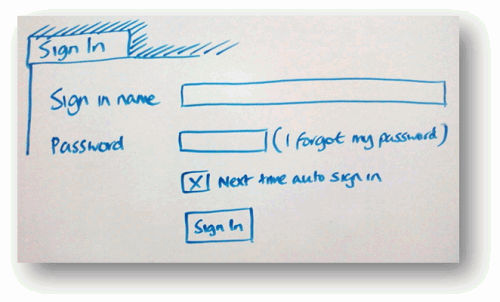

Paper may seem like a low technology tool but it has the advantage of being cheap, plentiful and easy to use. Sketch ideas and test them with users to get their feedback. When you feel like you have enough feedback to start designing; create paper prototypes too. Simulate the flow that you want to achieve in your design and get a user to work through it – is it intuitive? Is it easy to use? It’s way easier to change the flow on paper than it will be for your developers to recode stuff later.

You Can Usability Test  Online

If you want to get lots of user feedback but your testing budget is smaller than a cup of coffee – don’t forget you can test online. There are lots of packages available to create simulations and test them with users. Many of them are easy to learn and cheap to use. You need to be careful in this kind of testing that your tests reflect your user profiles (there’s no point testing endlessly outside of your core audience) but even if you can’t achieve that – some feedback is better than none at all.

Separate What People Say and What They Actually Do


Stop someone on the street and ask them; “do you give money to charity?” Nearly everyone will say; “Yes!” But in reality there’s a huge chunk of people who don’t give money to charity. Some because they don’t have the money, some because they’d rather spend it elsewhere, etc. Always try and work out what people actually do and don’t rely on what they say they do to inform your designs.


Image Source:

Optimisation Beacon (link to image)

InfoQ (link to image)

Seeking Alpha (link to image)

Aconitum Mobile (link to image)

Learn More in This Course:

AI for Designers

5 days
57 % booked
View Course

What You Should Read Next

  • Read full article
    8 Talks by Women to Inspire UX Designers - Article hero image
    Interaction Design Foundation logo

    8 Talks by Women to Inspire UX Designers

    User Experience design, like so many other disciplines, has a lower representation of women as compared to men. Things are changing now, though. Slowly, but surely. From strategy to tactics and from ideas to actionable tips, here is a curated playlist of talks by, and stories of just some of the mos

    Social shares
    655
    Published
    Read Article
  • Read full article
    UX Storyboards: Ultimate Guide - Article hero image
    Interaction Design Foundation logo

    UX Storyboards: Ultimate Guide

    In user experience design, we use techniques like workshops and interviews to understand users. We turn our research into user stories and process flows. We use personas and wireframes to share our ideas with our teams.But it’s important to remember the real people we design for. We need to know wha

    Social shares
    777
    Published
    Read Article
  • Read full article
    Stop the Generic Portfolio Trap! Design a Stand-Out Portfolio for Your UX/UI Niche: UX Writing - Article hero image
    Interaction Design Foundation logo

    Stop the Generic Portfolio Trap! Design a Stand-Out Portfolio for Your UX/UI Niche: UX Writing

    A picture may be worth a thousand words, but in UX design the right words are priceless. UX writing guides users, simplifies complex concepts, encourages desired actions, and creates a sense of delight. But how do you demonstrate you can do all of these things? How do you get noticed by hiring manag

    Social shares
    415
    Published
    Read Article
  • Read full article
    Mobile Breadcrumbs: 8 Best Practices in UX - Article hero image
    Interaction Design Foundation logo

    Mobile Breadcrumbs: 8 Best Practices in UX

    Breadcrumbs act as navigation aids—ones that simplify user journeys on websites. They highlight the path taken within a site to boost user experience, especially on mobile devices with limited screen space. Explore more about mobile breadcrumbs and understand the common design mistakes and best prac

    Social shares
    806
    Published
    Read Article
  • Read full article
    TAPT: Teasing Apart, Piecing Together - Article hero image
    Interaction Design Foundation logo

    TAPT: Teasing Apart, Piecing Together

    [[video:96]]Many experiences share the same core elements but differ in context. Photo sharing on Facebook has similar experience elements to sharing physical photos, but the actions involved and the context of the two experiences differ vastly. In creative processes, it’s valuable to analyze relate

    Social shares
    419
    Published
    Read Article
  • Read full article
    Why Care about Statistical Significance? - Article hero image
    Interaction Design Foundation logo

    Why Care about Statistical Significance?

    The categorical data depicts the success and failure rate of the low-fidelity wireframe above. There is not a large enough difference between the two to determine if the designs were successful.There is an element of error involved in measuring anything. So, when we want to compare measurements, how

    Social shares
    434
    Published
    Read Article
  • Read full article
    Web Fonts: Definition and 10 Recommendations - Article hero image
    Interaction Design Foundation logo

    Web Fonts: Definition and 10 Recommendations

    Web fonts bring digital content to life. They enhance readability, set the tone, and ensure consistency across various platforms—all vital ingredients. When you understand web fonts and their impact, it can help you with effective website creation—and greatly so. We’ll provide a comprehensive overvi

    Social shares
    782
    Published
    Read Article
  • Read full article
    How to Screen Research Participants - Article hero image
    Interaction Design Foundation logo

    How to Screen Research Participants

    Finding the right participants is crucial for gathering user research. We usually need to do research with participants having a particular set of needs or experience. In this short video, you will find out about the basic need for screening and how we make sure that we have suitably qualified parti

    Social shares
    451
    Published
    Read Article
  • Read full article
    Pitfalls in Recruiting Participants for User Research - Article hero image
    Interaction Design Foundation logo

    Pitfalls in Recruiting Participants for User Research

    The level of participant engagement is an important part of the user research results. Our results are dependent on proper engagement with our participants. In this video we look at some of the issues around participant recruitment and hear practical examples that arose in a large online study.[[vid

    Social shares
    421
    Published
    Read Article
  • Read full article
    How to Fit Quantitative Research into the Project Lifecycle - Article hero image
    Interaction Design Foundation logo

    How to Fit Quantitative Research into the Project Lifecycle

    Quantitative research methods fit into the project lifecycle at different stages of the process.In this video, we see where different quantitative research methods fit into a typical project lifecycle. Bear in mind that even with an iterative process such as Agile, the short cycles still address dif

    Social shares
    511
    Published
    Read Article

Top Articles

Top Topic Definitions

Feel Stuck?
Want Better Job Options?

AI is replacing jobs everywhere, yet design jobs are booming with a projected 45% job growth. With design skills, you can create products and services people love. More love means more impact and greater salary potential.

At IxDF, we help you from your first course to your next job, all in one place.

See How Design Skills Turn Into Job Options
Privacy Settings
By using this site, you accept our Cookie Policy and Terms of Use.
Customize
Accept all

Be the One Who Inspires

People remember who shares great ideas.

Share on:

Academic Credibility — On Autopilot

Don't waste time googling citation formats. Just copy, paste and look legit in seconds.

Feel stuck? Want Freedom?

Get one powerful email each week, like 325,569 others.

Learn to design a life you love.

Next email in:
2
days
0
hrs
15
mins
23
secs