User shadowing is a long-established research technique which has only recently come into the limelight and regular use within UX research environments. It is the process by which an observer shadows a research participant for a fixed period of time to better understand how the product or service is used in a natural environment. More recently, it has also begun to be adopted within businesses where internal services are being more closely examined for efficiency and fitness of purpose.
User Shadowing
Your constantly-updated definition of User Shadowing and collection of videos and articles.
Be a conversation starter: Share this page and inspire others!
Get 1 Powerful Email Each Week
Join 313,466 subscribers.
What is User Shadowing?
Learn More About User Shadowing
Make learning as easy as watching Netflix: Learn more about User Shadowing by taking the online IxDF Course User Research – Methods and Best Practices.
Why? Because design skills make you valuable. In any job. Any industry.
Earn Industry-Recognized Certificates
Industry giants trust our courses to train their teams, and prestigious universities integrate our content into their curricula. Add your certificates to your LinkedIn profile, résumé, and job applications.




All Free IxDF Articles on User Shadowing


Shadowing in User Research - Do You See What They See?
The idea of shadowing someone to see what they are doing is not new. It is a technique that is widely implemented in user research. The idea is simple; the researcher accompanies the user and observes how they use the product or service within their natural environment.Shadowing also takes place in
- Social shares
- 979
- Published
Read Article
Shadowing in User Research - Do You See What They See?
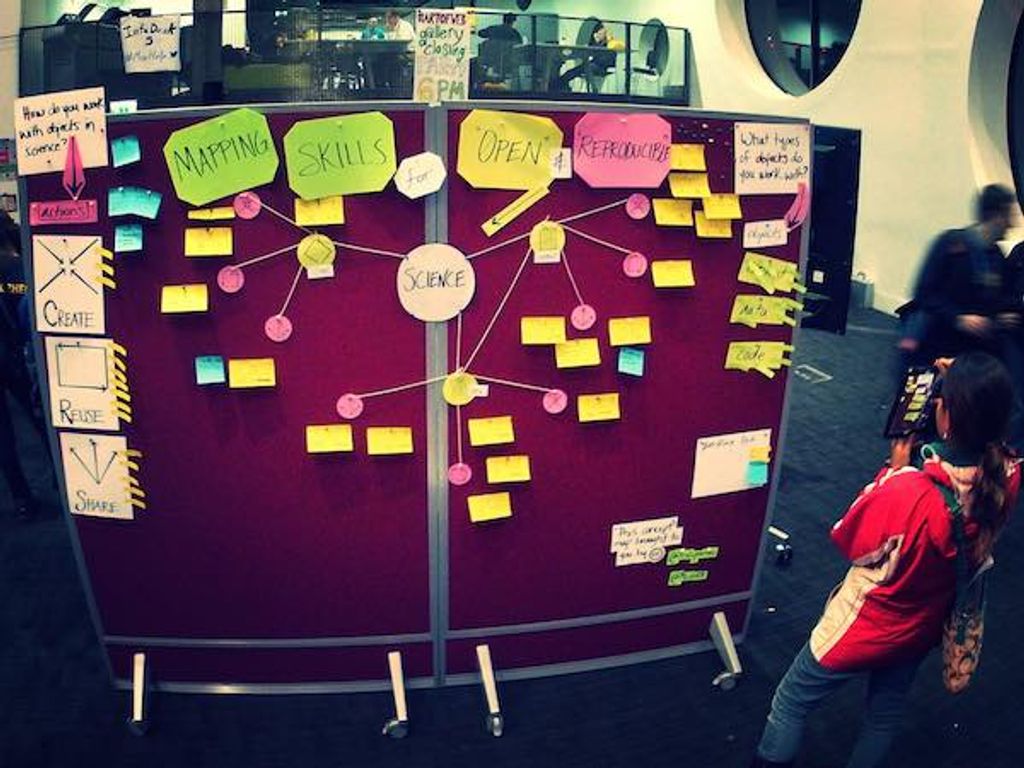
The idea of shadowing someone to see what they are doing is not new. It is a technique that is widely implemented in user research. The idea is simple; the researcher accompanies the user and observes how they use the product or service within their natural environment.
Shadowing also takes place in other fields of business and in particular internal business process design and human resource situations where a potential recruit learns from someone who is already handling an existing role in a business.
Khoi Vin, the VP of UX at Wildcard, says; “Asking users to adopt new behaviors or even modify existing behaviors is very, very hard.” Shadowing lets you understand existing behaviors so that you can adapt your designs to those behaviors.
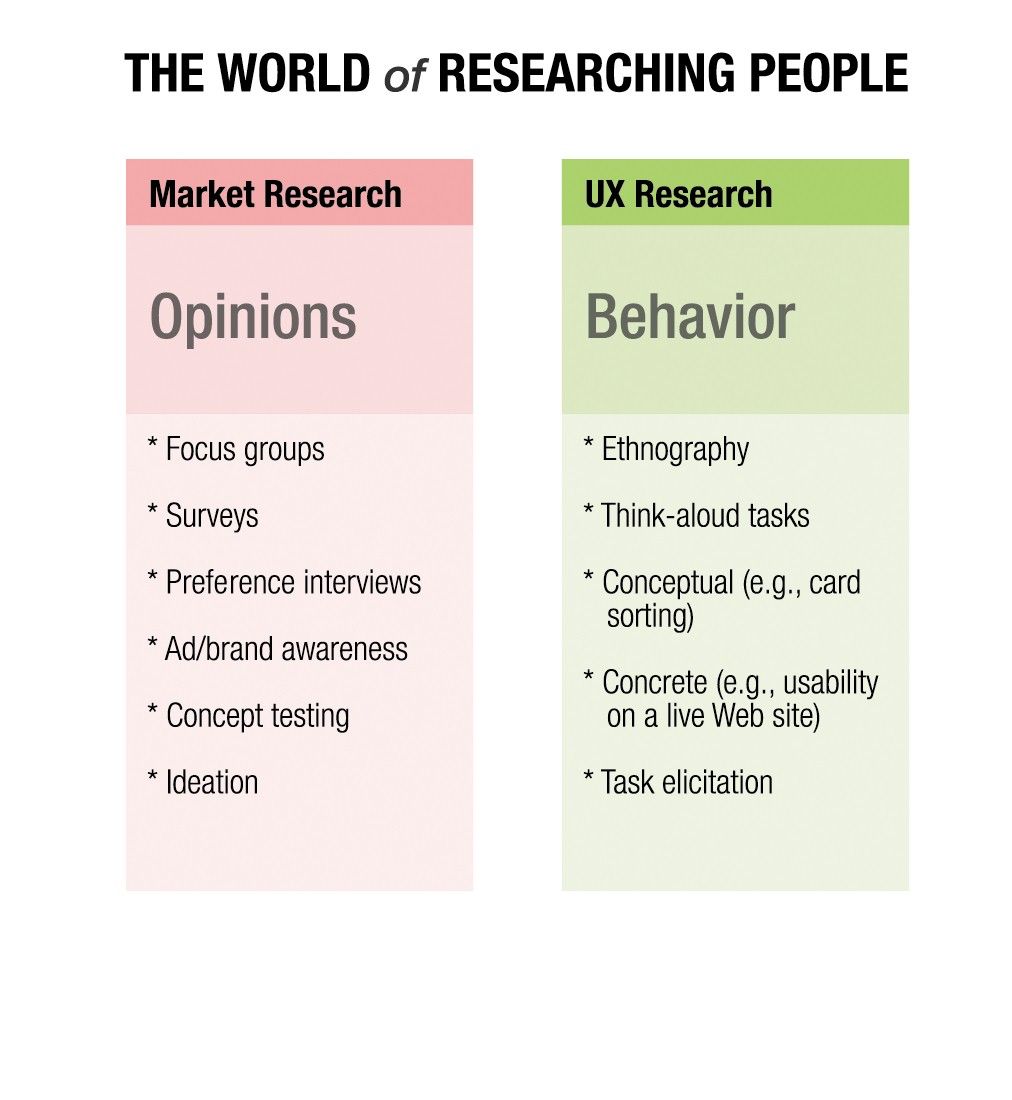
Author/Copyright holder: Rosenfeld Media. Copyright terms and licence:CC BY 2.0
Shadowing is very much a UX research technique as it allows you to observe behavior rather than opinions.
Shadowing as a UX Research Technique
Shadowing is, by its very nature, a qualitative research technique. It is too time consuming and resource intensive to be conducted on a massive scale and thus it’s important to realize that it is best used to provide the basis for further quantitative research which offers statistically significant insights rather than being used as the end point of research.
The key principle of shadowing is that the researcher acts as an observer only. They are not to interfere with the research subject (participant) as that interference might change the way that the subject behaves in any given circumstance. Thus shadowing is somewhat different from customer observational interviewing practices in which the researcher fully interacts with the participant while they observe them in their usual environment.
This can be frustrating as researchers often need to probe for more detail based on what they learn in shadowing exercises. There are three methods commonly employed to help overcome this limitation:
Before shadowing occurs – participants are interviewed or involved in group discussions to learn more about their needs.
During shadowing – the shadow develops a list of questions that are then posed to the participant when shadowing is complete.
During shadowing – the shadow works with a commentator who explains what is being observed throughout the study. This is most often used when the shadow is facing a complex situation where a full explanation (or training) has not been available before shadowing commences.
Shadowing can take place over any time period. It can be short (30 minutes) to very involved (over a period of days or weeks). The exact length of a shadowing exercise is normally determined by what eh observer wishes to learn.
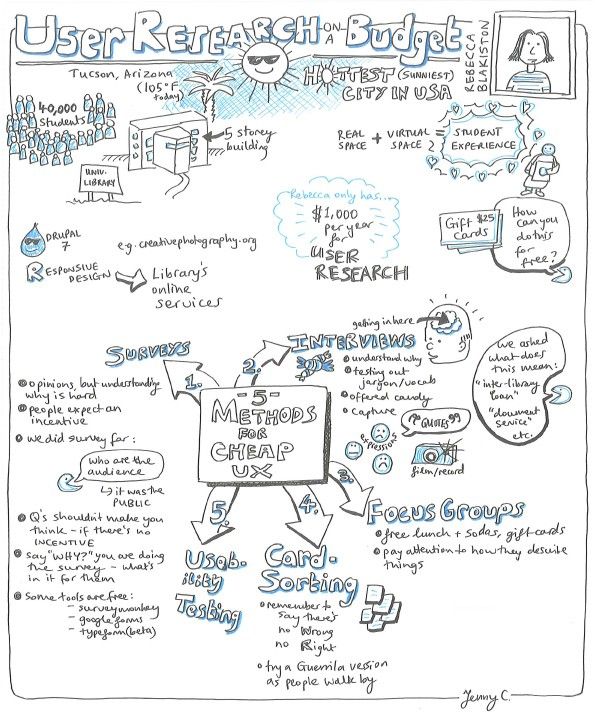
Author/Copyright holder: Jenny Cham. Copyright terms and licence: CC BY-NC-ND 2.0
There’s no doubt that shadowing is also a really useful technique for user research on a budget as it only requires a researcher’s time and no additional investment.
Tips for Conducting Shadowing Exercises
As shadowing is simply an act of observation it requires little preparation to carry out. However, there are some tips to help conduct more effective observations:
The shadow should have some idea of what they want to learn from the exercise and ideally this should be written down in an easy to reference manner during the shadowing exercise.
Observations should be recorded as they are made, though care should be taken not to allow this to distract from other observations, in a fashion that allows reconstruction of the behavior at a later date. This is often done via videoing or photographic the participant at certain points during the exercise.
Care should be taken to avoid videoing a subject for hours and hours on end. It is very unlikely to be valuable to spend as much time on analysis as on the observation itself. Try to capture important steps only.
It can be useful to develop an observation sheet with respect to known process points (capturing time taken, quality of effort, where and when and who is involved in action, etc.) to guide the shadow in observation.
If the participant to be observed will be mobile during the observation – care should be given to ensure that the observer can move easily (and with their equipment) so as not to interfere with the natural motion of the subject.
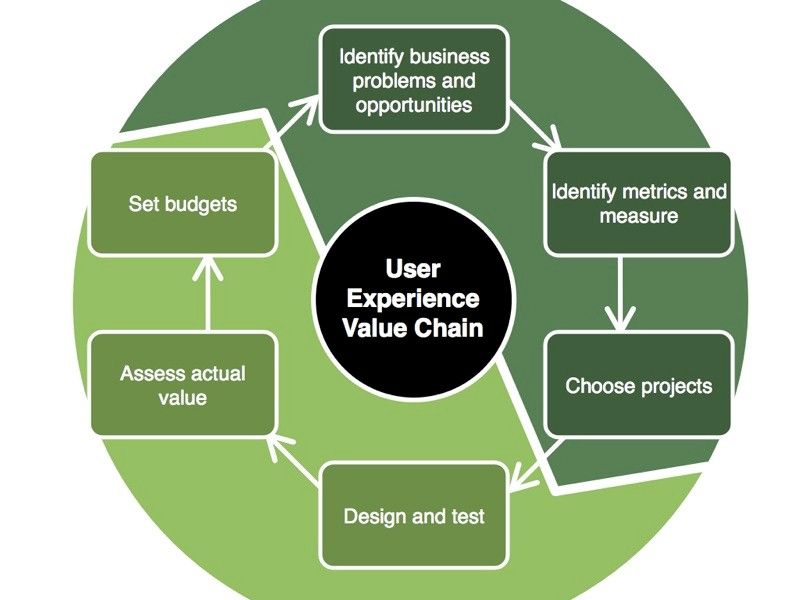
Author/Copyright holder: brandon schauer. Copyright terms and licence: CC BY-SA 2.0
Shadowing helps with the highest part of the value chain for user experience – identifying problems and opportunities.
Analysis of Shadowing Exercises
The analysis of these exercises will normally depend on specific key observations by the shadow. These will be used to inform further research to ensure that individual observations hold true for a larger portion of the user base than those involved in the study.
Care should be taken to ensure that the researcher is not introducing their own biases into observations. It is also important to review contextual cues provider by the researcher when trying to better understand observed behaviors.
The Take Away
Shadowing is a useful behavioral observation of a user in their natural environment that provides ideas for further user research. Results of shadowing should never be taken at face value or extrapolated to be representative of the user base as a whole without additional insight. It is one of the easiest techniques to put into practice as long as care is taken to ensure the observer does not introduce their own biases into observations.
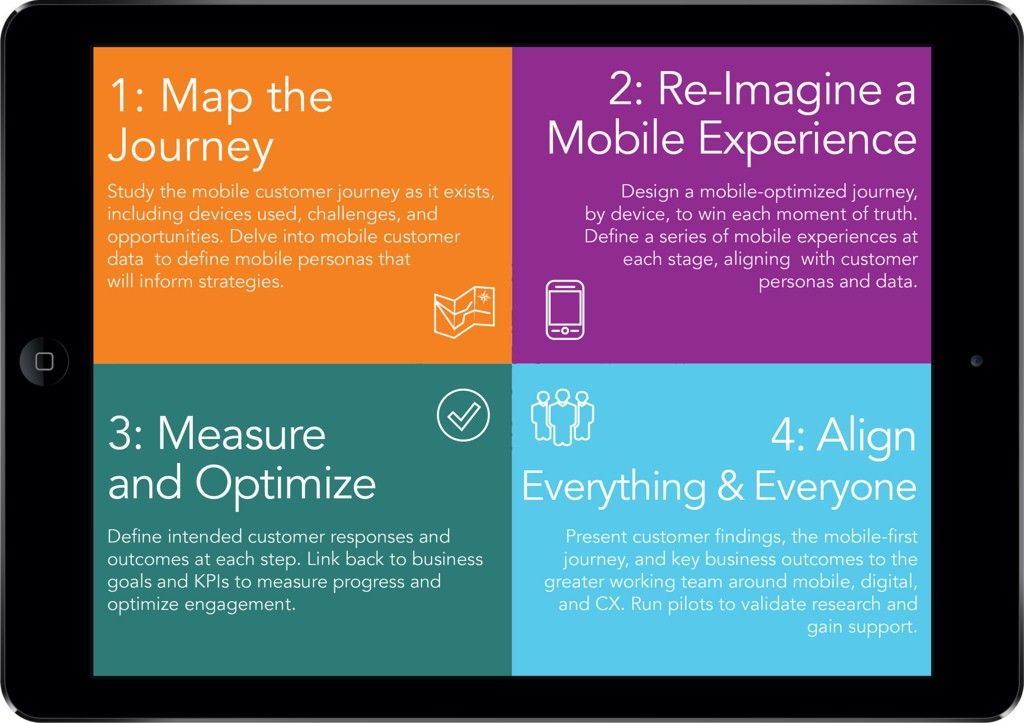
Author/Copyright holder: Brian Solis. Copyright terms and licence: CC BY 2.0
Shadowing can also help you map an existing user journey before you transition a product to mobile.
Resources & Where to Learn More
Course: “User Research – Methods and Best Practices”.
User research (at the British Government) argues the case that shadowing regularly makes you a better researcher. See here.
Hero Image: Author/Copyright holder: Creative Commons Blog. Copyright terms and licence: CC BY 4.0