Tips for Writing a CV for a UX Job Application

• 8 min read

876 Shares

It’s not really fair that before we can show an interviewer how great we are for their position – we have to land that interview in the first place. A good CV can make or break your career prospects; you cannot get a great job without getting an interview. Sadly, in nearly all professions including UX many CVs are simply not fit-for-purpose.

Why do You Need a CV?

This is fairly obvious. A CV is a tool for opening doors to opportunities. It has to create the right impression on the person reading it for them to put you on their “possible hire” pile. Without that impact your CV is going straight into the circular file under someone’s desk and the door to a better job remains resolutely closed.

A CV needs to show a little of your personality, it has to demonstrate you have what it takes to do the job, it should offer an insight into what you bring a team and ideally, show a commitment to learning and personal development too
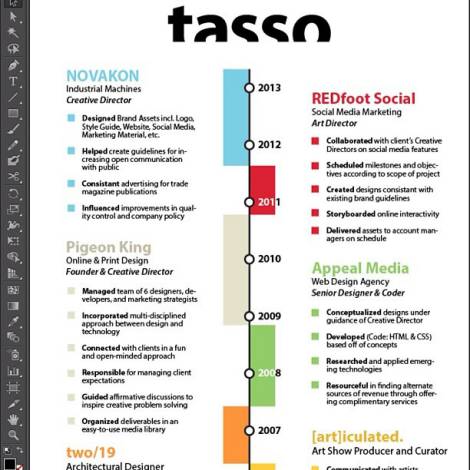

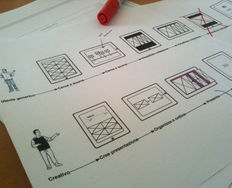
Author/Copyright holder: Tasso Art. Copyright terms and licence: CC BY-ND 2.0

What Should a Good UX CV Contain?

There are some fairly simple rules to developing a great UX CV and these include:

Open With a Great Personal Statement

Your address and contact details belong at the end of a CV. You open the CV with the information that the recruiter really needs to see - your personal statement. This is where you get to tell the recruiter who you are and what you want to do and demonstrate your love for UX.

Keep sentences short. Use active verbs. Make bold and clear statements. This statement will go with your CV wherever it gets sent in the recruiting organization (unlike the cover letter which will often go in the bin following the first sift of CVs) – so make it work hard for you.

Keep it Short and To The Point

With the single exception of the contracting market (where it can be impossible to keep things very short); the rest of the recruiting world expects to see a CV of no more than 2 pages. If you can boil things down to a single page, without losing important information, so much the better. No-one needs to read a novel about your work life.

The longer your CV, the more likely it is that it will be thrown out because no-one can be bothered to read it. And let’s be fair; if you can’t summarize your career information well – how will you summarize research well?

Have a Logical Organized Format

I prefer to move from my personal statement to my experience to my education and then anything else I might (or might not) include such as interests and contact details. Each section is clearly defined and formatted for consistency. You don’t have to follow my flow but you do need to make it easy to access information and make it obvious where the reader can find the information that they need.

Consider Separating Experience from Work History

The truth is that most jobs in a linear career involve similar responsibilities and result in similar achievements. Instead of trying to stuff everything you’ve done in with every job and repeating a ton of stuff – why not just list your work history (one line per job) and then have an experience section listing your main achievements in life? It’s easier to read and far less tedious on a recruiter’s eye too.

Make Education Relevant

There’s nothing more ridiculous than a mid-career professional listing all their school subjects with grades against each. Nobody cares about what you did at school by the time you’re in a career – what they want to see is your professional development. Professional qualifications and your degree is more than enough in this section unless you’re hunting for your first job.

You can also stop listing every single module that made up your degree. Nobody cares about those either. A degree holds currency for about a year (if you’re lucky) after you’ve received it. After that – your studies become increasingly divorced from current practice in a field. So kill the list and free up that space to sell yourself better.


Author/Copyright holder: Sergio Rivas. Copyright terms and licence: CC BY-NC-ND 2.0

Interests and Hobbies

By and large, I’m not a fan of this section on a CV. When I’m hiring, I’m hiring people for what they can do for me and not the fact that they like to go abseiling on weekends. However, there are hiring managers out there that love this section.

If you’re going to use it. Be sparing – a line or two is enough. Don’t list banal data like “I like watching TV, reading books and listening to music.” Everyone does – it doesn’t make you interesting. Do include things that might make you stand out from the pile. “I am engaged in voluntary community work for a charity for the visually-impaired.”

What Shouldn’t a Good UX CV Contain?

There are some fairly simple rules about what you shouldn’t include on a CV too:

Obvious Typos

Look, the truth is your CV won’t go in the bin if there’s a mistake or even two on it but if there’s a mistake in every line – good bye. If you’re not the best writer in the world; get someone else to proofread your CV before it goes out the door. Attention to detail matters to employers.

No Explanation of Rapid Turnover of Work

My CV is full of 1 year (or less) assignments. That’s because I’m a contractor when I work for others – it’s for a set period of time and then I move onto something else. The only way people can know this is if I tell them. Employers aren’t keen on people with twenty recent moves on their CV without explanation; it sounds like you have no staying power.

Photos and Graphics

There are some job markets where a photo is an essential. In these markets choose a professional head shot and use that. Otherwise, don’t include photos, graphics, etc. on your CV. The more you stray from a traditional format – the less likely you are to be recruited. You may get noticed for use of these things but rarely will it impress anyone.

Summary

Writing a CV can be hard work but if you use the tips above; you’re much more likely to get the results you want from the exercise and that new UX job you’ve always wanted. Good luck.

Topics in This Article

Learn More in This Course:

AI for Designers

10 days
16 % booked
View Course

What You Should Read Next

  • Read full article
    How to Change Your Career from Graphic Design to UX Design - Article hero image
    Interaction Design Foundation logo

    How to Change Your Career from Graphic Design to UX Design

    If there’s an occupation that is 100% linked with the public’s idea of what design is all about, it’s graphic design. From the familiar golden arches of the McDonald’s brand to the typography and colors of movie posters, graphic designers create some of the most iconic and ubiquitous designs around

    Social shares
    1.4k
    Published
    Read Article
  • Read full article
    UX Roles: The Ultimate Guide – Who Does What and Which One You Should Go For? - Article hero image
    Interaction Design Foundation logo

    UX Roles: The Ultimate Guide – Who Does What and Which One You Should Go For?

    Do you have the ambition and enthusiasm for a career in UX design but don’t know where to start? You’ll be pleased to know there are many paths you can take. Even as a relatively new field, user experience (UX) design has both general and specialist job roles. This variety means there is a role wait

    Social shares
    1.2k
    Published
    Read Article
  • Read full article
    How to Change Your Career from Marketing to UX Design - Article hero image
    Interaction Design Foundation logo

    How to Change Your Career from Marketing to UX Design

    There are a few good reasons why you might want to change your career from marketing to UX design. First, there’s the pay—sources like UXDesignerSalaries(1) show that UX designers are paid a fairly handsome salary across the world (even as high as $97k in Switzerland). Furthermore, according to recu

    Social shares
    1.1k
    Published
    Read Article
  • Read full article
    How to Change Your Career from Web Design to UX Design - Article hero image
    Interaction Design Foundation logo

    How to Change Your Career from Web Design to UX Design

    Changing careers isn’t as hard as it’s often made out to be, especially if you’ve got the right resources to help you make the change. For many web designers, now is the perfect time to make the switch into UX design. To start with, there’s the monetary boost that comes with the change in career. Ac

    Social shares
    1.1k
    Published
    Read Article
  • Read full article
    How to Write the Conclusion of Your Case Study - Article hero image
    Interaction Design Foundation logo

    How to Write the Conclusion of Your Case Study

    You worked on an amazing UX project. You documented every detail and deliverable and when the time came, you began to write a UX case study about it. In the case study, you highlighted how you worked through a Design Thinking process to get to the end result; so, can you stop there and now move on t

    Social shares
    1k
    Published
    Read Article
  • Read full article
    How to create the perfect structure for a UX case study - Article hero image
    Interaction Design Foundation logo

    How to create the perfect structure for a UX case study

    UX case studies form the core content of a UX professional’s portfolio. They are essential to getting you hired, because case studies are a window to your professional practice, by showing how you think, adapt, cooperate and ultimately solve challenges. A UX case study has to tell a story about you.

    Social shares
    975
    Published
    Read Article
  • Read full article
    7 Tips to Improve Your UX Design Practice - Article hero image
    Interaction Design Foundation logo

    7 Tips to Improve Your UX Design Practice

    Hey! But my UX design practice is perfect! Thankfully, we don’t hear that very much but the truth is – the longer we’re in a job, the better we consider ourselves to be at that job. Sometimes, it’s worth remembering that even the best professionals still have learning to be done. It’s also worth rem

    Social shares
    967
    Published
    Read Article
  • Read full article
    UX vs UI: What’s the Difference? - Article hero image
    Interaction Design Foundation logo

    UX vs UI: What’s the Difference?

    You might see the "UX/UI designer" job title and think UX and UI are interchangeable. There’s overlap, for sure, but in spite of all the things that do carry over between the UX and UI spheres, the two are definitely separate disciplines.[[video:1500]]This video breaks down the differences between U

    Social shares
    946
    Published
    Read Article
  • Read full article
    How to Build a UX/UI Design PDF Portfolio That Hiring Managers Will Love (Includes Examples) - Article hero image
    Interaction Design Foundation logo

    How to Build a UX/UI Design PDF Portfolio That Hiring Managers Will Love (Includes Examples)

    If you already have an online UX/UI design portfolio, do you need a PDF version? The answer is – yes; it is better to be safe than sorry! Some hiring managers like to see a more detailed PDF portfolio after reviewing your online portfolio, while some job applications may request an upload instead of

    Social shares
    943
    Published
    Read Article
  • Read full article
    UI & UX Designer Salaries: How Much Can I Earn in 2026? - Article hero image
    Interaction Design Foundation logo

    UI & UX Designer Salaries: How Much Can I Earn in 2026?

    How much can you earn as a UI or UX designer in 2026? The truth is that there's no single answer. Your earning potential depends less on averages and more on factors you can actually control. Designers using AI to accelerate execution while bringing strategic thinking, user empathy, and measurable b

    Social shares
    943
    Published
    Read Article

Top Articles

Top Topic Definitions

Feel Stuck?
Want Better Job Options?

AI is replacing jobs everywhere, yet design jobs are booming with a projected 45% job growth. With design skills, you can create products and services people love. More love means more impact and greater salary potential.

At IxDF, we help you from your first course to your next job, all in one place.

See How Design Skills Turn Into Job Options
Privacy Settings
By using this site, you accept our Cookie Policy and Terms of Use.
Customize
Accept all

Be the One Who Inspires

People remember who shares great ideas.

Share on:

Academic Credibility — On Autopilot

Don't waste time googling citation formats. Just copy, paste and look legit in seconds.

Feel Stuck? Want Freedom?

Get one powerful email each week, like 326,062 others.

Learn to design a life you love.

Next email in
6
days
12
hrs
8
mins
33
secs