Product Thinking is Problem Solving

• 6 min read

954 Shares

It can be easy to get bogged down in developing features when we get into user experience design. It’s not that features aren’t important but that they are often secondary to the reason a customer or user buys our product. That reason is simple; the user buys the product to solve a real world problem for themselves.

In practice that means we have to see the product first. A feature may (or may not) be a useful part of a product but without the product the feature is a waste of space. A smartphone may be able to run apps for example but the primary use of a phone is communication. Apps may enhance the communication experience but without the ability to make calls, send texts, etc. apps would be of little value by themselves.

Therefore, designers should think in products first and features second.

Nikkel Blasse, the product and interaction designer at Xing, calls this product thinking.

What’s the Problem?

The first step of product thinking is to determine the problem that your users are looking to solve. That’s the reason that they will buy your product (as long as it actually solves the problem in a meaningful and valuable way).

If the problem you choose doesn’t actually exist or the solution you propose doesn’t actually solve the problem – your products are going to be worthless to users. Products without users end up at the scrap heap (often with the jobs of the people who created them).

Sure, there’s the possibility that if you get the solution wrong – you can fix it but if you solve a problem that doesn’t exist; there’s little you can do about that in the post-launch analysis.

Finding real problems is difficult sometimes. Even when you do a bunch of research – it’s possible that you will identify a problem that doesn’t exist. However, the right place to start is always by talking to would-be users.

Don’t forget that users may not be able to articulate their problems very well (it’s not their job as Steve Jobs would have said) so you may need to dig deep and do some real life observations as well as just talking to your users.

The Structure of Product Thinking
© Steven Depolo, CC BY 2.0

You begin with the user and determine:

  • What the problem is that you need to solve

  • The audience that you’re going to solve the problem for

Then you look at the job to be done:

  • Why are you doing this (what’s the vision behind it)?

  • Strategy – the how will we do this?

Finally you reach your outputs:

  • What goals are we setting? What exactly will we achieve?

  • What features will this manifest as? What will we do to reach our goals?

Solve the Problem First

It’s vital that your process delivers a solution that solves the problem. Features that enhance this solution are welcome but if you don’t solve the problem – the whole product is fluff nothing more. It’s important to remember that while Interaction Design and Visual Design can build something beautiful – it’s wasted without the product being useful.

Don’t Forget to Define the Product from a UX Perspective

This product is for: (Your Audience)

It will help them solve this problem: (The Problem)

We will do this by: (The Strategy)

We expect a working product to: (The Objective)

Once you’ve done this definition – you can move on to deciding on the features.

What Does Product Thinking Do for the Design Process?
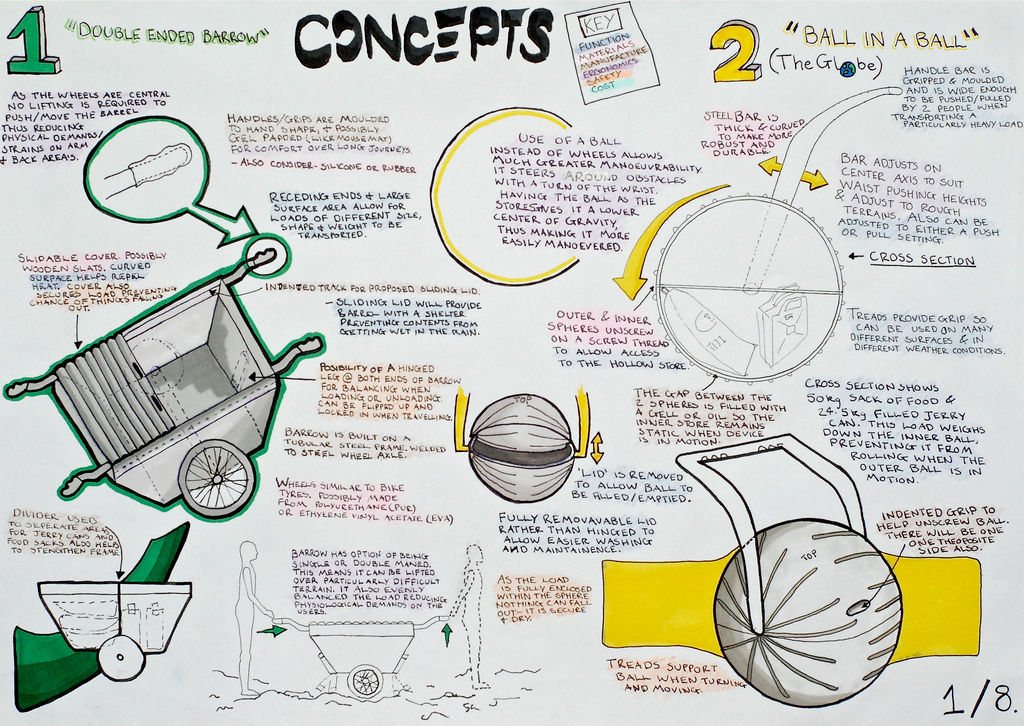
© Jordanhill School D&T Dept, CC BY 2.0

It allows you to create features that matter for the users of your products. It lets you see the product in context and not as a combination of features and design efforts. It makes sure that you’re tackling meaningful problems. It reduces the risks of creating product failures (though nothing can eliminate these risks entirely).

It should also help shape the questions that a designer asks to develop products. It should give designers the confidence to say “no” when asked to introduce a feature that doesn’t support the solution. It should lead to leaner more effective products.

The Take Away

Product thinking enables designers to build better products. It’s a way of examining every design decision in context with the problem the user wants to solve. It should also extend the relationship between UX and product management.

However, for some product thinking is just a new buzzword that does not necessarily bring anything new compared, for example, to design thinking. Whether it is a new approach or not, you can use the concept product thinking as an advocacy tool. Maybe this term is easier to grasp for your manager, client, team, etc. So, analyse your internal audience and see what word makes more sense to accomplish your aims and convey your ideas!

Resources

Find out why Nikkel Blasse is convinced that Product Thinking is the next big thing in UX design here: https://medium.com/@jaf_designer/why-product-thinking-is-the-next-big-thing-in-ux-design-ee7de959f3fe

Find out why others disagree with him here: https://www.quora.com/What-is-the-difference-in-product-thinking-and-design-thinking

Reference:

Hero Image: Paul Townsend, CC BY-ND 2.0

Learn More in This Course:

AI for Designers

12 days
13 % booked
View Course

What You Should Read Next

  • Read full article
    What is Design Thinking and Why Is It So Popular? - Article hero image
    Interaction Design Foundation logo

    What is Design Thinking and Why Is It So Popular?

    Design Thinking is not an exclusive property of designers—all great innovators in literature, art, music, science, engineering, and business have practiced it. So, why call it Design Thinking? What’s special about Design Thinking is that designers’ work processes can help us systematically extract,

    Social shares
    1.6k
    Published
    Read Article
  • Read full article
    Personas – A Simple Introduction - Article hero image
    Interaction Design Foundation logo

    Personas – A Simple Introduction

    Personas are fictional characters, which you create based upon your research to represent the different user types that might use your service, product, site, or brand in a similar way. Creating personas will help you understand your users’ needs, experiences, behaviors and goals. Creating personas

    Social shares
    1.6k
    Published
    Read Article
  • Read full article
    What is Interaction Design? - Article hero image
    Interaction Design Foundation logo

    What is Interaction Design?

    Interaction design is an important component within the giant umbrella of user experience (UX) design. In this article, we’ll explain what interaction design is, some useful models of interaction design, as well as briefly describe what an interaction designer usually does.A simple and useful unders

    Social shares
    1.5k
    Published
    Read Article
  • Read full article
    Apple’s Product Development Process – Inside the World’s Greatest Design Organization - Article hero image
    Interaction Design Foundation logo

    Apple’s Product Development Process – Inside the World’s Greatest Design Organization

    Apple’s Product Development Process may be one of the most successful design processes ever implemented. With a valuation that exceeds $2 trillion, there’s a lot that designers can learn from Apple and introduce into their own design environments.Apple is a notoriously secretive business. In Steve J

    Social shares
    1.4k
    Published
    Read Article
  • Read full article
    Stage 2 in the Design Thinking Process: Define the Problem and Interpret the Results - Article hero image
    Interaction Design Foundation logo

    Stage 2 in the Design Thinking Process: Define the Problem and Interpret the Results

    An integral part of the Design Thinking process is the definition of a meaningful and actionable problem statement, which the design thinker will focus on solving. This is perhaps the most challenging part of the Design Thinking process, as the definition of a problem (also called a design challenge

    Social shares
    1.4k
    Published
    Read Article
  • Read full article
    10 Great Sites for UI Design Patterns - Article hero image
    Interaction Design Foundation logo

    10 Great Sites for UI Design Patterns

    You don’t want to spend your whole life redesigning the wheel, do you? No, neither do we. If you are looking for a design that solves a problem that has been solved with a different application before, then the template for your wheel is probably already out there. This lets you save time and make a

    Social shares
    1.4k
    Published
    Read Article
  • Read full article
    Shneiderman’s Eight Golden Rules Will Help You Design Better Interfaces - Article hero image
    Interaction Design Foundation logo

    Shneiderman’s Eight Golden Rules Will Help You Design Better Interfaces

    Follow Ben Shneiderman’s 'Eight Golden Rules of Interface Design' if you want to design great, productive and frustration-free user interfaces. Apple, Google and Microsoft are among some of the highly successful companies whose well-designed products reflect Shneiderman’s rules. The characteristics

    Social shares
    1.4k
    Published
    Read Article
  • Read full article
    How to Change Your Career from Graphic Design to UX Design - Article hero image
    Interaction Design Foundation logo

    How to Change Your Career from Graphic Design to UX Design

    If there’s an occupation that is 100% linked with the public’s idea of what design is all about, it’s graphic design. From the familiar golden arches of the McDonald’s brand to the typography and colors of movie posters, graphic designers create some of the most iconic and ubiquitous designs around

    Social shares
    1.4k
    Published
    Read Article
  • Read full article
    What is Ideation – and How to Prepare for Ideation Sessions - Article hero image
    Interaction Design Foundation logo

    What is Ideation – and How to Prepare for Ideation Sessions

    Ideation is the process where you generate ideas and solutions through sessions such as Sketching, Prototyping, Brainstorming, Cheatstorming, Brainwriting, Worst Possible Idea, and a wealth of other ideation techniques. Ideation is also the third stage in the Design Thinking process. Although many p

    Social shares
    1.4k
    Published
    Read Article
  • Read full article
    Repetition, Pattern, and Rhythm - Article hero image
    Interaction Design Foundation logo

    Repetition, Pattern, and Rhythm

    Let’s look at three subjects that, at first glance, may strike you as being incredibly basic and self-explanatory. However, although they may seem like they should need no introduction, we should study them. By understanding these concepts, you’ll be able to apply them more effectively to captivate

    Social shares
    1.4k
    Published
    Read Article

Top Articles

Top Topic Definitions

Feel Stuck?
Want Better Job Options?

AI is replacing jobs everywhere, yet design jobs are booming with a projected 45% job growth. With design skills, you can create products and services people love. More love means more impact and greater salary potential.

At IxDF, we help you from your first course to your next job, all in one place.

See How Design Skills Turn Into Job Options
Privacy Settings
By using this site, you accept our Cookie Policy and Terms of Use.
Customize
Accept all

Be the One Who Inspires

People remember who shares great ideas.

Share on:

Academic Credibility — On Autopilot

Don't waste time googling citation formats. Just copy, paste and look legit in seconds.

Feel Stuck? Want Freedom?

Join 326,013+ designers who get one powerful email each week. Learn to design a life you love.

Next email in
1
day
17
hrs
16
mins
42
secs

Free forever. No spam. Unsubscribe anytime.