Do You Need to be an Industry Expert to be a Good UX Designer?

• 8 min read

383 Shares

“A little learning is a dangerous thing.” Is the famous quote from Alexander Pope but many people don’t seem to know that this isn’t what Pope meant. In fact the whole quote is as follows; “A little learning is a dangerous thing, drink deep or taste not the Pierian Spring.”

What Pope meant was that we should either immerse ourselves in a subject or leave it alone. He didn’t mean that there was any danger in learning itself. When it comes to the user experience is it important for us to drink deep from the Pierian Spring of the sector or industry that the business operates in? Or is there an advantage to keep our learning to a minimum and embracing a certain amount of ignorance instead?

The Benefits of Ignorance

There is a common belief that we conduct research to prove ourselves right. That we don’t so much test hypotheses but rather load the dice in their favour. In the reality this would not just do the companies, that we research for, a disservice in the long run it would put us out of a job. Proving yourself right is a risky strategy, mainly because all of us (no matter how intelligent) are often wrong in our initial thoughts and beliefs about a subject.



There’s an inherent problem with expertise in any specific area. The more we know, the more we presume to know. It’s been show by researchers, time and again, that people who are adjudged to be experts win the confidence of others. It’s also been shown that they are more likely to be wrong about things that fall outside of their actual area of knowledge than those with no knowledge. And worse they are more likely to be very wrong than those with no knowledge. They over estimate their own competence and the mistakes they make reflect this.

Clients can benefit from our ignorance. When you don’t know a subject well, you are more likely to ask questions and to probe to gain understanding. That’s precisely what a user experience researcher is supposed to do for a living. We’re not there to think of solutions to a client’s problem by ourselves – we go out and do the research and let the users guide us to a solution.

The biggest benefit of ignorance is that it drives us to understand our customers. We are much more likely to learn about the causes of business issues, and be able to solve them with user research, when we let the client educate us about their needs.

Same-Same But Different

I live in South East Asia and this phrase is incredibly common when people ask if something is similar to something else. The joy of life is that there are often huge areas of overlap between one thing we do and something else. This is particularly true in industry. While specific knowledge of an industry will make you a better industry professional, it doesn’t necessarily make you a better engineer or designer.

UX research that you have already done can shine light onto new problems in other industries. A lack of industry knowledge can often lead you to explore different paths, ones used elsewhere, that might be dismissed by an industry expert.

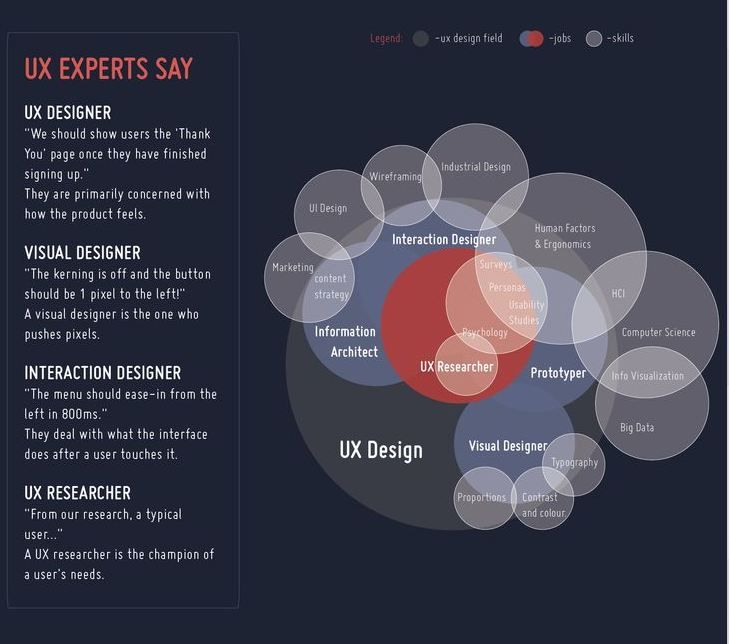
When you get down to the basic facts, users are human beings and for all our differences – we have much more in common than we have things that separate us. People drawn from similar groups will tend to exhibit similar behaviours in similar contexts. The UX designer is an expert in people first and foremost.

This doesn’t mean that you shouldn’t take on board input from industry experts. Your clients will be only too pleased to give you their input when you ask for it. What it does mean is that you can start with a clear perspective in your research rather than one laden down with years of industry knowledge that might be obscuring the wood from the trees.
A Broader Viewpoint

If you’re not mired in industry thinking there’s another possible advantage to your customers; the ability to see beyond the industry that they are in. Companies evolve over time. Look at Google, a company that was once “just” (and we use the term very loosely when it comes to a company that dominates its market with such incredible efficiency) a search engine.

Today, Google is in cloud storage, application development, hardware development, tech research (such as driverless cars and cures for global warming), and more. The opportunity to grow beyond the boundaries that are initially set for companies is often ignored because the people involved with the company are too focused on the industry they work for and not on the potential that they might have to solve problems beyond that industry sphere.

Google takes its simple, efficient approach to one area of activity and applies it wherever it may do some good. Your clients can be helped to see a broader view of the world if you’re not bogged down in the detail of what an industry is or is not. Help them see the wood from the trees.


Ignorance Can Lead to Innovation

The moral of this story is that ignorance can lead to innovation. A user experience designer’s job is not so much to be an expert in a specific industry, though admittedly there are exceptions to this rule, but rather to be an expert in user behaviour.

Your research and questioning skills can lead you to create more value for a business than it might, perhaps, be able to create for itself. You can explore ideas that could seem “off the wall” to an experienced industry professional. You can create intuitive links to other areas of business where users suffer from similar problems.

It’s a question of approach. If you don’t know something, you’re open to learning about it. It’s that learning that drives creativity. Being an industry expert is not always a disadvantage but there are plenty of times when a lack of expertise is an advantage.

Image Sources: Alejandro Dagnino (link to image), Chris Pirillo (link to image), Austroneslan Expeditions (link to image), Franzisko Hauser (link to image), Yuliya Baran (link to image)

Learn More in This Course:

AI for Designers

8 days
32 % booked
View Course

What You Should Read Next

  • Read full article
    Why Care about Statistical Significance? - Article hero image
    Interaction Design Foundation logo

    Why Care about Statistical Significance?

    The categorical data depicts the success and failure rate of the low-fidelity wireframe above. There is not a large enough difference between the two to determine if the designs were successful.There is an element of error involved in measuring anything. So, when we want to compare measurements, how

    Social shares
    433
    Published
    Read Article
  • Read full article
    Web Fonts: Definition and 10 Recommendations - Article hero image
    Interaction Design Foundation logo

    Web Fonts: Definition and 10 Recommendations

    Web fonts bring digital content to life. They enhance readability, set the tone, and ensure consistency across various platforms—all vital ingredients. When you understand web fonts and their impact, it can help you with effective website creation—and greatly so. We’ll provide a comprehensive overvi

    Social shares
    782
    Published
    Read Article
  • Read full article
    How to Screen Research Participants - Article hero image
    Interaction Design Foundation logo

    How to Screen Research Participants

    Finding the right participants is crucial for gathering user research. We usually need to do research with participants having a particular set of needs or experience. In this short video, you will find out about the basic need for screening and how we make sure that we have suitably qualified parti

    Social shares
    450
    Published
    Read Article
  • Read full article
    Pitfalls in Recruiting Participants for User Research - Article hero image
    Interaction Design Foundation logo

    Pitfalls in Recruiting Participants for User Research

    The level of participant engagement is an important part of the user research results. Our results are dependent on proper engagement with our participants. In this video we look at some of the issues around participant recruitment and hear practical examples that arose in a large online study.[[vid

    Social shares
    419
    Published
    Read Article
  • Read full article
    How to Fit Quantitative Research into the Project Lifecycle - Article hero image
    Interaction Design Foundation logo

    How to Fit Quantitative Research into the Project Lifecycle

    Quantitative research methods fit into the project lifecycle at different stages of the process.In this video, we see where different quantitative research methods fit into a typical project lifecycle. Bear in mind that even with an iterative process such as Agile, the short cycles still address dif

    Social shares
    510
    Published
    Read Article
  • Read full article
    How to Resolve Conflicts Between Design Thinking and Marketing - Article hero image
    Interaction Design Foundation logo

    How to Resolve Conflicts Between Design Thinking and Marketing

    In the past, designers often reported to marketing managers and were neither expected nor allowed to make business decisions. When traditionally-structured companies transition to a design-driven mindset, there can be friction between the marketing and design teams. Let’s take a closer look at this

    Social shares
    682
    Published
    Read Article
  • Read full article
    Stop the Generic Portfolio Trap! Design a Stand-Out Portfolio for Your UX/UI Niche: User Research - Article hero image
    Interaction Design Foundation logo

    Stop the Generic Portfolio Trap! Design a Stand-Out Portfolio for Your UX/UI Niche: User Research

    User research is indispensable—and without it, well... UX design is guesswork. When you’re a user researcher, you know this well—but it can be hard to communicate your work in a way that grabs the viewer and holds their attention. And that’s what a portfolio is all about—grabbing the attention of yo

    Social shares
    383
    Published
    Read Article
  • Read full article
    Top Service Blueprint Templates - Article hero image
    Interaction Design Foundation logo

    Top Service Blueprint Templates

    Service blueprint tools are vital for effective customer experience design—and for designers to make experiences that are exceptional. Here, we’ll discuss why these tools are so important. What’s more, we’ll explore templates and practical resources to create high-quality, efficient service blueprin

    Social shares
    638
    Published
    Read Article
  • Read full article
    How to Write Research Questions that Lead to Confident Design - Article hero image
    Interaction Design Foundation logo

    How to Write Research Questions that Lead to Confident Design

    Designing with Data provides an extensive background to A/B testing.As with all other research methods, we need to start with a research question. A/B testing concerns itself with changes in user behavior, meaning that our questions need to be centered on measurable goals. In many cases, these will

    Social shares
    450
    Published
    Read Article
  • Read full article
    Getting Started - Article hero image
    Interaction Design Foundation logo

    Getting Started

    We start our introduction to A/B and multivariate testing (MVT) by looking at their basic principles and their differences. Note that the video mentions Google Optimize, which has been withdrawn. Google Firebase can be used for mobile platforms. Third-party solutions are needed for A/B testing on th

    Social shares
    226
    Published
    Read Article

Top Articles

Top Topic Definitions

Feel Stuck?
Want Better Job Options?

AI is replacing jobs everywhere, yet design jobs are booming with a projected 45% job growth. With design skills, you can create products and services people love. More love means more impact and greater salary potential.

At IxDF, we help you from your first course to your next job, all in one place.

See How Design Skills Turn Into Job Options
Privacy Settings
By using this site, you accept our Cookie Policy and Terms of Use.
Customize
Accept all

Be the One Who Inspires

People remember who shares great ideas.

Share on:

Academic Credibility — On Autopilot

Don't waste time googling citation formats. Just copy, paste and look legit in seconds.

Feel stuck? Want Freedom?

Get one powerful email each week, like 325,668 others.

Learn to design a life you love.

Next email in:
4
days
21
hrs
13
mins
48
secs