5 Ways to Develop the User Experience of Enterprise IT Environments

• 8 min read

439 Shares

In the consumer space, IT and UX seem to go hand in hand. Adoption is driven by user experience and so is retention. Products like Apple’s iPhone are borne from the understanding that ease-of-use and enjoyment of use are vitally important. Over in the Enterprise world, this seems to have passed many people by.

The user experience in enterprises appears to be about the last priority in IT development. The CEOs personal whims (even if the CEO will never touch the application in question) are a massive priority. The people who use the application are rarely, if ever, considered in many environments. There is an assumption that if you have to use something for work – you will use it properly even if the experience is akin to being forced to run the 100 meters on your hands against people who are allowed to use their feet.

This has to change. The world around the enterprise has already shifted. The lines between the home, social life and work life are becoming increasingly blurred. Millennials and Gen Y in particular are going to expect a consistent experience in their IT environments and they’re going to vote with their labour if it’s not provided. Enterprises that want to stay competitive need to focus on user experience. We’ve identified 5 ways that the user experience in Enterprise IT environments needs to improve:

Purpose Above Platform

Enterprise systems need to be chosen for their experience and purpose rather than for which platform the IT team prefers to operate on. This is the age of cloud computing there’s no business justification for legacy platforms any more. The infrastructure used to deploy systems can be adapted to any technical requirement at a reasonably low cost.

These platforms need to provide a similar range of experience to the platforms people use in the rest of their lives. There’s no excuse for awkward deployment environments and archaic platform dependent processes any more. The trend of BYOD (Bring Your Own Device) will continue to accelerate and the transition between environments must be seamless.

Reliable Experiences

Years ago, I started work for a software company. My job was to manage a team harvesting data with their application. The job didn’t start well. On the first day of work, the company’s server infrastructure collapsed and with it our ability to access the application and to harvest the data the project needed. Those servers were restored on a late Friday afternoon at the end of my first week. There’s no unhappier moment than trying to explain to your new boss that you’ve done no work because the company’s IT infrastructure sucks.

Down time should be a thing of the past. Again, cloud computing enables consistent and reliable experiences. People want to be productive at work and the user experience should always enable productivity.
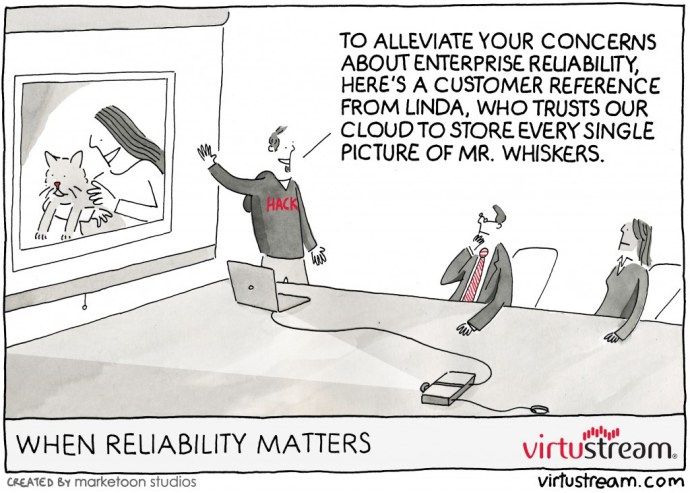


Author/Copyright holder: Virtustream.com. Copyright terms and licence: All rights reserved Img source

New Network Approaches

Enterprise networks are going to need to enable the user experience from network to personal device and back again. The change from technology centred development to user centred development is a pre-requisite for this.

That means constructing networks to deliver this experience. Next generation networks will also need to continue to provide the levels of server-server communication currently required in the enterprise environment.
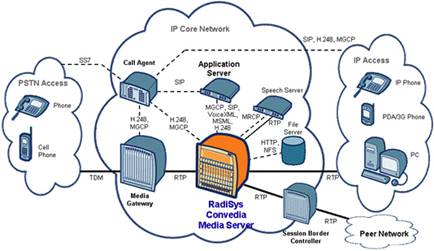


Author/Copyright holder: Radisys. Copyright terms and licence: All rights reserved Img source

Security Approaches Will Have to Change

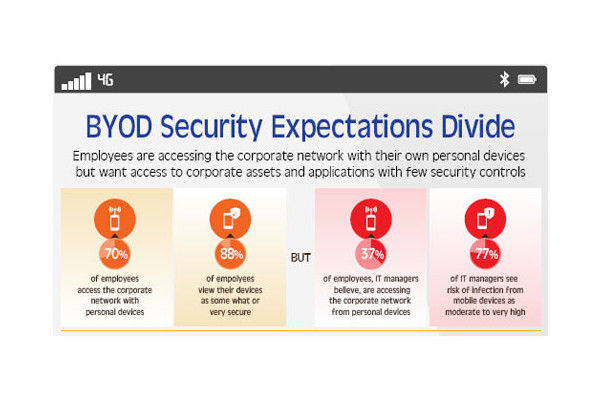
This may be the biggest challenge to the enterprise user experience; how do you deliver an environment where a device can go literally anywhere and the experience does not change and deliver that in a secure manner?

Devices need to be locked down enough so that data cannot easily be retrieved from a lost or stolen device. At the same time they need to be open enough so that accessing data by the actual user is not a painful or time consuming process.

Some services, for example DropBox, will exist completely outside the company’s own infrastructure. Thought needs to be given as to how to balance the need for such services whilst protecting corporate data.

Cyber-crime is on the rise too. In a global enterprise environments businesses are becoming their data sets. Protecting that data is critical to business longevity and the ability to compete. With even national governments, such as China, involved in corporate espionage – this is going to be a major challenge to UX professionals.


Author/Copyright holder: Unknown. Copyright terms and licence: Unknown Img source

Aligning People, Processes and The Enterprise Itself

The overall user experience requires a level of management within the enterprise itself. There needs to be a common vision of what the overall enterprise user experience should be like. People and processes will need to align the way they work, to some extent, to this vision.

In turn this should make it easier for the enterprise’s UX team to define personas and deliver a UX strategy which is in keeping with the vision. Of course, there will always be some unhappy customers with any development – ask any major consumer software provider Facebook, Google, Apple, Microsoft, etc. have all taken wrong turns on their development roadmaps at times.

There will also need to be a feedback mechanism for users within the enterprise to express their concerns when the user experience doesn’t meet their expectations. That means enabling processes to allow people to raise concerns without fear of sanction or isolation at work. Users are only going to contribute to the development of the enterprise user experience if it’s done in an environment of safety rather than one of shame and blame.

Summary

It is time that the enterprise IT environment caught up with the consumer IT environment. Younger generations are more and more familiar with hardware and software before they enter the employment market. Their expectations of systems are much better developed than those in previous generations where IT was slightly scary, expensive and something they had to put up with.

Enterprises that want to attract the best talent will need to enable that talent to perform and that means addressing the weaknesses of the user experience inherent in so many of today’s systems.

Header Image: Author/Copyright holder: Unknown. Copyright terms and licence: Unknown. Img

Learn More in This Course:

AI for Designers

8 days
19 % booked
View Course

What You Should Read Next

  • Read full article
    Why Care about Statistical Significance? - Article hero image
    Interaction Design Foundation logo

    Why Care about Statistical Significance?

    The categorical data depicts the success and failure rate of the low-fidelity wireframe above. There is not a large enough difference between the two to determine if the designs were successful.There is an element of error involved in measuring anything. So, when we want to compare measurements, how

    Social shares
    432
    Published
    Read Article
  • Read full article
    Web Fonts: Definition and 10 Recommendations - Article hero image
    Interaction Design Foundation logo

    Web Fonts: Definition and 10 Recommendations

    Web fonts bring digital content to life. They enhance readability, set the tone, and ensure consistency across various platforms—all vital ingredients. When you understand web fonts and their impact, it can help you with effective website creation—and greatly so. We’ll provide a comprehensive overvi

    Social shares
    781
    Published
    Read Article
  • Read full article
    How to Screen Research Participants - Article hero image
    Interaction Design Foundation logo

    How to Screen Research Participants

    Finding the right participants is crucial for gathering user research. We usually need to do research with participants having a particular set of needs or experience. In this short video, you will find out about the basic need for screening and how we make sure that we have suitably qualified parti

    Social shares
    450
    Published
    Read Article
  • Read full article
    Pitfalls in Recruiting Participants for User Research - Article hero image
    Interaction Design Foundation logo

    Pitfalls in Recruiting Participants for User Research

    The level of participant engagement is an important part of the user research results. Our results are dependent on proper engagement with our participants. In this video we look at some of the issues around participant recruitment and hear practical examples that arose in a large online study.[[vid

    Social shares
    419
    Published
    Read Article
  • Read full article
    How to Fit Quantitative Research into the Project Lifecycle - Article hero image
    Interaction Design Foundation logo

    How to Fit Quantitative Research into the Project Lifecycle

    Quantitative research methods fit into the project lifecycle at different stages of the process.In this video, we see where different quantitative research methods fit into a typical project lifecycle. Bear in mind that even with an iterative process such as Agile, the short cycles still address dif

    Social shares
    510
    Published
    Read Article
  • Read full article
    How to Resolve Conflicts Between Design Thinking and Marketing - Article hero image
    Interaction Design Foundation logo

    How to Resolve Conflicts Between Design Thinking and Marketing

    In the past, designers often reported to marketing managers and were neither expected nor allowed to make business decisions. When traditionally-structured companies transition to a design-driven mindset, there can be friction between the marketing and design teams. Let’s take a closer look at this

    Social shares
    682
    Published
    Read Article
  • Read full article
    Stop the Generic Portfolio Trap! Design a Stand-Out Portfolio for Your UX/UI Niche: User Research - Article hero image
    Interaction Design Foundation logo

    Stop the Generic Portfolio Trap! Design a Stand-Out Portfolio for Your UX/UI Niche: User Research

    User research is indispensable—and without it, well... UX design is guesswork. When you’re a user researcher, you know this well—but it can be hard to communicate your work in a way that grabs the viewer and holds their attention. And that’s what a portfolio is all about—grabbing the attention of yo

    Social shares
    383
    Published
    Read Article
  • Read full article
    Top Service Blueprint Templates - Article hero image
    Interaction Design Foundation logo

    Top Service Blueprint Templates

    Service blueprint tools are vital for effective customer experience design—and for designers to make experiences that are exceptional. Here, we’ll discuss why these tools are so important. What’s more, we’ll explore templates and practical resources to create high-quality, efficient service blueprin

    Social shares
    638
    Published
    Read Article
  • Read full article
    How to Write Research Questions that Lead to Confident Design - Article hero image
    Interaction Design Foundation logo

    How to Write Research Questions that Lead to Confident Design

    Designing with Data provides an extensive background to A/B testing.As with all other research methods, we need to start with a research question. A/B testing concerns itself with changes in user behavior, meaning that our questions need to be centered on measurable goals. In many cases, these will

    Social shares
    450
    Published
    Read Article
  • Read full article
    Getting Started - Article hero image
    Interaction Design Foundation logo

    Getting Started

    We start our introduction to A/B and multivariate testing (MVT) by looking at their basic principles and their differences. Note that the video mentions Google Optimize, which has been withdrawn. Google Firebase can be used for mobile platforms. Third-party solutions are needed for A/B testing on th

    Social shares
    225
    Published
    Read Article

Top Articles

Top Topic Definitions

Feel Stuck?
Want Better Job Options?

AI is replacing jobs everywhere, yet design jobs are booming with a projected 45% job growth. With design skills, you can create products and services people love. More love means more impact and greater salary potential.

At IxDF, we help you from your first course to your next job, all in one place.

See How Design Skills Turn Into Job Options
Privacy Settings
By using this site, you accept our Cookie Policy and Terms of Use.
Customize
Accept all

Be the One Who Inspires

People remember who shares great ideas.

Share on:

Academic Credibility — On Autopilot

Don't waste time googling citation formats. Just copy, paste and look legit in seconds.

Feel stuck? Want Freedom?

Get one powerful email each week, like 325,742 others.

Learn to design a life you love.

Next email in:
5
days
11
hrs
54
mins
13
secs