The Three Types of Formal Methods of Human Computer Interaction

• 5 min read

751 Shares

"Formal methods" sounds kind of scary but it in reality it’s a way of saying; “the system with which we record ideas/information/etc.” and that’s rather less scary. In Human Computer Interaction (HCI) there are a multitude of formal methods, in use, to record ideas and other types of information. Today, we’ll take a look at the three main types of formal method and then we may look at the methods themselves in more detail in another article at a later date.

The Three Types of Formal Methods for HCI

Users

It perhaps comes as no surprise that there are formal methods dedicated to capturing what goes on at the user-level. This is of course, the reason that we all do what we do. Without users any HCI (or indeed User Interface/UI) work is wasted. If no-one uses the product; who cares what it does? There’s a time and a place for theory but once we’re doing design work – it’s not about theory it’s about practice.



What may come as a bit of a surprise is there are no commonly used formal methods for dealing with groups of users at higher levels. Use there are task-modelling systems, for example, which deal with more than one user but there are no in depth formal methods for social-level modelling or demographic-level modelling.

Systems

If you have a formal method for documenting the user’s approach to a product; you also need a method for documenting the system level too. That is not just the user's interaction with that system but what happens during that interaction "out of sight" of the user. Choosing to represent the system rather than the user does not mean that we have not taken the user into account; it’s rather that we sometimes need to document what is happening and why in different ways. This also gives us the opportunity to examine the back-end of the model as well as the front-end.

World

This might be better described as contextual or environmental; it’s often important to examine the physical context of a user’s interaction with a product. It’s all well and good designing a system to make it easier for someone in a wheelchair to use a computer but if in the real work environment; that computer is not positioned in a wheelchair accessible zone – it’s not going to deliver the benefits that we hope for. It's important to understand where and how our systems are used not just the people who use them.
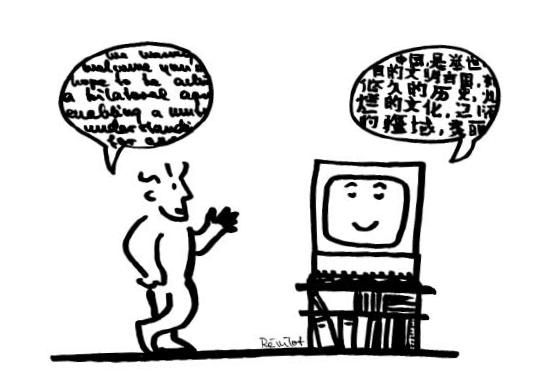


We may also want to model user flow for systems which will have large volumes of users; how will they get to the product? How will they leave? What incentives do they need to do this efficiently? And so on…

In Combination

Of course all of these formal methods can be used in combination but in general they will be used in different ways and at different levels in your system's documentation. If you want to learn more about Formal Methods and their use; you can find Alan J Dix’s book here. Alan’s a Computing Professor at Lancaster University in the UK.

References & Where to Learn More:

Header Image: Author/Copyright holder: aknottedcord.Copyright terms and licence: All rights reserved. Img

Course: “Human-Computer Interaction - The Foundations of UX Design”

Images: Header, HCI, Users, World

Topics in This Article

Learn More in This Course:

AI for Designers

11 days
13 % booked
View Course

What You Should Read Next

  • Read full article
    Why Care about Statistical Significance? - Article hero image
    Interaction Design Foundation logo

    Why Care about Statistical Significance?

    The categorical data depicts the success and failure rate of the low-fidelity wireframe above. There is not a large enough difference between the two to determine if the designs were successful.There is an element of error involved in measuring anything. So, when we want to compare measurements, how

    Social shares
    430
    Published
    Read Article
  • Read full article
    Web Fonts: Definition and 10 Recommendations - Article hero image
    Interaction Design Foundation logo

    Web Fonts: Definition and 10 Recommendations

    Web fonts bring digital content to life. They enhance readability, set the tone, and ensure consistency across various platforms—all vital ingredients. When you understand web fonts and their impact, it can help you with effective website creation—and greatly so. We’ll provide a comprehensive overvi

    Social shares
    779
    Published
    Read Article
  • Read full article
    How to Screen Research Participants - Article hero image
    Interaction Design Foundation logo

    How to Screen Research Participants

    Finding the right participants is crucial for gathering user research. We usually need to do research with participants having a particular set of needs or experience. In this short video, you will find out about the basic need for screening and how we make sure that we have suitably qualified parti

    Social shares
    449
    Published
    Read Article
  • Read full article
    Pitfalls in Recruiting Participants for User Research - Article hero image
    Interaction Design Foundation logo

    Pitfalls in Recruiting Participants for User Research

    The level of participant engagement is an important part of the user research results. Our results are dependent on proper engagement with our participants. In this video we look at some of the issues around participant recruitment and hear practical examples that arose in a large online study.[[vid

    Social shares
    417
    Published
    Read Article
  • Read full article
    How to Fit Quantitative Research into the Project Lifecycle - Article hero image
    Interaction Design Foundation logo

    How to Fit Quantitative Research into the Project Lifecycle

    Quantitative research methods fit into the project lifecycle at different stages of the process.In this video, we see where different quantitative research methods fit into a typical project lifecycle. Bear in mind that even with an iterative process such as Agile, the short cycles still address dif

    Social shares
    509
    Published
    Read Article
  • Read full article
    How to Resolve Conflicts Between Design Thinking and Marketing - Article hero image
    Interaction Design Foundation logo

    How to Resolve Conflicts Between Design Thinking and Marketing

    In the past, designers often reported to marketing managers and were neither expected nor allowed to make business decisions. When traditionally-structured companies transition to a design-driven mindset, there can be friction between the marketing and design teams. Let’s take a closer look at this

    Social shares
    682
    Published
    Read Article
  • Read full article
    Stop the Generic Portfolio Trap! Design a Stand-Out Portfolio for Your UX/UI Niche: User Research - Article hero image
    Interaction Design Foundation logo

    Stop the Generic Portfolio Trap! Design a Stand-Out Portfolio for Your UX/UI Niche: User Research

    User research is indispensable—and without it, well... UX design is guesswork. When you’re a user researcher, you know this well—but it can be hard to communicate your work in a way that grabs the viewer and holds their attention. And that’s what a portfolio is all about—grabbing the attention of yo

    Social shares
    380
    Published
    Read Article
  • Read full article
    Top Service Blueprint Templates - Article hero image
    Interaction Design Foundation logo

    Top Service Blueprint Templates

    Service blueprint tools are vital for effective customer experience design—and for designers to make experiences that are exceptional. Here, we’ll discuss why these tools are so important. What’s more, we’ll explore templates and practical resources to create high-quality, efficient service blueprin

    Social shares
    636
    Published
    Read Article
  • Read full article
    How to Write Research Questions that Lead to Confident Design - Article hero image
    Interaction Design Foundation logo

    How to Write Research Questions that Lead to Confident Design

    Designing with Data provides an extensive background to A/B testing.As with all other research methods, we need to start with a research question. A/B testing concerns itself with changes in user behavior, meaning that our questions need to be centered on measurable goals. In many cases, these will

    Social shares
    448
    Published
    Read Article
  • Read full article
    Getting Started - Article hero image
    Interaction Design Foundation logo

    Getting Started

    We start our introduction to A/B and multivariate testing (MVT) by looking at their basic principles and their differences. Note that the video mentions Google Optimize, which has been withdrawn. Google Firebase can be used for mobile platforms. Third-party solutions are needed for A/B testing on th

    Social shares
    219
    Published
    Read Article

Top Articles

Top Topic Definitions

Feel Stuck?
Want Better Job Options?

AI is replacing jobs everywhere, yet design jobs are booming with a projected 45% job growth. With design skills, you can create products and services people love. More love means more impact and greater salary potential.

At IxDF, we help you from your first course to your next job, all in one place.

See How Design Skills Turn Into Job Options
Privacy Settings
By using this site, you accept our Cookie Policy and Terms of Use.
Customize
Accept all

Be the One Who Inspires

People remember who shares great ideas.

Share on:

Academic Credibility — On Autopilot

Don't waste time googling citation formats. Just copy, paste and look legit in seconds.

Feel Stuck? Want Freedom?

Join 326,038+ designers who get one powerful email each week. Learn to design a life you love.

Next email in
1
day
5
hrs
59
mins
41
secs

Free forever. No spam. Unsubscribe anytime.