The Design of Attention
Cognitive Load, Uncertainty, and Navigation
Give players too much information and they disengage. Give them too little and they get lost. Where's the line — and who gets to draw it? This session treats information density not as a usability checkbox, but as a question of rhythm, tension, freedom, and curiosity. We'll look at how designers layer information, when uncertainty should be preserved rather than removed, and how open-world games constantly negotiate between exploration and efficiency. This isn't about minimizing information. It's about sequencing it.
If you've ever felt overwhelmed by a game's UI — or bored by one that told you too much — this session is for you.
👥 Who Should Attend
🎨 UX/UI designers working on complex, information-heavy products
🔄 Game designers responsible for onboarding and wayfinding
🚀 Anyone designing for attention in high-density interfaces
💡 What You’ll Learn
🔍 How cognitive load and decision fatigue shape what players can actually absorb
📊 How information hierarchy and context — not just quantity — determine clarity
🗺️ Why controlled uncertainty is a design tool, not a design flaw
🗺️ How open-world games balance discovery against efficiency through guidance systems
💰 Oyun içi ekonomi ve kullanıcı deneyimi ile etkileşimi
💬 Interactive Discussion
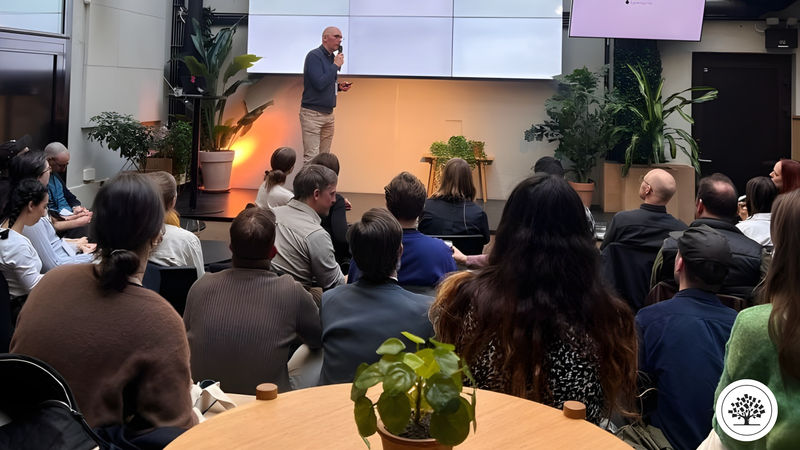
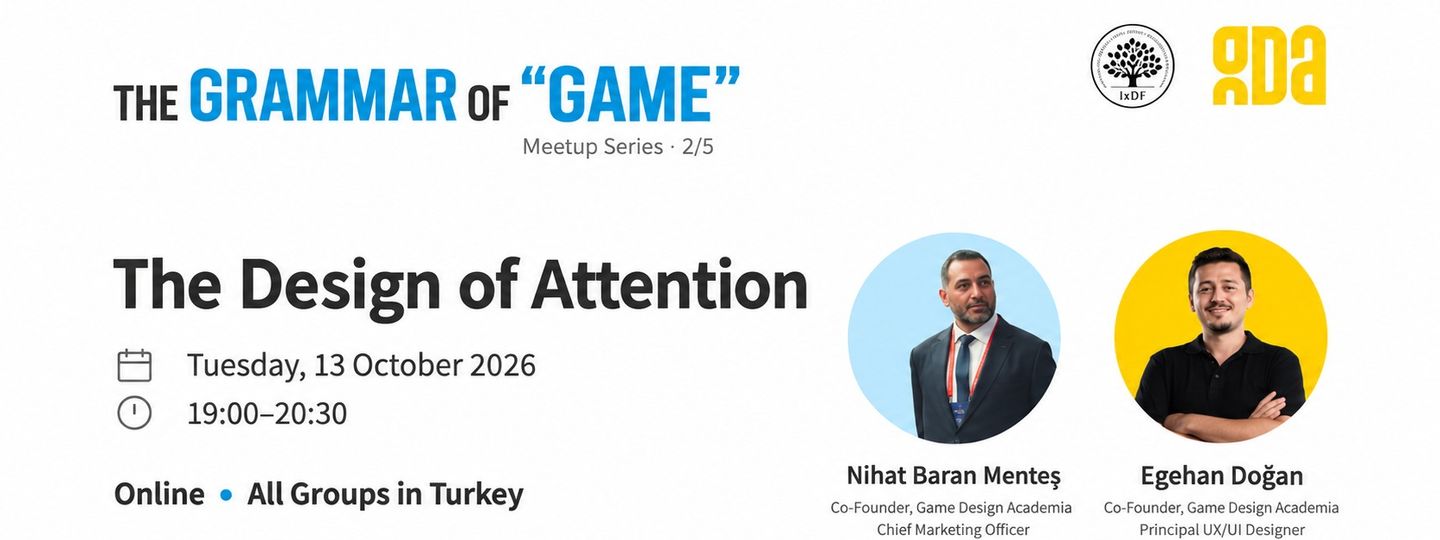
Guest Nihat Baran Menteş joins to unpack real examples of layered information design and navigation systems in practice.
🎁 What You’ll Leave With
📋 A working model for layering information without overwhelming the user
👁️ Criteria for deciding when to guide the user and when to let them explore
💬 A clearer view of how uncertainty can be designed deliberately, not accidentally
✨ Save your spot for this free IxDF Community event — part two of our five-part series on the grammar of the game.



 +7