
Conceptual Models: A Guide to Intuitive Design

Price
What are conceptual models and why should you, as a designer, care about them? The short answer is, conceptual models are an important design tool to help users select or adopt appropriate mental models.
Mental models are how your users subconsciously navigate the world, including the digital world: apps, websites, and electronic devices. If your product has an analog in the physical world, users will often apply the same mental model, so your product's conceptual model should reflect that. For example, imagine you are designing an ebook reader. When your users interact with an ebook for the first time, they will refer to their mental model for physical books. They’ll expect to be able to find chapters, turn pages, set bookmarks, highlight phrases, etc. The better you design the ebook experience to match users’ mental models for physical books, the more intuitive and successful your ebook will be.
Even if your product has no analog in the physical world, or has features that have no physical analog, it is important for designers to create conceptual models and design the product based on that, so users can develop a coherent, task-focused mental model of the product. For example, ebook readers often provide functions not found in physical books, such as search, links to other content, or security measures. An ebook should provide that functionality based on a simple, coherent conceptual model, excluding concepts unrelated to users' goals, to help users incorporate the new concepts into their mental model.
Unfortunately, software designers often skip conceptual design. The result is incoherent, arbitrary, overly-complex products that expose off-task concepts to users and conflict with users' mental models, impeding learning, facilitating errors, frustrating users, and ultimately decreasing product uptake.
Understanding conceptual models is the first step towards helping your users navigate and learn to use your product more easily. By building on users’ existing knowledge and frameworks and helping users integrate new concepts, you’ll reduce cognitive friction. Plus, if you understand how users conceive and accomplish tasks, you’ll be able to design intuitive and successful user journeys.
Harness the power of conceptual models in this Master Class with Jeff Johnson.
You’ll learn:
- The benefits of designing a task-focused, coherent conceptual model of an application before designing the application’s user interface.
- The components of a conceptual model (e.g., object/operations analysis), and how to create them.
- Several different ways conceptual models can be represented.
With a more robust understanding of conceptual models you’ll be able to create more intuitive experiences for your user and take your products and solutions to the next level. In addition, the ability to sketch conceptual models quickly and easily will save you large amounts of time in UI design.
Your Speaker and Industry Expert

Jeff Johnson is an Assistant Professor in the Computer Science Department of the University of San Francisco. After earning B.A. and Ph.D. degrees from Yale and Stanford, he worked at Cromemco, Xerox, US West, Hewlett-Packard Labs, and Sun Microsystems. In 1990, he co-chaired the first Participatory Design conference, PDC'90. He serves on the SIGCHI U.S. Public Policy Committee. He has also taught at Stanford University and Mills College, and in 2006 and 2013 he taught HCI as an Erskine Fellow at the University of Canterbury in New Zealand. He is a member of the ACM SIGCHI Academy, a SIGCHI Lifetime Achievement in Practice Awardee, and an ACM Distinguished Member.
He has authored or co-authored many articles and chapters on Human-Computer Interaction, as well as the books GUI Bloopers, Web Bloopers, GUI Bloopers 2.0, Designing with the Mind in Mind, Conceptual Models (co-authored with Austin Henderson), Designing with the Mind in Mind, 2nd edition, Designing UIs for an Aging Population (co-authored with Kate Finn), and Designing with the Mind in Mind, 3rd edition.

Build High-Impact Design and AI Skills
- Learn from industry leaders.
- Practical 1-hour Master Classes.
- Apply what you learn right away.
- Already a member? Log in to get your 90% discount.
Get a Certificate
You get an industry-recognized IxDF Certificate after each Master Class you complete. Add it to your LinkedIn profile and résumé to show managers and clients you learned your skills from the best.


Questions? We've Got Answers
Why are design skills so important right now?
Design skills are valuable for both you personally and for your company.
For you personally, design skills are important because:
Design roles are growing faster than average. The World Economic Forum ranks human-centered design among the fastest-growing skill areas through 2030.
Employers increasingly expect design skills across roles, not just from designers. Knowing design thinking, user research, or UX principles makes you more competitive in any field.
Designers who combine human-centered skills with AI expertise are in especially high demand.
For your company, design skills are important because:
Design skills help your team increase sales, retain customers, and improve customer satisfaction. Better customer experiences lead directly to better business results.
Companies that invest in design outperform the S&P 500 Index by 228% (Design Management Institute, Design Value Index).
Design is more than aesthetics. It's how teams make products easier to use, services more efficient, and technology more human. These skills create value across every department.
I'm not a designer. Why should I learn design and AI?
Design and tech skills can open up career opportunities.
For example, if you're in a field such as:
Marketing, communication, HR, software development, customer service, business management, healthcare, teaching, and many more.
Why can design skills make you valuable in these jobs and industries?
That's because:
Design skills help your team increase sales, retain customers, and improve customer satisfaction. Better customer experiences lead directly to better business results.
Companies that invest in design outperform the S&P 500 Index by 228% (Design Management Institute, Design Value Index).
Design is more than aesthetics. It's how teams make products easier to use, services more efficient, and technology more human. These skills create value across every department.
Do I need any prior experience in design or tech?
No.
Our courses, master classes, and career programs cover everything from the fundamentals to advanced topics.
Whether you're completely new to design or an experienced professional, you'll find courses, master classes and career programs at your level.
Will I receive a Certificate?
Yes.
After you finish, you'll receive an industry-recognized IxDF Certificate to prove you've completed an evidence-based curriculum taught by industry leaders.
Add IxDF Certificates to your LinkedIn profile, resumé and job application in a few easy steps.
You can download your certificates as .jpg files, so they are easy to share. Certificates are always valid.
How do I add the IxDF Certificate to my LinkedIn profile?
That's easy.
Add your IxDF Certificates to your LinkedIn profile, resumé and job application in a few easy steps:
Click “Add profile section” on your LinkedIn
Tap “Recommended”
Select “Add licenses or certifications”
Enter your IxDF Certificate details
Hit “Save”
You can download your IxDF Certificates as .jpg files, so they are easy to share. IxDF Certificates are always valid.
Need more detailed instructions?
How can the global and local IxDF community help me?
We can help you in several ways.
Join meetups in your city: Join the regular meetups in your city in a nearby cafe or office building to have fun and learn with people just like you. You get full access to IxDF Local Groups where you can build your network, find new opportunities, or simply enjoy yourself in the company of people who are passionate about design. The meetings are completely optional and are spread across app. 500 cities worldwide.
You can also get instant help and career advice in the IxDF online members-only forums. Here, you can build your global network through our supportive community.
I just signed up for a live Master Class. What's next?
Wonderful! When you sign up for a Master Class, you'll receive an email from us with a link to join the live Master Class.
If you can't find the email, please reach out to [email protected], and we're super happy to help you!
Great news! You'll also get an on-demand version of your Master Class a few hours after the live event ends.
A few days later, the on-demand Master Class will also show up on your private profile page if you're a member.
That way, you can view the Master Class on-demand at any time. As many times as you wish.
Will the live Master Class be recorded and become available on-demand?
Absolutely!
When you sign up for a live Master Class, you'll automatically receive the link to the recording a few hours after the live event ends.
A few days later, the on-demand Master Class will show up on your private profile page if you're an IxDF member. If you're not a member, you'll receive your recording by email.
You can enjoy your Master Class on-demand at any time, anywhere. Watch it as many times as you want.
What if I can't attend a live Master Class?
Great news! We've got you covered.
When you sign up for the live Master Class, you'll automatically receive the link to the recording a few hours after the live event ends.
A few days later, the on-demand Master Class will show up on your private profile page if you're an IxDF member. If you're not a member, you'll receive your recording by email.
You can enjoy your Master Class on-demand at any time, anywhere. Watch it as many times as you want.
What if I have more questions?
We'd love to hear from you and help you!
Reach out to us at [email protected] or use the online contact form.

High-Impact AI and Design Skills









What the Design Industry Says
Everything you learn at IxDF is evidence-based and designed to create actual results in your job and career.
Hear from designers, career switchers, and product leaders who share their experience with IxDF.

– Forbes.com

– UXPin

– Petal Health

– UxManiac

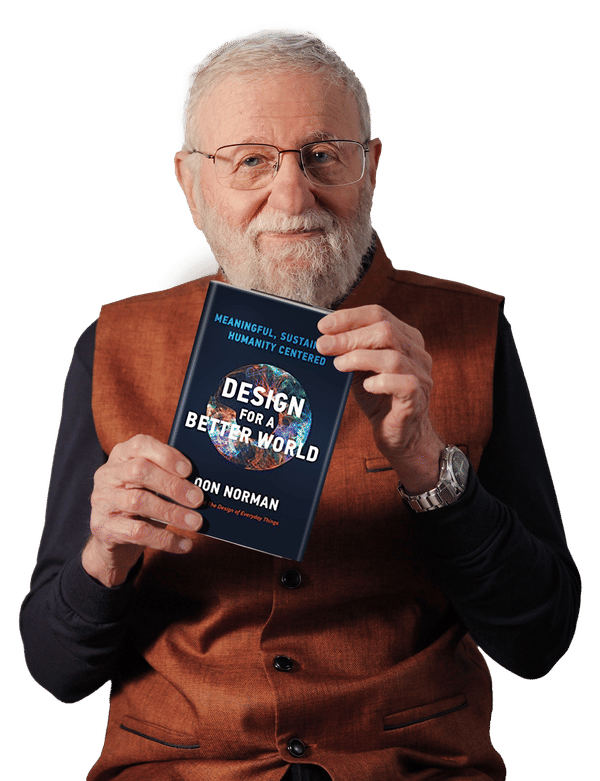
– Don Norman

– UsefulUsability.com

– Future Product Days

– Employed World

4.8/5 “Excellent” (based on 2,341 reviews)
– Trustpilot

– Critical Techworks

– Sagicor South Africa

– Leads.Lab

9/10 “I highly recommend it for anyone.”
– UX Mastery

– NextGen Healthcare

– Toools Design

– AiGA Design

– Core77

– IBM

– UX Planet

– George UX Conf

– SAP Community Network

– Canon

– UI Gradient

– UX Salon Barcelona

– Paul Boag

– Allied Irish Banks

– UX UI

– IDZ Berlin